Apple has released 54 iPhone models, from the original iPhone in 2007 to iPhone 18 Pro and iPhone 18 Pro Max in 2026, and iPhone Duo goes on sale on October 23, 2026.
This list follows Apple's own model page year by year, then shows what changed between generations, which models still get iOS updates, and how to identify the iPhone in your hand.
Every iPhone release in chronological order
Apple's support page gives the year each model was introduced, not the day. Within each year, the models below follow Apple's own listing order, oldest first.
Read the table top to bottom for the full release order.
| Year | iPhone models introduced | Count |
|---|---|---|
| 2007 | iPhone (the original) | 1 |
| 2008 | iPhone 3G | 1 |
| 2009 | iPhone 3GS | 1 |
| 2010 | iPhone 4 (GSM model; the CDMA model followed in 2011) | 1 |
| 2011 | iPhone 4s | 1 |
| 2012 | iPhone 5 | 1 |
| 2013 | iPhone 5c, iPhone 5s | 2 |
| 2014 | iPhone 6 Plus, iPhone 6 | 2 |
| 2015 | iPhone 6s Plus, iPhone 6s | 2 |
| 2016 | iPhone SE (1st generation), iPhone 7 Plus, iPhone 7 | 3 |
| 2017 | iPhone 8 Plus, iPhone 8, iPhone X | 3 |
| 2018 | iPhone XR, iPhone XS Max, iPhone XS | 3 |
| 2019 | iPhone 11, iPhone 11 Pro Max, iPhone 11 Pro | 3 |
| 2020 | iPhone SE (2nd generation), iPhone 12 mini, iPhone 12, iPhone 12 Pro, iPhone 12 Pro Max | 5 |
| 2021 | iPhone 13 mini, iPhone 13, iPhone 13 Pro, iPhone 13 Pro Max | 4 |
| 2022 | iPhone SE (3rd generation), iPhone 14, iPhone 14 Plus, iPhone 14 Pro, iPhone 14 Pro Max | 5 |
| 2023 | iPhone 15, iPhone 15 Plus, iPhone 15 Pro, iPhone 15 Pro Max | 4 |
| 2024 | iPhone 16, iPhone 16 Plus, iPhone 16 Pro, iPhone 16 Pro Max | 4 |
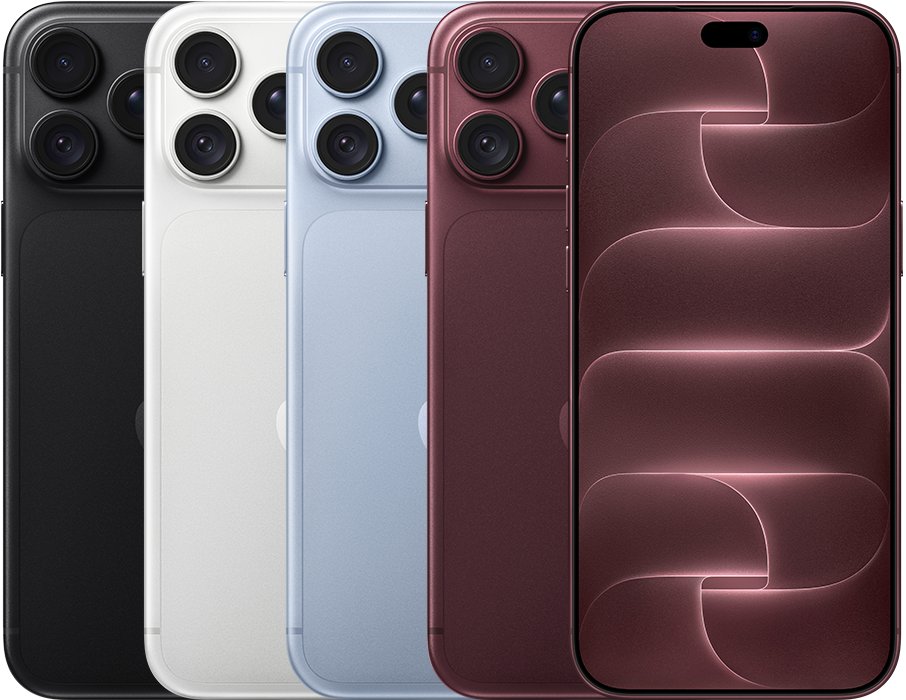
| 2025 | iPhone 16e, iPhone Air, iPhone 17, iPhone 17 Pro, iPhone 17 Pro Max | 5 |
| 2026 | iPhone 17e, iPhone 18 Pro, iPhone 18 Pro Max, plus iPhone Duo (pre-orders October 16, on sale October 23) | 3 + Duo |
The total of 54 counts every model on Apple's identification page. iPhone Duo is announced and priced, but it is not on that page yet.
Every iPhone release by year
Each row below gives the iPhone screen size and the detail Apple uses to tell that model apart. Apple's page does not list screen sizes for models before iPhone 6, so those rows describe the body instead.
| Year | Model | Display | What sets it apart |
|---|---|---|---|
| 2007 | iPhone | Not listed | Anodized aluminum back, 4, 8 or 16 GB, mini-SIM tray on top |
| 2008 | iPhone 3G | Not listed | Plastic back, 8 or 16 GB; reached China mainland in 2009 |
| 2009 | iPhone 3GS | Not listed | Plastic back with a shiny silver imprint, up to 32 GB |
| 2010 | iPhone 4 | Not listed | Flat glass front and back, stainless steel band, micro-SIM |
| 2011 | iPhone 4s | Not listed | Same glass-and-steel design, first 64 GB option |
| 2012 | iPhone 5 | Not listed | Aluminum back, first nano-SIM tray |
| 2013 | iPhone 5c | Not listed | Hard-coated polycarbonate back in five colors |
| 2013 | iPhone 5s | Not listed | Home button with Touch ID |
| 2014 | iPhone 6 Plus | 5.5 inches | Larger 5.5-inch model of the 2014 pair |
| 2014 | iPhone 6 | 4.7 inches | Curved-edge glass front, aluminum back |
| 2015 | iPhone 6s Plus | 5.5 inches | Laser-etched "S" on the back |
| 2015 | iPhone 6s | 4.7 inches | Rose gold added to the colors |
| 2016 | iPhone SE (1st generation) | 4 inches | Small body with Touch ID, up to 128 GB |
| 2016 | iPhone 7 Plus | 5.5 inches | Dual 12 MP rear cameras |
| 2016 | iPhone 7 | 4.7 inches | Solid-state Home button, jet black finish |
| 2017 | iPhone 8 Plus | 5.5 inches | Glass back, wide-angle and telephoto cameras |
| 2017 | iPhone 8 | 4.7 inches | Glass back, solid-state Home button with Touch ID |
| 2017 | iPhone X | 5.8 inches | First all-screen Super Retina display, no Home button |
| 2018 | iPhone XR | 6.1 inches | Liquid Retina display, aluminum band, six colors |
| 2018 | iPhone XS Max | 6.5 inches | Largest screen of 2018, up to 512 GB |
| 2018 | iPhone XS | 5.8 inches | Stainless steel band, up to 512 GB |
| 2019 | iPhone 11 | 6.1 inches | Ultra Wide and Wide cameras |
| 2019 | iPhone 11 Pro Max | 6.5 inches | Three 12 MP cameras, textured matte glass |
| 2019 | iPhone 11 Pro | 5.8 inches | First Pro-branded iPhone, three cameras |
| 2020 | iPhone SE (2nd generation) | 4.7 inches | 4.7-inch body with a Home button and Touch ID |
| 2020 | iPhone 12 mini | 5.4 inches | 5.4-inch all-screen display, flat aluminum edges |
| 2020 | iPhone 12 | 6.1 inches | Super Retina XDR display, flat aluminum band |
| 2020 | iPhone 12 Pro | 6.1 inches | LiDAR Scanner on the back |
| 2020 | iPhone 12 Pro Max | 6.7 inches | 6.7-inch display and LiDAR Scanner |
| 2021 | iPhone 13 mini | 5.4 inches | Last mini model |
| 2021 | iPhone 13 | 6.1 inches | Starting storage raised to 128 GB |
| 2021 | iPhone 13 Pro | 6.1 inches | ProMotion display, 1 TB option |
| 2021 | iPhone 13 Pro Max | 6.7 inches | ProMotion display, 1 TB option |
| 2022 | iPhone SE (3rd generation) | 4.7 inches | Last iPhone with a Home button and Touch ID on Apple's list |
| 2022 | iPhone 14 | 6.1 inches | No SIM tray on US models |
| 2022 | iPhone 14 Plus | 6.7 inches | Plus name returns in place of mini |
| 2022 | iPhone 14 Pro | 6.1 inches | First Dynamic Island |
| 2022 | iPhone 14 Pro Max | 6.7 inches | Dynamic Island, stainless steel band |
| 2023 | iPhone 15 | 6.1 inches | USB-C connector and Dynamic Island |
| 2023 | iPhone 15 Plus | 6.7 inches | USB-C, color-infused glass back |
| 2023 | iPhone 15 Pro | 6.1 inches | Titanium band and Action button |
| 2023 | iPhone 15 Pro Max | 6.7 inches | Titanium band, starts at 256 GB |
| 2024 | iPhone 16 | 6.1 inches | Camera Control and Action button |
| 2024 | iPhone 16 Plus | 6.7 inches | Camera Control and Action button |
| 2024 | iPhone 16 Pro | 6.3 inches | Larger Pro screen, Camera Control |
| 2024 | iPhone 16 Pro Max | 6.9 inches | Largest screen of 2024 |
| 2025 | iPhone 16e | 6.1 inches | One rear camera, Action button, no Camera Control |
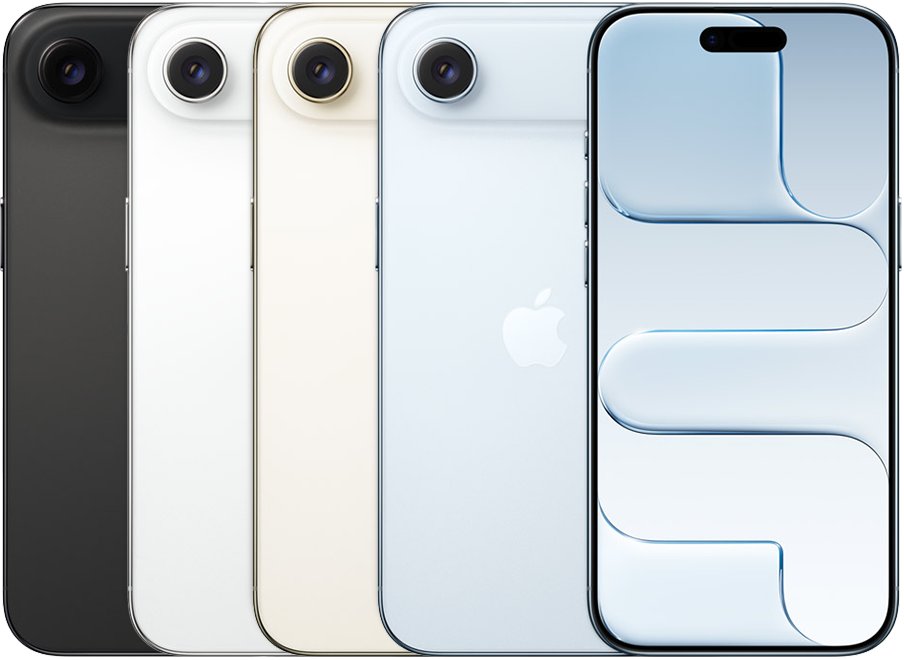
| 2025 | iPhone Air | 6.5 inches | Titanium band, one camera, no SIM tray anywhere |
| 2025 | iPhone 17 | 6.3 inches | Base model starts at 256 GB |
| 2025 | iPhone 17 Pro | 6.3 inches | Aluminum unibody, camera plateau |
| 2025 | iPhone 17 Pro Max | 6.9 inches | First 2 TB option |
| 2026 | iPhone 17e | 6.1 inches | Starts at 256 GB, one rear camera |
| 2026 | iPhone 18 Pro | 6.3 inches | A20 Pro chip, smaller Dynamic Island |
| 2026 | iPhone 18 Pro Max | 6.9 inches | Smaller Dynamic Island, up to 2 TB |
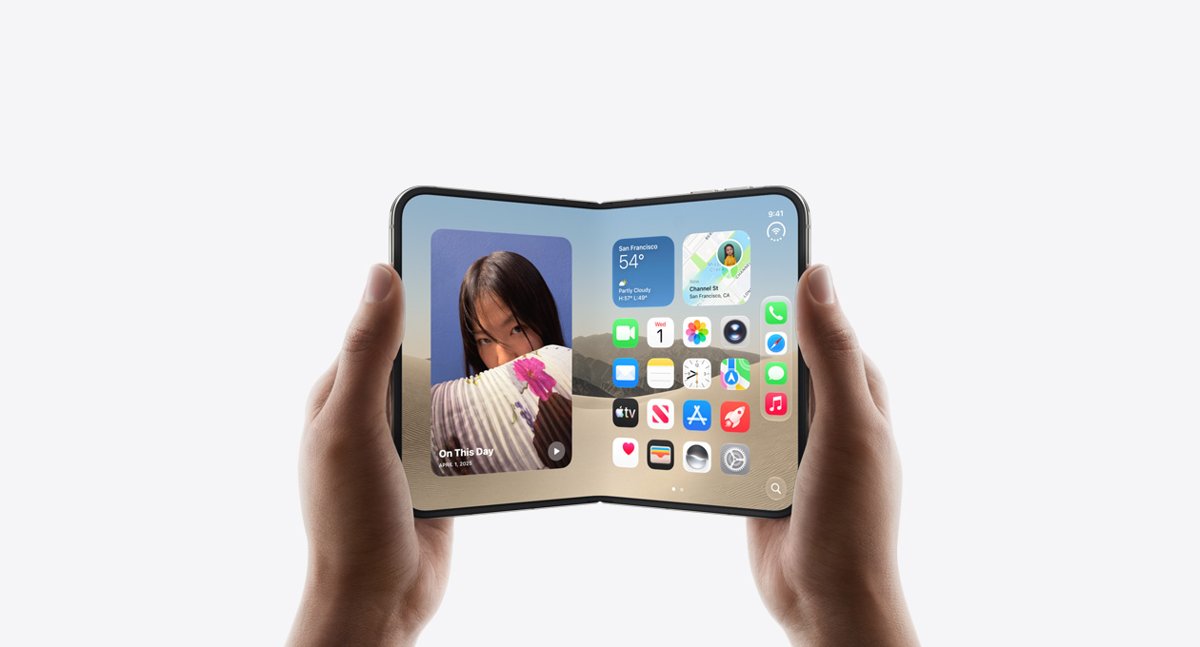
| 2026 | iPhone Duo (on sale October 23) | 7.6-inch folding, 5.4-inch outer | First foldable iPhone, from $1,999 |
How the iPhone lineup changed over time
The lineup grew from one phone a year to four or five. The eras below match the points where Apple changed the size range, the naming or the hardware.
| Period | What changed | Models that mark it |
|---|---|---|
| 2007-2012: one main iPhone a year | A single model each year; storage tiers grew from 4 GB to 64 GB | iPhone, iPhone 3G, iPhone 3GS, iPhone 4, iPhone 4s, iPhone 5 |
| 2013-2016: two models a year, then two screen sizes | A second model arrived in 2013, the larger Plus size in 2014, and a 4-inch SE in 2016 | iPhone 5c and 5s, iPhone 6 and 6 Plus, iPhone SE (1st generation) |
| 2017: Touch ID meets the all-screen design | iPhone 8 kept the Home button while iPhone X dropped it for an all-screen display | iPhone 8, iPhone 8 Plus, iPhone X |
| 2018-2020: XR, Pro branding and four-model lineups | An aluminum XR beside the steel XS, the first Pro models in 2019, and four iPhone 12 models in 2020 | iPhone XR, iPhone 11 Pro, iPhone 12 mini |
| 2021-2024: mini becomes Plus, and USB-C arrives | iPhone 13 mini was the last mini; iPhone 14 Plus replaced it; iPhone 15 switched to USB-C | iPhone 13 mini, iPhone 14 Plus, iPhone 15 |
| 2025-2026: e models, iPhone Air and the first foldable | e models followed the last SE, iPhone Air added a thin model, and iPhone Duo folds | iPhone 16e, iPhone Air, iPhone 17e, iPhone Duo |
Important iPhone chronology and compatibility details
A release year on its own can mislead. These are the cases where the year, the connector or the feature set needs a second look.
| Detail | What Apple states | Why it matters |
|---|---|---|
| Release year is not always the same as every sale date | iPhone 4 is listed as 2010 (GSM) and 2011 (CDMA); iPhone 3G as 2008, and 2009 in China mainland | A model can reach some carriers or countries a year after its debut |
| Announced is not the same as on sale | iPhone Duo takes pre-orders from 5:00 a.m. PT on October 16, 2026 and is available from October 23 | A 2026 list can include a phone you cannot buy yet |
| iPhone 15 is the start of USB-C | Apple lists a USB-C connector for iPhone 15 and every later model, but not for iPhone 14 | Cables and accessories differ either side of 2023 |
| The e models follow the SE line | iPhone 16e (2025) and iPhone 17e (2026) came after iPhone SE (3rd generation) from 2022 | iPhone 17e, from $699, is the lowest-priced model in the current lineup |
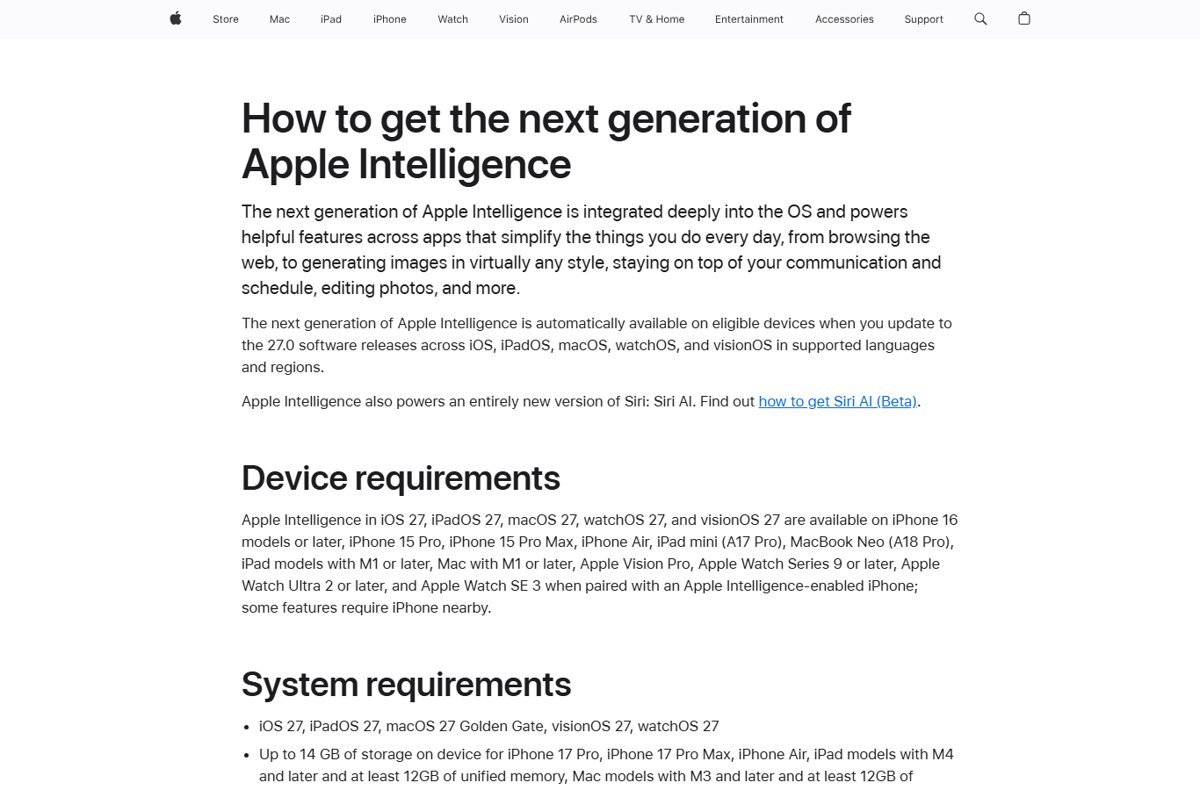
| Apple Intelligence needs a recent model | Supported on iPhone 15 Pro, iPhone 15 Pro Max, iPhone Air and all iPhone 16 models and later | iPhone 15 and iPhone 15 Plus run iOS 27 but not Apple Intelligence |
| Some features skip the e models | Camera Control is on iPhone 16 models and later, excluding iPhone 16e and iPhone 17e | A newer year does not guarantee every feature of that year |
Important details when comparing iPhone generations
Two phones from the same generation can still differ by country. Check these points before you compare a used or imported iPhone.
| What to compare | How it varies | Example from Apple's list |
|---|---|---|
| SIM trays depend on the model and market | From iPhone 14 onward, except iPhone SE (3rd generation), US models have no SIM tray and use eSIM only; most other regions keep a nano-SIM tray | iPhone 14 has no tray in the United States but has one elsewhere; iPhone Air has none anywhere |
| Some regional versions have different features | Apple sells separate model numbers per region, and some carry extra hardware | Japanese iPhone 7 models A1779 and A1785 contain FeliCa for Apple Pay transit |
| Dual physical SIM in some markets | A few models take two nano-SIM cards in certain regions | iPhone XS Max in China mainland, Hong Kong and Macao holds two nano-SIM cards |
| Screen sizes are rounded | Apple measures the display as a rectangle, so the advertised size is slightly larger than the real diagonal | iPhone 16 Pro Max is listed as 6.9 inches and measures 6.86 inches as a rectangle |
| Older SIM sizes | Early models use larger SIM cards than today's nano-SIM | Original iPhone, 3G and 3GS take a mini-SIM; iPhone 4 and 4s take a micro-SIM |
Which older iPhones still receive software updates?
iOS 27 runs on iPhone 11 and later and on iPhone SE (2nd generation) and later. Older models stop at an earlier iOS version but can still get occasional security fixes.
The dates below are the latest releases on Apple's security page for each group.
| iPhone models | Latest iOS line | Most recent update listed by Apple |
|---|---|---|
| iPhone 11 and later, iPhone SE (2nd and 3rd generation), iPhone 16e, iPhone 17e | iOS 27 | iOS 27.0.1, September 28, 2026 |
| iPhone XS, iPhone XS Max, iPhone XR | iOS 18 | iOS 18.7.10, August 17, 2026 |
| iPhone 8, iPhone 8 Plus, iPhone X | iOS 16 | iOS 16.7.16, May 11, 2026 |
| iPhone 6s, iPhone 6s Plus, iPhone 7, iPhone 7 Plus, iPhone SE (1st generation) | iOS 15 | iOS 15.8.8, May 11, 2026 |
| iPhone 5s, iPhone 6, iPhone 6 Plus | iOS 12 | iOS 12.5.8, January 26, 2026 |
| iPhone 5c and earlier | No current updates | Not listed in recent security releases |
To install what your iPhone is offered, open Settings, tap General, then tap Software Update and tap Download and Install if an update appears.
How to find which iPhone model you have
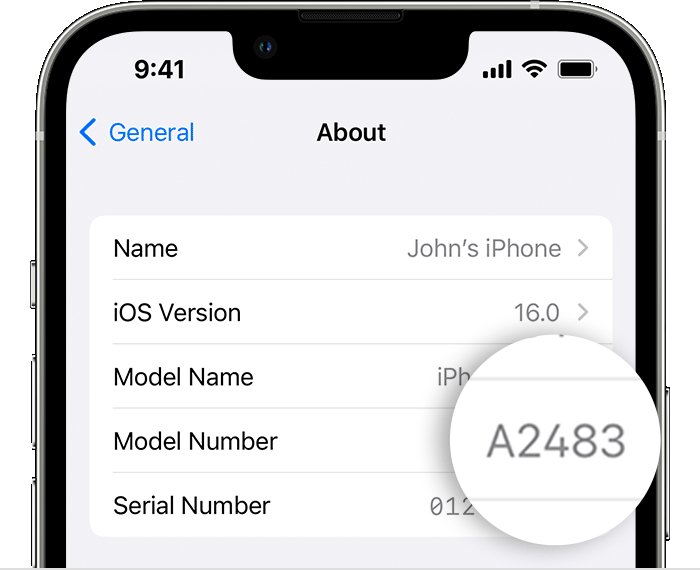
Match your phone to the tables above with its model number. The part number shown first is not the same thing, so tap it once.
- Open the Settings app.
- Tap General, then tap About.
- Look to the right of Model Number to see the part number.
- Tap the part number to switch it to the model number, which starts with A, such as A3256.
- Find that A number on Apple's Identify your iPhone model page to confirm the name and year.
- If the phone will not turn on even after you force restart the iPhone, check the back cover on iPhone 7 or earlier, or the SIM tray slot or charging port on later models.
Sources for iPhone release years and updates
Every model name, year and update date on this page comes from these Apple pages.
- Identify your iPhone model — Year introduced, capacity, colors and model numbers for every iPhone
- Find the model number of your iPhone — Settings path and physical locations of the model number
- Apple security releases — Latest iOS 27, 18, 16, 15 and 12 releases and the models each covers
- iOS 27 compatible devices — Full list of iPhone models that run iOS 27
- Apple Intelligence device requirements — Which iPhone models support Apple Intelligence
- iPhone Duo — Pre-order and availability dates, display sizes and price
iPhone release order FAQ
What was the first iPhone?
The first iPhone is simply called iPhone, introduced in 2007. Apple lists it with 4, 8 or 16 GB of storage, an anodized aluminum back and a mini-SIM tray on top. Its model number is A1203.
How many iPhone models are there?
Apple's identification page lists 54 iPhone models, from the 2007 original to iPhone 18 Pro Max in 2026. iPhone Duo becomes the 55th once it goes on sale on October 23, 2026.
Is there an iPhone 17 Air?
No. Apple named the model iPhone Air, with no number. It was introduced in 2025 alongside iPhone 17, has a 6.5-inch display, a titanium band, one rear camera and no SIM tray in any country.
Is the iPhone 17e a 2025 or 2026 model?
iPhone 17e is a 2026 model. Apple lists its year introduced as 2026, a year after iPhone 17 and iPhone 16e. It has a 6.1-inch display and starts at 256 GB.
Which iPhone was the first to use USB-C?
iPhone 15, from 2023, was the first iPhone with a USB-C connector. iPhone 15 Plus, 15 Pro and 15 Pro Max arrived with it the same year, and every model since uses USB-C.
Does every iPhone 14 have a SIM tray?
No. iPhone 14 models sold in the United States have no SIM tray and work with eSIM only. Models sold in most other countries and regions keep a nano-SIM tray on the left side.
Does iPhone 15 support Apple Intelligence?
Only the Pro models do. Apple Intelligence runs on iPhone 15 Pro and iPhone 15 Pro Max, while iPhone 15 and iPhone 15 Plus do not support it, even on iOS 27.
Can an old iPhone still receive security updates after losing major iOS support?
Yes, for a while. Apple still issues fixes for older iOS lines, such as iOS 15.8.8 for iPhone 7 and iOS 12.5.8 for iPhone 6 in 2026. These updates add security fixes, not new features.
The bottom line on the iPhone release timeline
For a phone that keeps getting full iOS updates, choose iPhone 11 or later, and choose iPhone 15 Pro or any iPhone 16 or later if you want Apple Intelligence. iOS 27 stops at iPhone 11 and iPhone SE (2nd generation), and Apple Intelligence needs iPhone 15 Pro or newer, so the release year decides how long the phone stays current.