To enable IIS on Windows 11, open Control Panel > Programs > Turn Windows features on or off, select Internet Information Services, click OK, and then open IIS Manager by typing inetmgr in the Run box.
Internet Information Services (IIS) is Microsoft's web server, built into Windows as an optional feature that hosts websites and web apps such as ASP.NET, classic ASP and PHP. This guide covers the Windows Features method, the PowerShell and DISM commands, opening IIS Manager, adding features such as ASP and HTTPS, Windows Server installs, and fixes for common problems.
Steps to install IIS on a Windows 11 computer
IIS is already part of Windows 11, so there is nothing to download. You turn it on from the Windows Features dialog while signed in with an administrator account.
- Press Start, type Control Panel and open it.
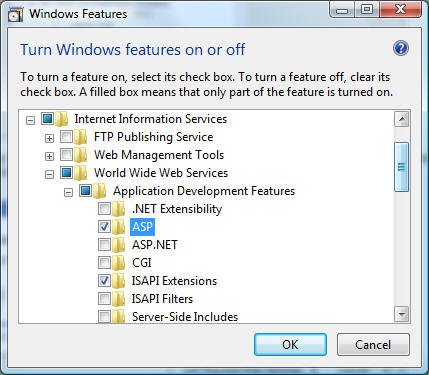
- Select Programs, then Programs and Features, then Turn Windows features on or off on the left side.
- Select the Internet Information Services check box. This picks the default IIS features for a basic web server.
- Expand Internet Information Services > Web Management Tools and make sure IIS Management Console is checked.
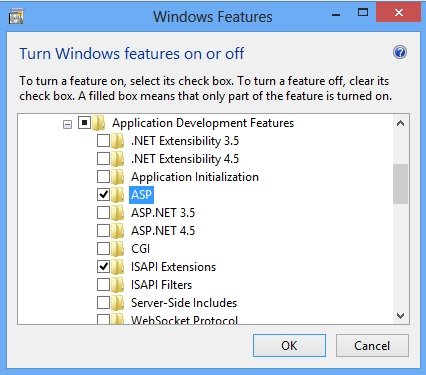
- Expand World Wide Web Services and add any extra features you need, such as Application Development Features > ASP.
- Click OK and wait while Windows applies the changes.
- Restart the PC if Windows asks you to.
Enable IIS with Windows Features, PowerShell or DISM: which to use
| Your situation | Use this | Why |
|---|---|---|
| One Windows 11 or Windows 10 PC, first time | Turn Windows features on or off | Visual tree, picks the default features and their dependencies for you |
| Scripted setup on several PCs | Enable-WindowsOptionalFeature in PowerShell | One command, and -All adds required parent features |
| Command Prompt only, or a batch file | DISM /Online /Enable-Feature | Works from cmd, but every dependency must be listed |
| Windows Server 2022 or Windows Server 2025 | Server Manager or Install-WindowsFeature | IIS is the Web Server (IIS) role on Windows Server, not a Windows Features entry |
IIS requirements on Windows 11
| Requirement | Details |
|---|---|
| Administrator account | Windows Features, DISM and the PowerShell feature cmdlets all need an elevated session |
| IIS Management Console | Needed for IIS Manager; it sits under Web Management Tools and is part of the default selection |
| World Wide Web Services | The actual web server; without it IIS Manager has no site to manage |
| Internet connection (sometimes) | Windows can use Windows Update as the source when feature files are not stored locally |
| Managed work PC | An organization can hide Windows Features with the Hide "Windows Features" policy; ask IT if the dialog is missing |
Install IIS on Windows 11 using PowerShell command
Open PowerShell as administrator and run the command below. It enables the same features that the default Windows Features selection installs.
Enable-WindowsOptionalFeature -Online -All -FeatureName IIS-WebServerRole, IIS-WebServer, IIS-CommonHttpFeatures, IIS-StaticContent, IIS-DefaultDocument, IIS-DirectoryBrowsing, IIS-HttpErrors, IIS-HealthAndDiagnostics, IIS-HttpLogging, IIS-RequestMonitor, IIS-Performance, IIS-HttpCompressionStatic, IIS-Security, IIS-RequestFiltering, IIS-WebServerManagementTools, IIS-ManagementConsole-Online targets the running copy of Windows. -FeatureName takes a comma-separated list of IIS features. -All also enables the parent features each one needs. Add -NoRestart to suppress the restart prompt.
You should see: PowerShell finishes without errors and reports whether a restart is needed. Restart if it says so.
To add one more feature later, run the same cmdlet with only that name, for example Enable-WindowsOptionalFeature -Online -All -FeatureName IIS-ASP for classic ASP.
How to enable IIS through CMD with DISM
DISM does not add missing dependencies on its own, so the command lists the Windows Process Activation Service parts as well. Open Command Prompt as administrator and enter this on one line.
DISM /Online /Enable-Feature /FeatureName:WAS-WindowsActivationService /FeatureName:WAS-ProcessModel /FeatureName:WAS-ConfigurationAPI /FeatureName:IIS-WebServerRole /FeatureName:IIS-WebServer /FeatureName:IIS-CommonHttpFeatures /FeatureName:IIS-StaticContent /FeatureName:IIS-DefaultDocument /FeatureName:IIS-HttpErrors /FeatureName:IIS-Security /FeatureName:IIS-RequestFiltering /FeatureName:IIS-WebServerManagementTools /FeatureName:IIS-ManagementConsole/Online works on the running Windows installation. Each /FeatureName adds one IIS or WAS feature. The order does not matter because DISM treats the whole line as one transaction.
You should see: DISM reports completion without errors. If a dependency is missing, the install can fail without a clear error message, so compare your list with the PowerShell command above.
Run IIS Manager on Windows 11
IIS Manager (inetmgr) is the console for sites, bindings, application pools and every IIS feature. Only an administrator account can use it to connect to the local web server.
- Right-click Start and select Run.
- Type
inetmgrand press Enter. You can also typeinetmgrin the Start search box. - In the Connections pane, expand your computer name, then Sites.
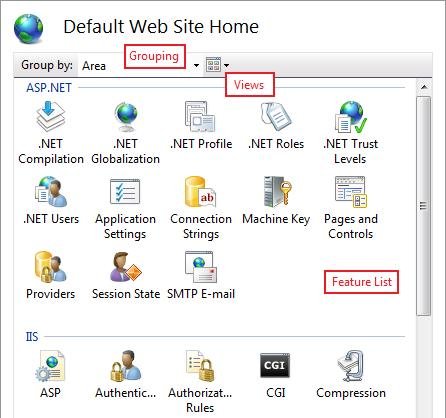
- Select Default Web Site to see its home page of feature icons in the middle pane.
- Use the Actions pane on the right to browse the site, edit Bindings…, or start and stop it.
- Switch between Features View and Content View at the bottom of the middle pane to see settings or files.
How to check IIS is working on Windows 11
- Open any browser on the same PC and go to
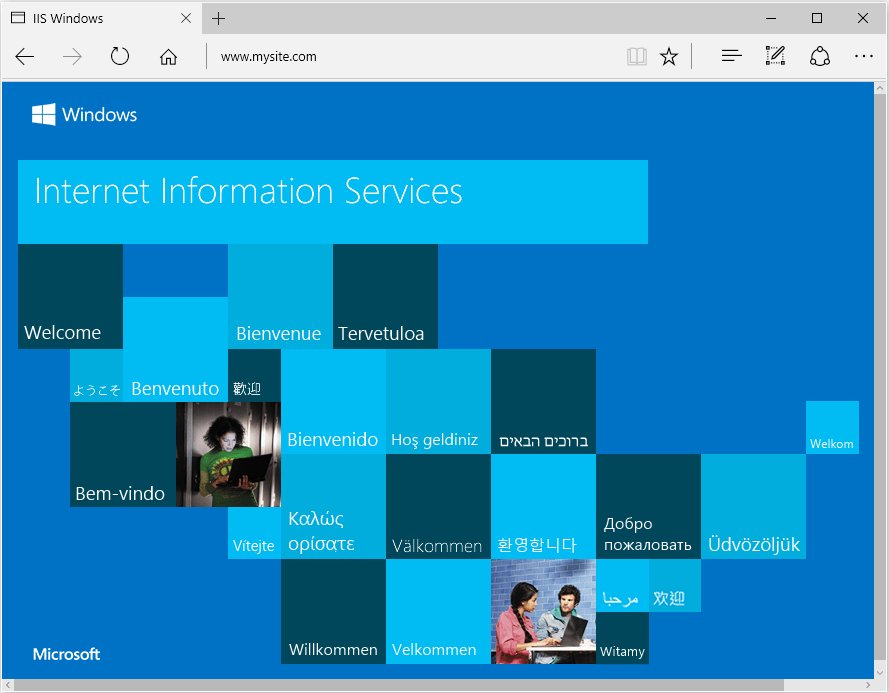
http://localhost. - Confirm the IIS welcome page loads. That page is served by Default Web Site.
- Open IIS Manager and check that Default Web Site is listed under Sites without a stopped icon.
- For a command-line check, run
Get-WindowsOptionalFeature -Online -FeatureName IIS-WebServerRolein an admin PowerShell window and confirm State shows Enabled.
What is Internet Information Services (IIS)?
Internet Information Services is the web server that ships with Windows and Windows Server. On Windows 11 it is off by default and installs as a set of separate features, so you add only the parts your site needs.
| Detail | What it means |
|---|---|
| Version line | IIS 10.0 shipped with Windows 10 and Windows Server 2016 and added HTTP/2 support |
| Default install | Static content, default document, directory browsing, HTTP errors, HTTP logging, request monitor, static compression, request filtering and IIS Management Console |
| Authentication | Anonymous authentication is always installed; Basic and Windows Authentication are optional |
| Main config file | applicationHost.config in %windir%\System32\inetsrv\config |
| Process model | Sites run in application pools managed by the Windows Process Activation Service (WAS) |
| Remote management | Optional Management Service listens on port 8172 so another PC's IIS Manager can connect |
How to enable IIS features like ASP, ASP.NET and WebSockets
Return to Turn Windows features on or off at any time and tick extra features under Internet Information Services. Windows adds the features each one depends on.
| You need | Tick this feature | Where it sits |
|---|---|---|
| Classic ASP pages (.asp) | ASP | World Wide Web Services > Application Development Features |
| ASP.NET Framework sites | The ASP.NET entries | World Wide Web Services > Application Development Features |
| PHP through FastCGI | CGI | World Wide Web Services > Application Development Features |
| WebSockets | WebSocket Protocol | World Wide Web Services > Application Development Features |
| Windows sign-in for intranet sites | Windows Authentication | World Wide Web Services > Security |
| Manage this PC's IIS from another computer | Management Service | Web Management Tools |
For PHP, the CGI feature provides the FastCGI handler, and you then add the FastCGI module to IIS and map it to PHP. ASP.NET Core apps also need Microsoft's .NET Hosting Bundle; if you installed it before IIS, run its installer again to repair it.
How to enable HTTPS on IIS in Windows 11
A self-signed certificate is fine for local testing. Browsers show a warning for it because your PC, not a trusted certificate authority, issued it.
- Open IIS Manager and select your computer name in Connections.
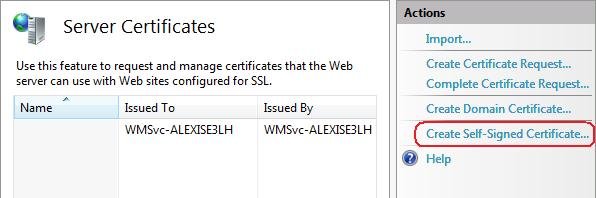
- Double-click Server Certificates in the middle pane.
- Select Create Self-Signed Certificate… in Actions, type a friendly name and click OK.
- Select Default Web Site and click Bindings… in Actions.
- Click Add…, choose https in Type, pick your certificate under SSL Certificate, and click OK.
- Select the new https link under Browse Web Site in Actions to test it.
How to enable IIS on Windows Server 2022 and 2025
On Windows Server, IIS is the Web Server (IIS) role. Install it from Server Manager, or run Install-WindowsFeature -Name Web-Server -IncludeManagementTools in an admin PowerShell window. Without -IncludeManagementTools, the cmdlet skips IIS Manager.
- Open Server Manager, select Manage, then Add Roles and Features.
- Click Next, choose Role-based or feature-based installation, and select the server.
- On Server Roles, tick Web Server (IIS) and click Add Features to include the IIS Management Console.
- Click Next through Features, then pick any extra Role Services you need.
- On Confirmation, click Install, then Close when the Results page shows success.
- Browse to
http://localhoston the server to confirm the default page loads.
Microsoft notes that a restart is not required after installing the Web Server (IIS) role.
How to disable IIS on Windows 11
- Open Control Panel > Programs > Programs and Features > Turn Windows features on or off.
- Clear the Internet Information Services check box so the whole branch is empty.
- Click OK and restart when Windows asks.
- To script it instead, use the Disable-WindowsOptionalFeature cmdlet with
-Onlineand the IIS feature names you enabled.
Fix IIS Manager, ASP and HTTPS problems on Windows 11
inetmgr is not found or IIS Manager is missing from Start
IIS Management Console was not selected, so the web server may run but the console is not installed.
- Open Turn Windows features on or off.
- Expand Internet Information Services > Web Management Tools.
- Tick IIS Management Console and click OK.
- Run
inetmgragain from the Run box.
ASP pages return HTTP 404 or show source code in the browser
Classic ASP is not part of the default IIS install, so IIS has no handler for .asp files.
- Open Turn Windows features on or off.
- Expand Internet Information Services > World Wide Web Services > Application Development Features.
- Tick ASP. ISAPI Extensions is selected with it automatically.
- Click OK, then reload the page.
HTTPS on IIS does not load after adding a binding
The https binding or its certificate entry in HTTP.sys is missing or wrong.
- In IIS Manager, select the site, click Bindings…, and confirm an https binding exists with a certificate selected.
- Open an admin Command Prompt and run
netsh http show sslcert. - Check that the IP and port of your binding appear with a certificate hash and store name.
- If they do not, edit the binding, reselect the certificate, and click OK.
Enable IIS on Windows 11 FAQ
What is Internet Information Services?
Internet Information Services (IIS) is Microsoft's web server for Windows and Windows Server. It hosts static websites and web apps built with ASP.NET, classic ASP, PHP and other frameworks. On Windows 11 it is an optional feature you turn on from Windows Features.
How do I enable IIS in Windows 10?
Enable IIS in Windows 10 the same way as Windows 11. Open Control Panel > Programs > Turn Windows features on or off, tick Internet Information Services, click OK, and restart if asked. The PowerShell and DISM commands are also identical.
How do I enable IIS Manager?
Enable IIS Manager by ticking IIS Management Console under Internet Information Services > Web Management Tools in Turn Windows features on or off. Then open it by typing inetmgr in the Run box and pressing Enter.
How do I enable IIS through CMD?
Open Command Prompt as administrator and run DISM /Online /Enable-Feature with a /FeatureName switch for each IIS feature, starting with IIS-WebServerRole and IIS-WebServer. DISM needs every dependency listed, including the WAS features, or the install can fail.
How do I enable IIS on Windows Server 2022 or 2025?
On Windows Server 2022 or 2025, add the Web Server (IIS) role in Server Manager with Add Roles and Features. In PowerShell, run Install-WindowsFeature -Name Web-Server -IncludeManagementTools so IIS Manager is installed too. No restart is required afterwards.
How do I enable ASP in IIS?
Open Turn Windows features on or off, expand Internet Information Services > World Wide Web Services > Application Development Features, and tick ASP. Windows also adds ISAPI Extensions. Without ASP installed, .asp pages return a 404 error or show their source code.
How do I enable more IIS features after installing?
Reopen Turn Windows features on or off and tick the extra features under Internet Information Services, such as CGI, WebSocket Protocol or Windows Authentication. In PowerShell, run Enable-WindowsOptionalFeature -Online -All -FeatureName with the feature name, such as IIS-ASP.
How do I use IIS after enabling it?
Put your site files in a folder, open IIS Manager with inetmgr, right-click Sites and choose Add Website to point a new site at that folder and port. For a quick test, the Default Web Site already answers at http://localhost.
Does enabling IIS on Windows 11 need a restart?
Sometimes. Windows asks for a restart when the features it adds require one, and the PowerShell cmdlet reports whether one is needed. On Windows Server, Microsoft states that installing the Web Server (IIS) role does not need a restart.