Press Windows key + R, type control printers and press Enter to open Devices and Printers in Windows 11 and Windows 10.
This guide covers the Run box, Search, Control Panel, Settings, Command Prompt and a desktop shortcut, plus what to do when Windows 11 sends you to Settings instead of the classic window.
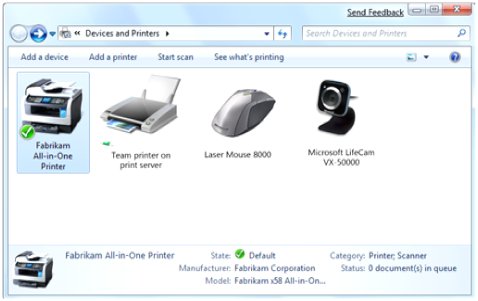
Open Devices and Printers Using the Run Command
The Run box is the quickest route because it skips menus entirely. Microsoft documents printers as the Control Panel command for the Printers folder, and the old Printers item maps to Devices and Printers since Windows 7.
- Press Windows key + R to open the Run box.
- Type
control printersin the Open box. - Press Enter or select OK.
- If that command lands anywhere other than the classic window, open Run again and type
control /name Microsoft.DevicesAndPrinters, which is the item's canonical name.
Use the Run box when the keyboard works and you want the classic window in one step. It also works when the Control Panel layout has changed after an update.
Which way to open Devices and Printers should you use?
| Your situation | Use this | Why |
|---|---|---|
| You want the classic window fast | Windows key + R > control printers |
One command, no menus |
| You prefer the mouse | Control Panel > Hardware and Sound > Devices and Printers | Click-through path with no typing beyond the search box |
| Windows 11 opens Bluetooth & devices instead | Printers & scanners > your printer > More devices and printer settings | Settings links back to the classic view from here |
| You are already in a Command Prompt or PowerShell window | control printers or control /name Microsoft.DevicesAndPrinters |
Same command as Run, no extra window |
| You open it every day | A desktop shortcut to control printers |
Double-click instead of typing |
| You only need to add or remove a printer | ms-settings:printers |
Opens Printers & scanners in Settings directly |
Open Devices and Printers from Windows Search
Windows Search indexes Settings pages and Control Panel items, so a short word gets you close. On Windows 11 the top result is usually the Settings page, which then links to the classic window.
- Select Start or the search box on the taskbar.
- Type printers.
- If Devices and Printers appears as a Control Panel result, select it and stop here.
- Otherwise select Printers & scanners in the results.
- Select your printer in the list.
- Select More devices and printer settings to open the classic Devices and Printers window.
Open Devices and Printers from Control Panel
Control Panel still ships with Windows 11 and Windows 10 for settings that have not moved to the Settings app. Devices and Printers sits in the Hardware and Sound category.
- Select Start, type Control Panel and press Enter.
- With View by set to Category, select Hardware and Sound.
- Select Devices and Printers.
- If you use icon view instead, set View by to Large icons and select Devices and Printers from the alphabetical list.
You can also type control in the Run box to reach Control Panel first. For a full list of Control Panel routes, the same View by control applies to every item.
Open Devices and Printers Through Windows Settings
Settings is where Microsoft now puts printer and Bluetooth management. It is also the way back to the classic window when Control Panel forwards you to Settings on Windows 11.
| Windows version | Settings path | How to reach the classic window from there |
|---|---|---|
| Windows 11 | Start > Settings > Bluetooth & devices > Printers & scanners | Select your printer, then More devices and printer settings |
| Windows 10 | Start > Settings > Devices > Printers & scanners | Use Run > control printers for the classic window |
| Either version, by URI | Windows key + R > ms-settings:printers |
Opens Printers & scanners directly |
| Bluetooth devices only | Windows 11: Bluetooth & devices; Windows 10: Devices > Bluetooth & other devices (ms-settings:bluetooth) |
Pair, remove and rename Bluetooth devices here |
Printers & scanners lists every installed printer and lets you add one. To add a Wi-Fi or Ethernet printer that is not listed, find it on your network first.
Open Devices and Printers from Command Prompt or PowerShell
The Run box commands also work inside a terminal window. Microsoft's Control Panel reference lists both the legacy keyword and the canonical name.
control printerscontrol starts Control Panel (control.exe), and the printers keyword opens the Printers folder, which maps to Devices and Printers on Windows 7 and later. The equivalent modern form is control /name Microsoft.DevicesAndPrinters, which uses the item's non-localized canonical name and works the same on any display language.
You should see: The Devices and Printers window opens and lists your connected devices and installed printers, and the prompt returns immediately.
Both commands run as your normal user. Devices and Printers does not need an elevated terminal to open.
Create a Desktop Shortcut for Devices and Printers
A shortcut saves typing if you manage printers often. It uses the same command as the Run box.
- Right-click an empty area of the desktop.
- Select New > Shortcut.
- Enter
control printersas the location of the item. - Continue, then type a name such as Devices and Printers.
- Finish the prompts and double-click the new shortcut to test it.
If you prefer the canonical form, enter control /name Microsoft.DevicesAndPrinters as the location instead. Both open the same window.
What Devices and Printers shows compared with Printers & scanners
| Item | Devices and Printers (Control Panel) | Printers & scanners (Settings) |
|---|---|---|
| Local USB printers | Yes | Yes |
| Network printers (TCP/IP) and shared Point and Print connections | Yes | Yes |
| Virtual printers such as Microsoft XPS Document Writer | Yes | Yes |
| Scanners with a WIA driver | Yes, when connected by Plug and Play or PnP-X | Yes |
| Other connected devices such as mice, keyboards and Bluetooth devices | Yes, in the same window | No; these live under Bluetooth & devices (Windows 11) or Devices (Windows 10) |
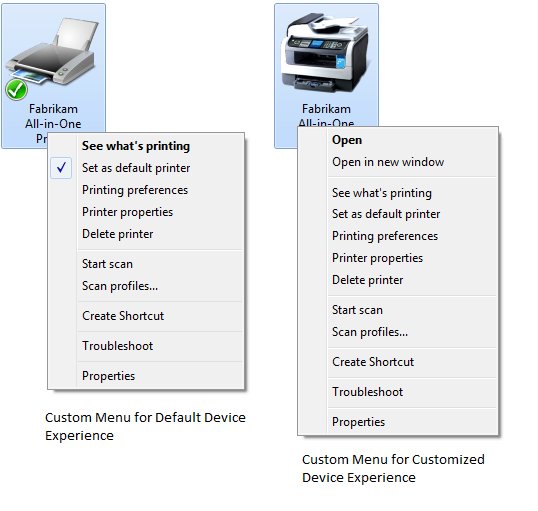
| Right-click actions | See what's printing, printer properties, Troubleshoot | Open queue, printer properties, More devices and printer settings |
Devices and Printers and Printers & scanners are not the same page. They share the same printer list, but only the classic window shows every connected device in one view.
How to check you opened the classic Devices and Printers window
- Look at the address bar at the top of the window: it should read Devices and Printers.
- Check that the window lists your connected devices together with your installed printers, not printers alone.
- Right-click a printer and confirm See what's printing appears in the menu.
- If you see a Settings page with Bluetooth & devices in the left pane instead, you are in Settings; select Printers & scanners > your printer > More devices and printer settings.
What to Do If Devices and Printers Does Not Open
Windows 11 opens Bluetooth & devices instead of the classic window
Microsoft is moving device management into Settings, so the Control Panel link can forward to Settings.
- Select Printers & scanners on the Bluetooth & devices page.
- Select any installed printer.
- Select More devices and printer settings.
- If no printer is installed yet, try Windows key + R >
control /name Microsoft.DevicesAndPrinters.
The window stays blank or keeps loading
Windows Explorer, which draws the folder, has stopped responding.
- Save your work, then press Ctrl + Shift + Esc to open Task Manager.
- On the Processes tab, right-click Windows Explorer and select End task.
- Select File > Run new task.
- Type
explorer.exeand press Enter. - Open Devices and Printers again with Windows key + R >
control printers.
Bluetooth devices are missing or pairing fails
The Bluetooth Support Service (bthserv) or Device Association Service is not running; these handle discovery and pairing.
- Press Windows key + R, type
services.mscand press Enter. - Find Bluetooth Support Service; if its status is not Running, right-click it and select Start.
- Find Device Association Service and start it the same way.
- Close Services and reopen Devices and Printers.
- If devices are still missing, run the Bluetooth troubleshooter in the Get Help app.
Printers are missing from the list or will not print
The Print Spooler service has stopped, or the printer driver or connection has a problem.
- Restart the Print Spooler next.
- Run the printer troubleshooter in the Get Help app.
- In Devices and Printers, right-click the printer and select Troubleshoot, then follow the wizard.
- Turn the printer off, unplug it for 30 seconds, and plug it back in.
Devices and Printers still crashes or will not open at all
Damaged Windows system files can break Control Panel items.
- Select Start, type cmd, right-click Command Prompt and select Run as administrator.
- Run
DISM.exe /Online /Cleanup-image /Restorehealthand wait for it to finish. - Run
sfc /scannow. - Restart the PC when the scan reports that corrupt files were repaired, then try
control printersagain.
Frequently Asked Questions
How do I open Devices and Printers in Windows 11?
Press Windows key + R, type control printers and press Enter. If Windows 11 shows Settings instead, go to Bluetooth & devices > Printers & scanners, select a printer and choose More devices and printer settings to reach the classic window.
How do I open Devices and Printers in Windows 10?
In Windows 10, open Control Panel, select Hardware and Sound, then Devices and Printers. The faster route is Windows key + R, then control printers. Settings > Devices > Printers & scanners manages the same printers in the newer interface.
How do I open Devices and Printers from Run?
Press Windows key + R, type control printers and press Enter. You can also type control /name Microsoft.DevicesAndPrinters, which is the item's canonical name. Both commands open the classic Devices and Printers window in Windows 11 and Windows 10.
How do I open Devices and Printers from CMD?
Type control printers at the Command Prompt and press Enter. The same command works in PowerShell and Windows Terminal. The alternative control /name Microsoft.DevicesAndPrinters opens the same window and does not depend on the Windows display language.
How do I open Devices and Printers as admin?
Devices and Printers has no separate Run as administrator mode because it opens inside Windows Explorer. Sign in with an administrator account, or enter administrator credentials when Windows asks; installing some printers needs that permission.
Why does Windows 11 open Bluetooth & devices instead of the classic Devices and Printers window?
Microsoft is moving device and printer management from Control Panel into Settings, so Windows 11 can forward the Control Panel link to Bluetooth & devices. Select Printers & scanners, pick a printer, then More devices and printer settings to reach the classic view.
Is Devices and Printers the same as Printers & scanners in Settings?
No. Printers & scanners in Settings lists printers and scanners only. Devices and Printers in Control Panel shows the same printers plus other connected devices, and it keeps right-click actions such as See what's printing and Troubleshoot.
Can I create a desktop shortcut that opens Devices and Printers directly?
Yes. Right-click the desktop, select New > Shortcut, enter control printers as the location, name it Devices and Printers and finish the prompts. Double-clicking the shortcut then opens the classic window in one step.
How do I open my printer's settings?
Open Settings > Bluetooth & devices > Printers & scanners on Windows 11, or Settings > Devices > Printers & scanners on Windows 10, and select the printer. In Devices and Printers, right-click the printer to open its properties or its print queue.
Bottom Line
Use Windows key + R and control printers as your default way to open Devices and Printers, and use Printers & scanners > More devices and printer settings when Windows 11 forwards you to Settings. The Run command reaches the classic window in one step on both Windows 11 and Windows 10, while the Settings link is the route Microsoft keeps inside the newer interface.

How to Find the Printer on Your Network in Windows 11 - Techdows
[…] older Devices and Printers view still exists in Windows 11. It shows every installed printer as an icon and gives right-click […]