To reset network settings in Windows 11, open Settings > Network & internet > Advanced network settings > Network reset and select Reset now; in Windows 10, the same button is under Network & Internet > Status > Network reset.
This guide covers both versions, the Command Prompt alternative, how to save your Wi-Fi profiles first, and what to fix afterwards.
How to Reset Network Settings in Windows 11
Save your work first, because Windows restarts the PC to finish the reset.
- Select Start, type settings, and open Settings.
- Select Network & internet.
- Select Advanced network settings.
- Scroll down and select Network reset.
- Select Reset now, then Yes to confirm.
- Wait for the PC to restart, then reconnect to your Wi-Fi network.
How to Reset Network Settings in Windows 10
- Select Start > Settings.
- Select Network & Internet.
- On the Status page, scroll down and select Network reset.
- Select Reset now, then Yes to confirm.
- Let the PC restart, then sign in and reconnect to your network.
What Resetting Network Settings Does in Windows
Microsoft describes network reset as removing every installed network adapter and its settings. After the restart, Windows reinstalls the adapters and sets their settings to the defaults.
| Item | After a network reset |
|---|---|
| Wi-Fi and Ethernet adapters | Removed and reinstalled with default settings |
| Custom IP, DNS and adapter settings | Back to defaults, such as automatic IP and DNS |
| Saved Wi-Fi networks | Expect to reconnect and type Wi-Fi passwords again |
| VPN clients and Hyper-V virtual switches | Might need to be reinstalled and set up again |
| Network profile | Known networks might switch to Public, so the PC is not discoverable |
| Your files, apps and other Windows settings | Not touched |
Network reset is not the same as resetting the whole PC. To start Windows over, see how to reset all settings in Windows 11 instead.
When You Should Reset Network Settings
Microsoft lists network reset as the last step to try, after the simpler fixes. Match your situation below.
| Your situation | Do this | Why |
|---|---|---|
| Wi-Fi or Ethernet stopped working after upgrading from Windows 10 to 11 | Network reset | Microsoft names this case as one network reset can fix |
| Internet works but shared network drives do not | Network reset | Also named by Microsoft as a case it can fix |
| Pages fail to load but the adapter is connected | Run the CMD commands first | Resets Winsock, TCP/IP and DNS cache without removing adapters |
| Only one Wi-Fi network fails | Forget and reconnect that network | Keeps every other setting |
| No connection at all on a new Windows 11 PC | Run the Network and Internet troubleshooter in Get Help | Automatic diagnostics before any reset |
| Every device in the house is offline | Restart the modem and router | The problem is not on the PC |
Save Current Windows Network Settings
A reset erases custom settings, so record them first. Exported Wi-Fi profiles can be added back with one command.
- Create a folder for the backup, for example
C:\WiFiBackup. - Select Start, type command prompt, and select Run as administrator > Yes.
- Run
netsh wlan show profilesto list your saved Wi-Fi networks. - Run
netsh wlan export profile folder=C:\WiFiBackup key=clearto save every profile as an XML file with its password. - Run
ipconfig /alland note any static IP address, gateway and DNS servers you set yourself. - Write down VPN server details and any proxy settings you use.
The key=clear option writes Wi-Fi passwords in plain text, so store the folder safely and delete it once you have restored your networks.
Performing Network Reset in Windows Using CMD
These commands reset the network stack without removing your adapters. Microsoft gives them as a separate fix to try before a full network reset; run them in this order in an administrator Command Prompt.
netsh winsock reset
netsh int ip reset
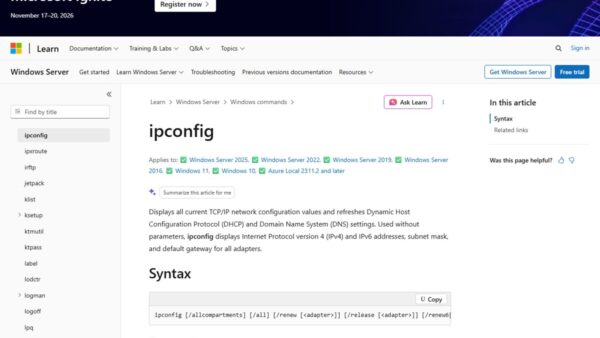
ipconfig /release
ipconfig /renew
ipconfig /flushdns
netsh winsock reset resets the Winsock catalog, netsh int ip reset resets TCP/IP settings, ipconfig /release and ipconfig /renew drop and request the IP address, and ipconfig /flushdns clears the DNS cache.
You should see: Each command completes without an error, ipconfig /renew shows an IPv4 address for your adapter, and the last command reports that the DNS Resolver Cache was flushed. Restart the PC if a command asks you to.
How to check the network reset worked
- Open Settings > Network & internet and check that the status at the top shows your network as connected.
- Open Command Prompt and run
ipconfig; note the Default Gateway address of your adapter. - Run
pingfollowed by that gateway address, for exampleping 192.168.1.1, and check for four replies. - Open a website in your browser to confirm internet access.
What to Do After the Network Reset
Restore only what you need. Leaving settings at their defaults is often the fix itself.
- Select the network icon in the taskbar, pick your Wi-Fi network, select Connect, and type its password.
- To restore saved Wi-Fi profiles instead, run
netsh wlan add profile filename="C:\WiFiBackup\<file>.xml"for each file in an administrator Command Prompt. - If you use a home network to share files or printers, open the connection's properties under Settings > Network & internet and set the profile back to Private.
- Reinstall or repair your VPN client, and recreate Hyper-V virtual switches if you use them.
- Re-enter any static IP or DNS settings you recorded, only if your network needs them.
- Delete the Wi-Fi backup folder once everything works.
For the adapter properties page, see how to open network adapter settings in Windows 11.
Fixes to Try If the Network Reset Does Not Work
Wi-Fi adapter missing or disabled after the reset
The adapter or its driver did not reinstall correctly.
- Open Device Manager and expand Network adapters.
- Right-click the Wi-Fi adapter and select Enable device if it is disabled.
- If it still fails, right-click it, select Uninstall device, check Attempt to remove the driver for this device, select Uninstall, and restart.
- If Windows does not reinstall the driver, install the network driver from your PC maker's site, downloaded on another PC if needed.
Connected, but no internet
The problem is the router, modem or ISP, not Windows.
- Run
ipconfigandpingyour default gateway. - If the gateway replies, restart the modem and router, then contact your ISP if the problem continues.
- If the gateway does not reply, connect the PC to the modem with an Ethernet cable to test the router.
Wi-Fi keeps dropping after the reset
Windows turns off the adapter to save power, or the WLAN service is stuck.
- In Device Manager, open the Wi-Fi adapter's Properties > Power Management tab.
- Clear Allow the computer to turn off this device to save power.
- Press Win + R, type
services.msc, find WLAN AutoConfig, right-click it and select Restart.
Still no connection on Windows 11
A setting outside the network stack, such as Airplane mode or a pending update, is blocking it.
- Check Settings > Network & internet > Airplane mode is off.
- Run the Network and Internet troubleshooter in the Get Help app.
- Install updates under Settings > Windows Update > Check for updates, then restart.
Frequently Asked Questions
What does a network settings reset do in Windows?
It removes every network adapter and its settings, then reinstalls the adapters with default settings after a restart. You reconnect to Wi-Fi, and you might need to reinstall VPN software and Hyper-V virtual switches. Your files and apps are not affected.
Why reset network settings?
A reset clears broken adapter settings that simple fixes miss. Microsoft recommends it as a last step, especially for connection problems after upgrading from Windows 10 to Windows 11 or when the internet works but shared network drives do not.
How do I reset network settings in Windows 11 with CMD?
Open Command Prompt as administrator and run netsh winsock reset, netsh int ip reset, ipconfig /release, ipconfig /renew and ipconfig /flushdns in that order. This resets the network stack but does not remove adapters the way Settings network reset does.
How do I reset network settings in Windows 10 with CMD?
The commands are the same as on Windows 11. In an administrator Command Prompt, run netsh winsock reset, netsh int ip reset, ipconfig /release, ipconfig /renew and ipconfig /flushdns, then check your connection and restart if prompted.
Will resetting network settings delete my Wi-Fi passwords?
Expect to re-enter them, because the reset returns adapters and their settings to defaults. Back up saved networks first with netsh wlan export profile key=clear in an administrator Command Prompt, then restore them with netsh wlan add profile.
How long does a Windows network reset take?
The reset itself is quick; most of the time is the restart. After you select Reset now and Yes, Windows restarts the PC, reinstalls the network adapters during startup, and you can reconnect once you sign in.
Is it safe to reset network settings on a PC?
Yes. It does not delete files, apps or accounts. The only side effects are lost custom network settings, saved Wi-Fi networks to reconnect, and VPN or virtual switch software that might need setting up again.
How do I reset all network settings in Windows 11?
Use Settings > Network & internet > Advanced network settings > Network reset > Reset now. That single button covers every adapter at once. Run the netsh and ipconfig commands as well if web pages still fail to load after the restart.
Bottom Line
Export your Wi-Fi profiles, try the five CMD commands, and use Network reset in Settings only if the connection is still broken. The commands fix most stack problems without removing adapters, while Network reset is the thorough last step that also wipes VPN and virtual switch setups.