YMMV stands for "your mileage may vary" and means your experience or results could be different from the writer's.
This guide covers where the phrase came from, how to use it in texts, reviews and work chat, when to leave it out, and how it compares with IMO, IMHO and FWIW.
What does YMMV mean?
YMMV is a short disclaimer. The writer shares something that worked for them and warns that it will not necessarily work the same way for you.
| Letter | Word | What it adds to the message |
|---|---|---|
| Y | Your | Points at the reader, not the writer |
| M | Mileage | Stands for results or experience, not literal miles |
| M | May | Signals a possibility, not a promise |
| V | Vary | Your outcome could be better, worse or simply different |
Read it as "this is what happened to me, and your case could turn out differently." In text slang the meaning is the same; only the setting changes.
Quick guide: should you use YMMV?
Match your message to a row. If the answer is no, a plain sentence does the job better.
| Your message | Use YMMV? | Why |
|---|---|---|
| A personal recommendation for a product, app or setting | Yes | Your result depends on your own hardware, habits or taste |
| A tip that worked once on your own device | Yes | Other setups can behave differently |
| A deal or promo code that depends on region or account | Yes | Eligibility differs between buyers |
| A verifiable fact, such as a price on a receipt or a law | No | Facts do not vary by reader, so the disclaimer misleads |
| Advice about health, money or safety | No | Name the real risk and point to a qualified source instead |
| A message to someone who does not know internet slang | No | Write "results may differ" in full |
Where did "your mileage may vary" come from?
The phrase started as fine print about cars before it became internet slang.
| Stage | Where it appeared | What it meant there |
|---|---|---|
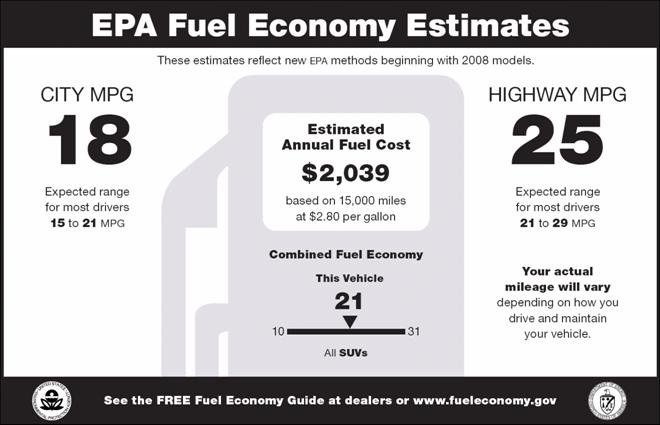
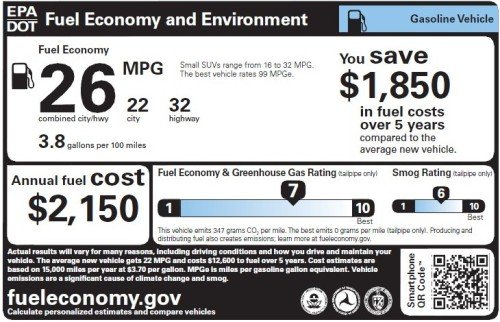
| Original use | US automobile mileage estimates published by the Environmental Protection Agency (EPA) | The fuel economy figure is an estimate, and the miles per gallon you get depend on how and where you drive |
| Idiom | Everyday speech and writing | Your results may differ from the ones being described |
| Online shorthand | Forums, mailing lists, chat and comment threads | Shortened to YMMV: this is my experience or opinion, and yours could be different |
| Community jargon | Groups such as the Dead Runners Society, an online running community | You may react differently to the shoe, treatment or training plan under discussion |
The car meaning explains the word "mileage." Nobody using YMMV today is talking about distance.
How to use YMMV
YMMV works best as a short tag on a statement that is honestly personal. Put the useful information first, then add the tag.
- Write the recommendation or result first, with the detail that made it work for you, such as your device model, budget or region.
- Add YMMV at the end of a personal recommendation, after a comma or a dash: "This keyboard fixed my wrist pain, YMMV."
- Put YMMV before advice that depends on context: "YMMV, but restarting the router fixed the drops for me."
- In reviews, place it next to the subjective part only, such as comfort, sound or taste, and keep measured facts plain.
- In deal and shopping posts, use it when the price, stock or coupon depends on the buyer's location or account.
- In tech troubleshooting, use it when a fix worked on one setup and other versions, carriers or hardware could behave differently.
- Spell out "your mileage may vary" the first time if the reader is new to online slang.
Deal posts about refurbished devices often carry YMMV, because grades and warranties change from seller to seller.
What YMMV looks like in real conversations
The same four letters fit text messages, forum replies, product reviews and work chat. The setting changes the tone, not the meaning.
| Setting | Example message | What the writer is signalling |
|---|---|---|
| Text message | "That ramen place was great, YMMV if you hate spicy food." | A casual opinion with a heads-up |
| Reddit or forum reply | "Clearing the app cache fixed it for me. YMMV on older phones." | A fix that worked once and is not guaranteed |
| Product review | "Battery lasts two days with light use. YMMV with heavy gaming." | Results depend on how you use the product |
| Workplace chat | "Blocking 9-11 for focus time helps me a lot, YMMV." | A suggestion, not a team rule |
| Business email | "The vendor's onboarding took a week for this team; YMMV depending on your integrations." | An estimate that depends on the other team's setup |
A technical example: SOS mode on an iPhone depends on carrier coverage, so a forum reply about it often ends with YMMV.
When you should use YMMV
Each of these situations has a real reason why the reader's result could differ.
| Situation | Why YMMV fits | Example |
|---|---|---|
| Subjective opinions | Taste in food, music, films or design differs from person to person | "Best album of the year for me, YMMV." |
| Personal results | Fitness, diet or productivity routines depend on the individual | "Waking at 6 made me more productive, YMMV." |
| Regional or account-based differences | Prices, features and offers can differ by country, store or account | "The discount showed up on my account, YMMV." |
| Software rollouts and A/B tests | Companies often release features to some users before others | "The new layout appeared for me today, YMMV." |
| Hardware and setup differences | The same fix can behave differently on other models or versions | "This driver update fixed the flicker on my laptop, YMMV." |
When not to use YMMV
YMMV softens a claim. In these cases softening the claim does the reader harm.
| Do not use it | Why | Write this instead |
|---|---|---|
| For facts that are verifiable | A date, a price on a receipt or a product specification does not vary by reader | State the fact and the source |
| To hide bad advice | A risky tip stays risky with a disclaimer attached | Name the risk plainly, or leave the tip out |
| In every message | Overusing it makes every statement sound unsure | Save it for the claims that genuinely depend on the reader |
| Where your audience will not understand it | Older relatives, customers and non-native speakers may not know the acronym | "Results may differ for you" |
| On health, legal or financial questions | The stakes are too high for a shrug | Point the reader to a doctor, lawyer or qualified adviser |
YMMV vs. similar abbreviations and phrases
These are often mixed up because each one softens a statement. They soften different things.
| Term | Stands for | Focus | Use it when |
|---|---|---|---|
| YMMV | Your mileage may vary | The reader's outcome | Your result might not repeat for them |
| "Your results may vary" | Written out in full | The reader's outcome | The setting is formal or the reader does not know slang |
| IMO | In my opinion | The writer's view | You are stating a personal judgement |
| IMHO | In my humble (or honest) opinion | The writer's view, with extra modesty or bluntness | You want to sound less forceful, or more candid |
| FWIW | For what it's worth | The value of the information | You are offering something the reader is free to ignore |
| "It depends" | Plain English | The answer itself | You can name what it depends on, and you then should |
IMO says "this is my view." YMMV says "your result could differ." A message can carry both: "IMO the cheaper plan is enough, YMMV if you stream a lot."
Capitalization and punctuation: YMMV, ymmv, or Y.M.M.V.?
No style authority sets a single rule for chat acronyms. These are the forms you will see and what each one suits.
| Form | Where it fits | Note |
|---|---|---|
| YMMV | Reviews, forums, email and any written post | The clearest and most widely recognised form |
| ymmv | Casual texts and chat | Same meaning; lowercase reads more relaxed |
| Y.M.M.V. | Rarely used | Periods add nothing and look dated |
| "your mileage may vary" | Formal writing or mixed audiences | Spelled out, it needs no explanation |
| ", YMMV." at the end | After a complete sentence | Use a comma, a dash or brackets: "Works for me (YMMV)." |
Is YMMV formal or informal?
Treat YMMV as informal: use it in texts, forums, reviews and relaxed team chat, and write "results may vary" in formal emails, reports and customer-facing documents. The acronym comes from online slang, and a reader who does not know it gains nothing from it, while the spelled-out phrase reads as plain business English.
What does YMM or YM mean in texting?
Short forms such as YMM, YM and YMW have no single settled meaning in standard acronym lists, so do not assume they equal YMMV.
| You saw | How to read it | What to do |
|---|---|---|
| YMMV | Your mileage may vary | Read it as a disclaimer on a personal result |
| YMM | Often a clipped YMMV when it ends a recommendation | If the context does not make it clear, ask the sender |
| YM | No fixed texting meaning; it can be a typo or a group's in-joke | Ask what they meant rather than guessing |
| YMW | No fixed texting meaning | Ask the sender; it is not a variant of YMMV |
Common mistakes people make with YMMV
Using YMMV when they mean "I'm not sure"
YMMV says your result could differ, not that the writer is unsure of their own facts.
- Check whether the doubt is about your claim or about the reader's situation.
- If you are unsure of the facts, write "I think" or "not certain, but" instead.
- Keep YMMV for results you actually saw that might not repeat for someone else.
Using YMMV as a complete answer
A reply that says only "YMMV" tells the reader nothing they can act on.
- State what you did and what happened.
- Name the detail that could change the outcome, such as the model, region or version.
- Add YMMV at the end, after the useful part.
Using YMMV in sensitive situations
Grief, health scares and money trouble call for care, and a slang shrug reads as dismissive.
- Drop the acronym entirely in these conversations.
- Say plainly that people's experiences differ: "This helped me, but everyone's situation is different."
- Point the person to a qualified source when the stakes are real.
How to reply when someone says YMMV
YMMV is not a question, so no reply is required. When you do reply, the goal is to find out whether the tip fits your case.
- Thank the person if the tip is useful: "Thanks, worth a try."
- Ask for the detail that decides whether it fits you: "What phone were you on when that worked?"
- Try the suggestion, then report back with your own result, good or bad.
- If your result differed, say so and add your setup, so the next reader learns from both.
- Use YMMV in your own reply if your result is just as personal.
YMMV examples you can copy
Each line puts the useful detail first and the disclaimer last. Swap in your own product or result.
| Use | Copy this |
|---|---|
| For product recommendations | "These earbuds fit well and stay put on runs. YMMV if you have small ears." |
| For tech fixes | "Turning Wi-Fi off and on fixed the drops on my laptop, YMMV." |
| For deals | "Got the 20% coupon at checkout, YMMV depending on your account." |
| For restaurants and travel | "Loved the window seats there. YMMV on a busy weekend." |
| For work tips | "Batching email twice a day saves me an hour. YMMV in a support role." |
| Formal version | "This approach worked for the pilot group; results may vary for other teams." |
Why YMMV is still useful
Keep YMMV for personal results and opinions shared with people who know the acronym. Four letters tell the reader that a tip is honest but not universal, which saves a sentence of hedging and invites them to share their own result.
YMMV meaning in text slang FAQ
What does YMMV mean in text slang?
In text slang, YMMV means "your mileage may vary." The sender is sharing something that worked for them, or an opinion, and warning that your experience could turn out differently. It is casual and usually sits at the end of the message.
What does the acronym YMMV stand for?
YMMV stands for "your mileage may vary." The phrase is borrowed from the EPA's automobile mileage estimates, where it meant that real fuel economy depends on how you drive. As slang, it means results may differ from person to person.
What is YMMV in texting?
In texting, YMMV is a quick disclaimer added to a recommendation or opinion, such as "Great place for brunch, YMMV." It tells the other person that their result could differ. It is often typed in lowercase as ymmv, with the same meaning.
What does YMMV mean in acronyms lists?
Acronym lists give YMMV as "your mileage may vary," adapted from EPA automobile mileage estimates. As an idiom, it means "this is just my experience or opinion, and yours may be different." It has no other common expansion.
What does YMM mean?
YMM has no single settled meaning in standard acronym lists. When it ends a recommendation, it is often a clipped YMMV. If the context does not make it clear, ask the sender what they meant rather than guessing.
What does YMM mean in texting?
In texting, YMM is not an established acronym with one fixed meaning. Read it as a possible typo for YMMV only when it ends a tip or opinion. Otherwise it can be a private shorthand, so ask the person who sent it.
What does YM mean in text?
YM has no fixed meaning in texting, and standard acronym lists do not define it as chat slang. It is not a short form of YMMV. Ask the sender, because it can be a typo, initials or an in-joke within a group.
What does YMW mean?
YMW has no settled meaning in standard acronym lists and is not a variant of YMMV. If you see it in a message, ask the sender what it stands for rather than assuming.
Is YMMV rude?
No. YMMV is a polite disclaimer that admits your experience is not universal. It can read as dismissive when it is the whole reply or when someone is upset, so add real detail first and leave it out of sensitive conversations.
What does YMMV mean in business?
In business writing, YMMV means the same thing: results may differ for another team, client or setup. It is informal, so use it in relaxed team chat and write "results may vary" in emails to clients or in reports.
YMMV meaning in one sentence
YMMV means "your mileage may vary": this worked for me, but your results could be different. Use it at the end of a personal tip, opinion or result, never on a verifiable fact, and spell it out when your reader does not know online slang.