RNG stands for random number generator, and in games it decides outcomes you cannot predict, such as critical hits, loot drops, enemy behavior and generated maps.
The sections below explain how a game turns a number into a result, where you meet RNG in real games, how much it affects skill, how to work out your drop odds, and how speedrunners manipulate it.
What does RNG mean?
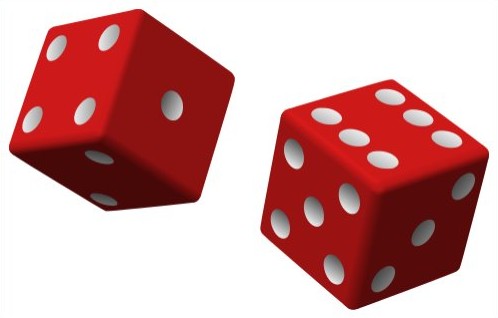
RNG is short for random number generator, or random number generation. Gamers use it for the code itself and for any unpredictable result that code produces, so a player who says "pure RNG" means the outcome came down to chance.
| Where you see RNG | What it means there | Example |
|---|---|---|
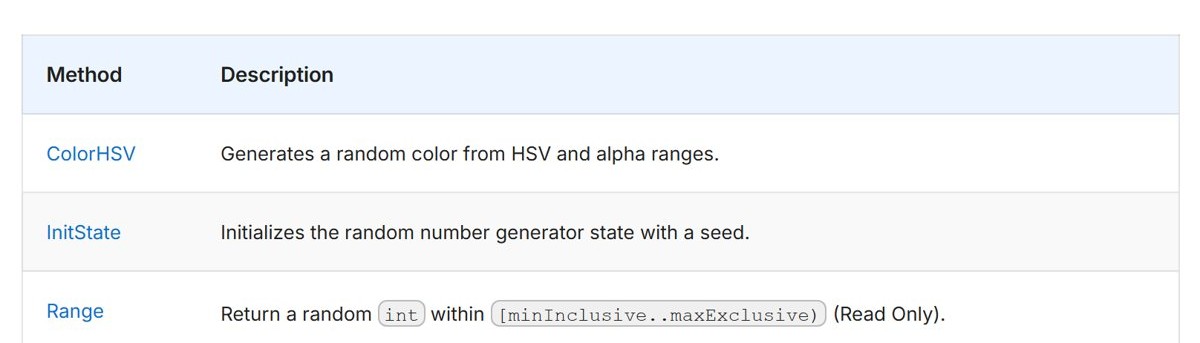
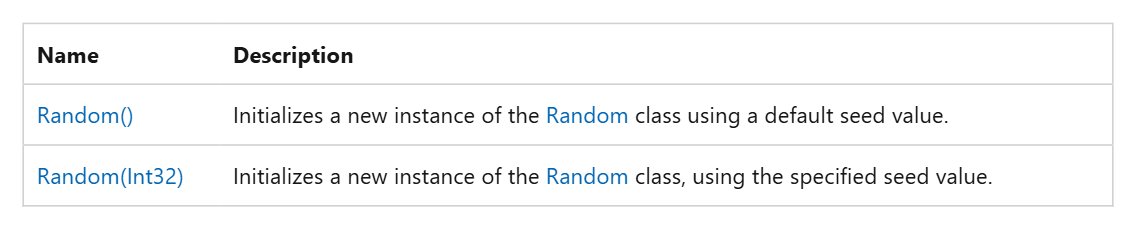
| Game code | The method that produces the random numbers | Unity's Random class, which game scripts call for pseudorandom values |
| Player chat | A result decided by chance rather than by the player | "I lost to RNG" after an opponent lands a lucky critical hit |
| Loot and rewards | The roll that picks which item you receive | A rare drop from a defeated enemy or a loot box |
| World building | The numbers that shape a generated map | A Minecraft world built from its random seed |
How does RNG work in video games?
Most games use a pseudorandom number generator, an algorithm that produces numbers which look random. Microsoft's .NET documentation describes the numbers as not completely random, yet random enough for practical purposes.
The table follows one illustrative 5% item drop from the first number to the final result.
| Stage | What the game does | Example with a 5% item drop |
|---|---|---|
| Seed | Starts the generator from an initial value | Unity seeds its generator once at startup, using a high-entropy value from the operating system |
| Generate | Runs the algorithm to get the next number | The generator returns a value from 1 to 100 |
| Compare | Checks the number against the odds the designers set | A value from 1 to 5 counts as a success |
| Apply | Turns the comparison into a result on screen | The enemy drops the item, or it drops nothing |
Designers control the odds, not the individual roll. A studio can raise or lower a drop chance in a patch without changing the generator at all.
Examples of RNG in video games
RNG sits behind more systems than loot. The figures below come from each game's maker or its documented history, so you can compare how much chance each system carries.
| Game or system | What RNG decides | Stated detail |
|---|---|---|
| Team Fortress 2 | Random critical hits | Standard weapons start at a 2% chance and melee weapons at 15%; a crit deals three times base damage |
| Dragon Quest | Critical hits | A fixed rate of 1 in 64, about 1.56% |
| Dungeons & Dragons | Critical hits from a die roll | A natural 20 on a 20-sided die, a 5% chance |
| Overwatch Loot Boxes | Item rarity in each box | 5.1% average chance of a Legendary item per box, as of the February 2025 patch notes |
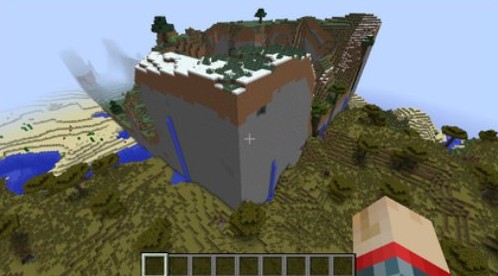
| Minecraft | The shape of a generated world | Each world's seed is a 64-bit integer, which allows about 18 quintillion maps |
| Tetris | The next falling piece | Tool-assisted runs manipulate luck to get the ideal piece |
Random encounters and the behavior of non-player characters also run on RNG. A computer-controlled opponent can use the same generator to choose its next move, which is why it does not repeat one pattern forever.
True RNG vs pseudo RNG in games
Two kinds of generator exist, and they differ in where the randomness comes from. Video games generally use the second kind because it is fast and gives developers control.
| Feature | Hardware RNG (true random) | Pseudorandom RNG |
|---|---|---|
| Source of randomness | A changing physical process, such as thermal noise or radioactive decay | A mathematical algorithm |
| Speed | Slow, limited to a set number of bits per second | Fast |
| Reproducible? | No | Yes, the same seed gives the same sequence |
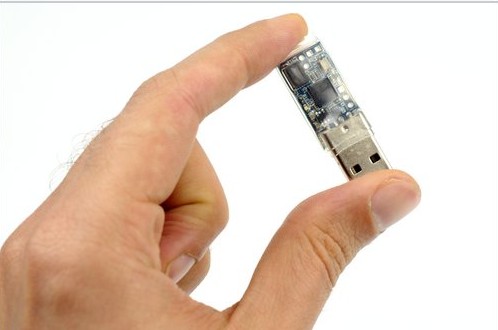
| Typical use | Often combined with a secure generator in cryptography | Game logic, procedural generation and simulations |
| Secure enough for passwords? | Used as the seed source for secure systems | No for a general-purpose generator; Microsoft points developers to RandomNumberGenerator instead |
Calling game RNG "not truly random" is accurate, but a player cannot usually see the difference. The sequence still looks unpredictable unless someone knows the seed and the generator's current state.
What is a seed in RNG?
A seed is the starting value of a pseudorandom generator. Anyone who knows the seed and the algorithm can reproduce the whole sequence, and that property is what makes shared game worlds and replays possible.
| Seed use | What it gives you | Real example |
|---|---|---|
| Sharing a world | Other players can generate the same map from one short value | Minecraft fans share seeds that produce interesting maps |
| Replaying a game | The same seed gives the same series of random numbers | Microsoft's .NET documentation names replaying games as a use for a fixed seed |
| Identical content for everyone | All players find the same things in the same places | No Man's Sky uses one seed for its universe |
| Speedrunning | Runners can pick a favorable starting world | Minecraft speedrunners use favorable seeds |
A seed only works with the algorithm that reads it. When Minecraft changed its world generation, newly explored chunks followed the new rules, which left jarring borders in older maps.
Does RNG really undermine skills?
RNG does not remove skill by itself. The answer depends on when the random result arrives, because a player can plan around chance that happens before a decision but can only absorb chance that happens after one.
A single fight can swing on a lucky roll, while a long series of matches gives skill more chances to show.
| Type of randomness | Example | Effect on skill |
|---|---|---|
| Before you decide | A generated map, a drawn card or a set of shop items | Rewards players who adapt, because the decision comes after the roll |
| After you decide | A critical hit or a chance to hit | Can override a good decision in one moment, though good odds still pay off over many rolls |
| Purely cosmetic | A skin from a loot box | No effect on match results |
| Gameplay-affecting rewards | Gear with random power from a loot box | Can give some players an edge that has nothing to do with how they play |
Hosts and designers can also limit chance directly. Team Fortress 2 server hosts can turn off random critical hits with the tf_weapon_criticals setting, and pity systems put a ceiling on how long a bad run lasts.
What is RNG manipulation in speedruns?
RNG manipulation, also called luck manipulation, means steering a pseudorandom generator toward a result you want. It works because the sequence is deterministic: change when or how often the game asks for a number, and every later result shifts.
| Technique | How it works | Allowed? |
|---|---|---|
| Player input as entropy | Inputs feed the generator, so exact timing can produce an ideal Tetris piece or a rare enemy drop | Common in tool-assisted speedruns, which are not limited by human reflexes |
| Changing the number of rolls | A small movement change can make the game poll its generator one time less, shifting later results | Part of the same tool-assisted technique; it also explains why replays can desync |
| Choosing a seed | Starting from a known seed gives a known world | Depends on the rules of the speedrun category |
| Editing game files | Modified internal files change the odds themselves | Treated as cheating, and harder to detect than traditional cheats |
If RNG can be manipulated, what's the use?
RNG is still worth using because manipulation takes specialized tools or exact timing that ordinary play does not involve. For most players, the sequence stays unpredictable, and that is all a game needs from it.
| Reason games keep RNG | What it adds | Example |
|---|---|---|
| Variety | Repeat playthroughs do not unfold the same way | Randomizers shuffle item locations, which makes them popular for races |
| Very large worlds | A short seed can produce a world that seems handmade | Minecraft and No Man's Sky generate their worlds procedurally |
| Rewards with suspense | Rarity tiers make uncommon items feel valuable | Loot boxes grade rewards so rarer items are less likely |
| Less predictable opponents | Computer-controlled characters do not repeat one exact pattern | Games use generators to decide how opponents move |
| Fast, testable code | Developers can repeat a bug by reusing the same seed | Seeded generators give the same results on each test run |
Good RNG vs bad RNG meaning and other RNG slang
RNG has its own vocabulary in chat and game forums. Like what AFK means in chat, these terms are shorthand that players rarely stop to explain.
| Term | Meaning |
|---|---|
| Good RNG | The dice went your way, such as a rare drop on the first try |
| Bad RNG | The dice went against you, such as dozens of runs with no drop |
| RNGesus | A joking personification of RNG that players plead with for better luck, also written RNJesus |
| Proc | The activation of a conditional, often random, effect |
| Crit | A critical hit, an attack that deals more damage than normal |
| Drop rate | The probability of getting a particular item from a loot box or booster pack |
| Pity timer | A system that raises the odds of a rare item after many failed attempts |
Results like these often get a shrug and a note that your mileage may vary, since two players can get very different luck from the same odds.
Are loot boxes RNG? Loot box odds and pity systems
Yes. A loot box gives a randomized selection of virtual items, so its contents come from an RNG roll. Stores and regulators now require many publishers to show the odds, which gives you real numbers to work with.
| Who | Rule or practice | What it means for you |
|---|---|---|
| Apple App Store | Apps selling loot boxes must disclose the odds of each item type before purchase | Look for the odds before you pay in an iPhone or iPad game |
| Google Play | Apps must clearly disclose the odds before the purchase, and close to it | Android games with loot boxes must show the odds at the point of sale |
| China | Publishers have had to release draw probabilities since May 2017 | Some published odds were as low as 0.1% |
| South Korea | Games must publish item odds, enforced from March 2024 | Publishers face fines if they do not |
| Belgium | The Gaming Commission ruled in 2018 that loot boxes in three named games were games of chance | Those loot box systems fell under the country's gambling laws |
| Overwatch | A Legendary item within 20 box openings and an Epic item within five | A published guarantee limits the worst case |
How to calculate RNG drop chance in games
A 5% drop does not mean you will get the item in 20 tries. Each roll is independent unless the game has a pity system, so past failures do not make the next roll more likely to succeed.
- Find the published drop rate in the game's odds screen, patch notes or official notice.
- Convert the rate to a decimal, so 5% becomes 0.05.
- Subtract it from 1 to get the chance of failing one roll: 1 – 0.05 = 0.95.
- Raise that number to the number of tries to get the chance of failing every roll: 0.95 to the power of 20 is about 0.36.
- Subtract the result from 1 to get the chance of at least one drop: 1 – 0.36 = 0.64, or about 64%.
The same math gives about 63% for a 1% drop after 100 tries. Roughly one player in three still has nothing after that many attempts, which is normal bad RNG and not proof that a game is broken.
A pity system changes this math, because the guarantee caps how many tries you can need. Check whether the game's counter carries over between banners or events before you plan around it.
RNG in gaming FAQ
What does RNG stand for in gaming?
RNG stands for random number generator or random number generation. In gaming, it also refers to any gameplay element with an unpredictable result, such as a loot drop, a random encounter or how a computer-controlled character behaves.
What does RNG mean in simple terms?
RNG means luck decided by code. The game produces a number, compares it with odds set by the designers, and then shows you the result. A player who blames RNG is saying that chance, not their own play, decided the outcome.
Is RNG truly random in video games?
Usually not. Most games use pseudorandom generators, whose output is fully determined by an initial seed or state. The numbers still pass as random in normal play, and Microsoft's .NET documentation calls this kind of output sufficiently random for practical purposes.
Can you manipulate RNG in a game?
Yes, in some games. Because pseudorandom sequences are deterministic, exact input timing can change which result you get, and tool-assisted speedruns use this to reach ideal outcomes. Editing internal game files to alter the odds is different and counts as cheating.
What does RNG mean in Minecraft?
In Minecraft, RNG decides things such as world generation and item drops. Each world comes from a random seed stored as a 64-bit integer, and players can share that seed so that others generate the same map on a matching game version.
What is the difference between RNG and luck?
RNG is the mechanism and luck is how the result feels to the player. A studio sets the odds and the generator rolls against them. Good luck or bad luck is simply where your personal results land within those odds.
What is a pity timer in RNG?
A pity timer improves your odds of a rare item, or guarantees one, after many failed attempts. Overwatch, for example, guarantees a Legendary item within 20 consecutive Loot Box openings. Not every game has one, so check the published odds before spending.
Are RNG and gacha the same thing?
No. RNG is the underlying chance system, while gacha is one way of selling that chance. Gacha games use spins, based on Japanese gashapon capsule toys, to hand out random items, and they are often compared to loot boxes.
Final notes on RNG in gaming
Treat RNG as a set of odds you can read and plan around, not as a force that decides every match. A game's generator only follows the odds its designers set. Published rates and the drop-chance math above tell you what to expect, and they also show when a game asks you to pay for a low chance.