When WiFi works on your other devices but not your iPhone, restart the iPhone, forget and rejoin the network, then set Private Wi-Fi Address to Fixed or Off for that network.
This guide covers those fixes in order, plus VPN apps, iOS updates, Location Services, the router settings that block only some devices and the reset to use as a last resort.
Step by step tutorial: Fixing Wi-Fi on your iPhone
Other devices connecting means the router and the network are working, according to Apple. Start with the iPhone, and test Wi-Fi after each step.
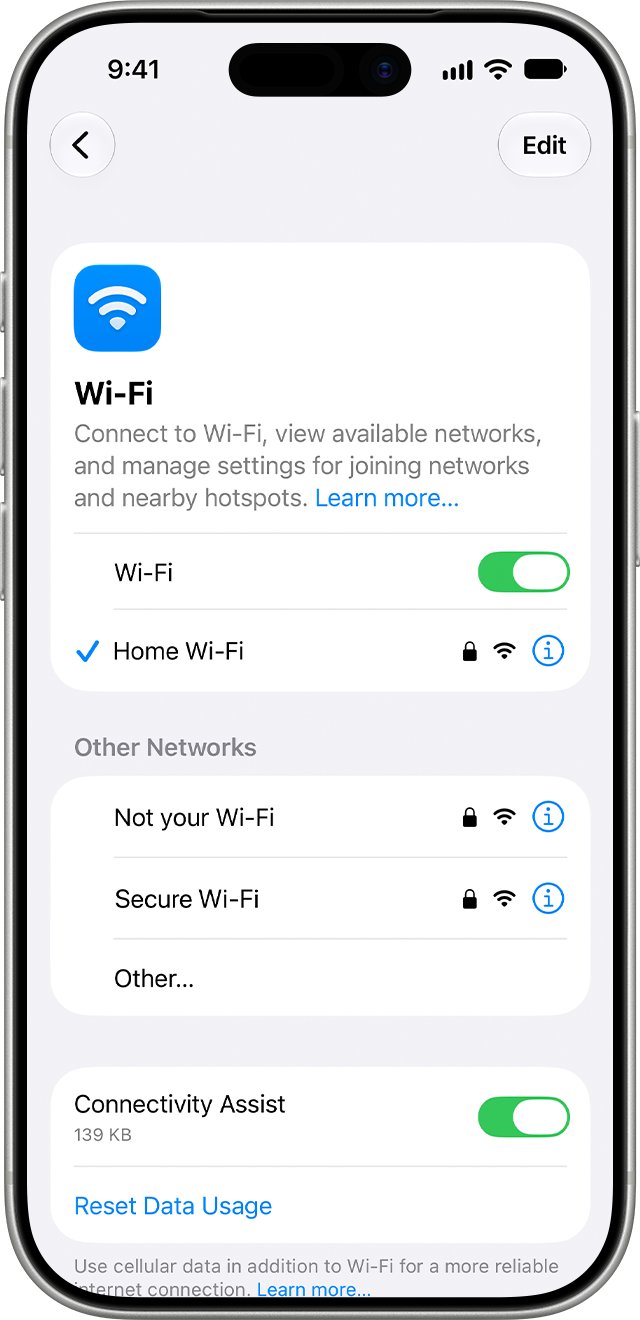
- Open Settings, tap Wi-Fi and make sure Wi-Fi is on and Airplane Mode is off.
- Restart your iPhone, then tap your network name in Settings > Wi-Fi.
- Tap Edit, tap the More Info button next to the network, tap Forget This Network, then tap Forget.
- Tap the network name again and enter its password.
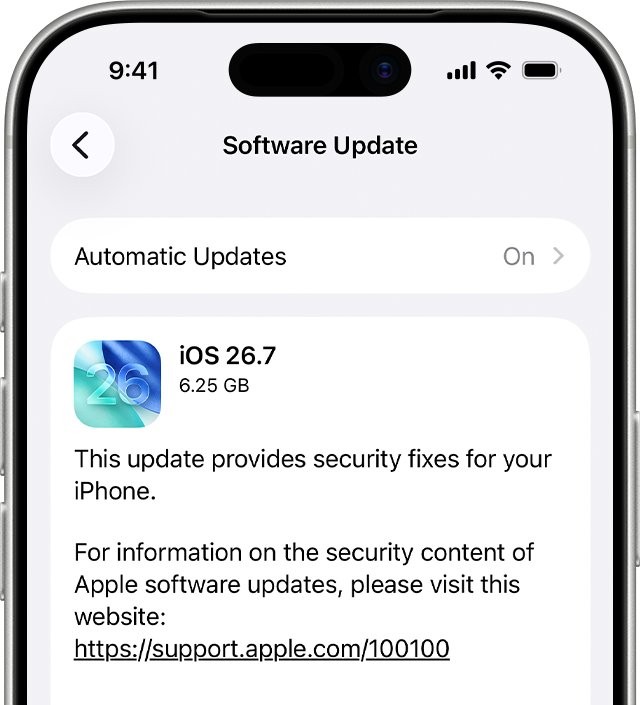
- Update iOS from Settings > General > Software Update.
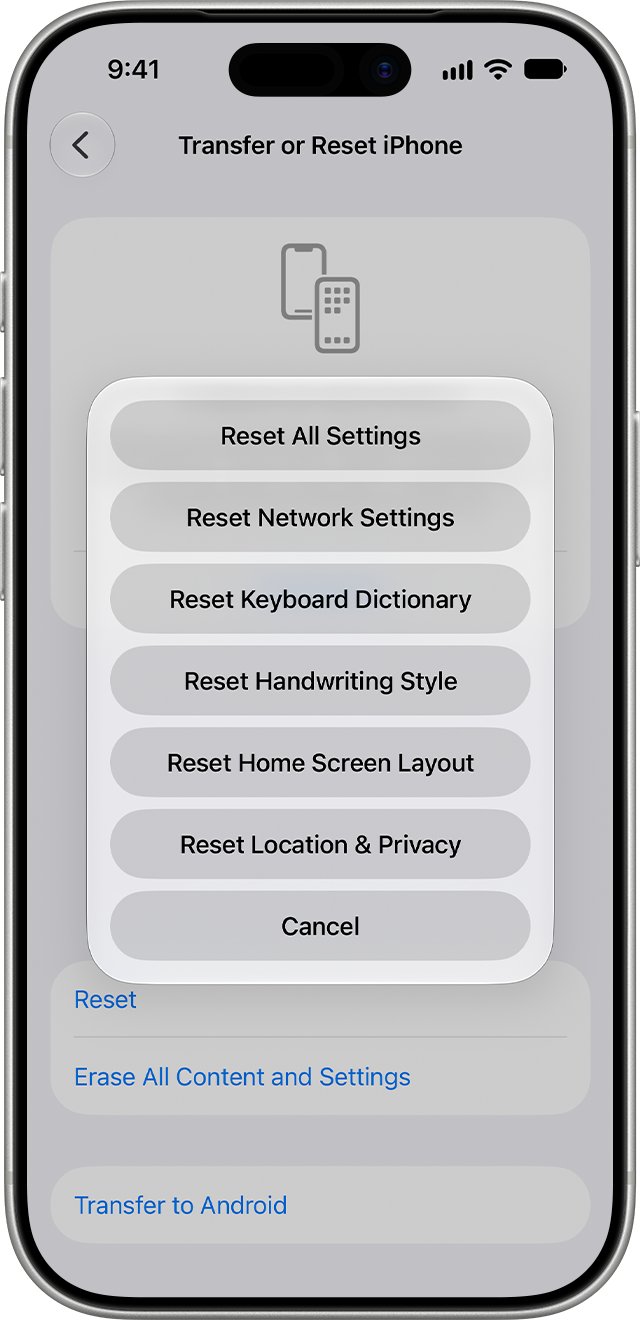
- If Wi-Fi still fails, tap Settings > General > Transfer or Reset iPhone > Reset > Reset Network Settings.
- Join the network again and look for the blue checkmark next to its name.
Why is WiFi not working on my iPhone but working on other devices
Match what your iPhone shows to the likely cause, then go straight to that fix.
| What you see on the iPhone | Likely cause | Fix |
|---|---|---|
| Wi-Fi switch is dimmed | The Wi-Fi setting is not responding | Restart the iPhone |
| Network is missing from the list | Hidden network, or router technology blocking unauthorized devices | Turn off the hidden network and MAC filtering on the router |
| Network is listed, but the iPhone will not join | A saved profile or the iPhone's private address | Forget the network, then change Private Wi-Fi Address |
| Joined, but no internet | VPN or security software, or a saved network setting | Uninstall the VPN app, then reset network settings |
| Works on some networks but not at home | Router settings that do not suit the iPhone | Check the router settings table below |
| Fails on every network, everywhere | The iPhone itself | Update iOS, reset network settings, then contact Apple |
How to fix iPhone WiFi not working in Settings
Check the settings first, because a toggle takes seconds to fix. Connectivity Assist uses cellular data alongside Wi-Fi, so turning it off shows whether Wi-Fi itself is working.
- Open Settings and confirm Airplane Mode is off.
- Tap Wi-Fi and make sure Wi-Fi is turned on.
- Scroll down and turn off Connectivity Assist.
- Tap your network name and enter the password if asked.
- Look for the blue checkmark next to the network name.
If you do not know the password, share the WiFi password from another iPhone or join the network with a QR code.
How to force restart iPhone when WiFi is grayed out
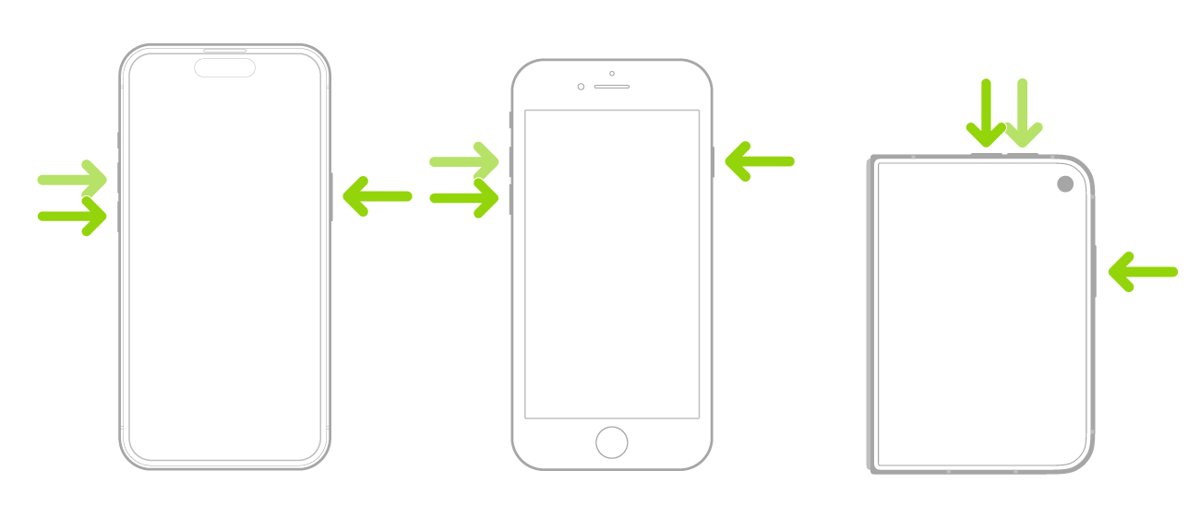
Apple's fix for a dimmed Wi-Fi setting is a restart. A force restart also works when the iPhone will not respond to a normal shutdown.
- Press and quickly release the volume up button.
- Press and quickly release the volume down button.
- Press and hold the side button.
- Release the side button when the Apple logo appears.
- Open Settings > Wi-Fi and join your network.
If the buttons do nothing, fix a force restart that is not working before you go further.
How to forget a WiFi network on iPhone and rejoin it
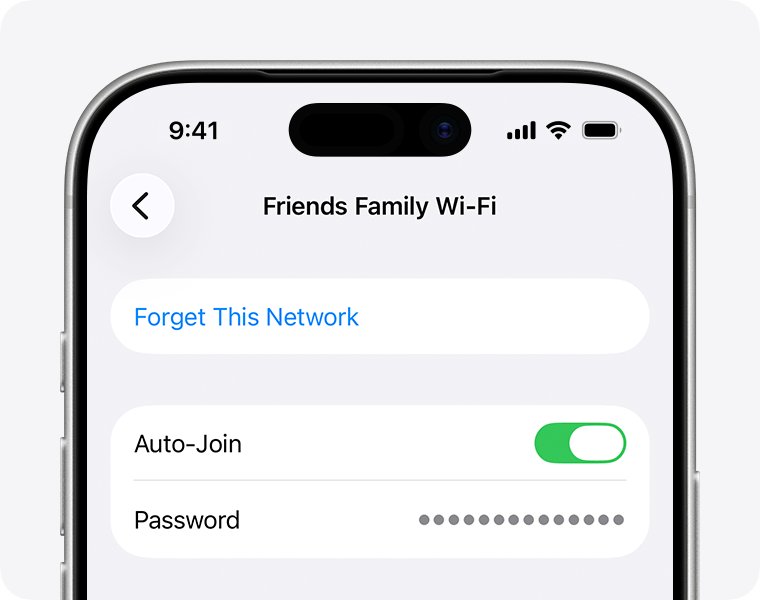
Forgetting a network clears its saved password and its private address, which gives the iPhone a clean join. If you use iCloud Keychain, your other devices on the same Apple Account forget the network too, so keep the password handy.
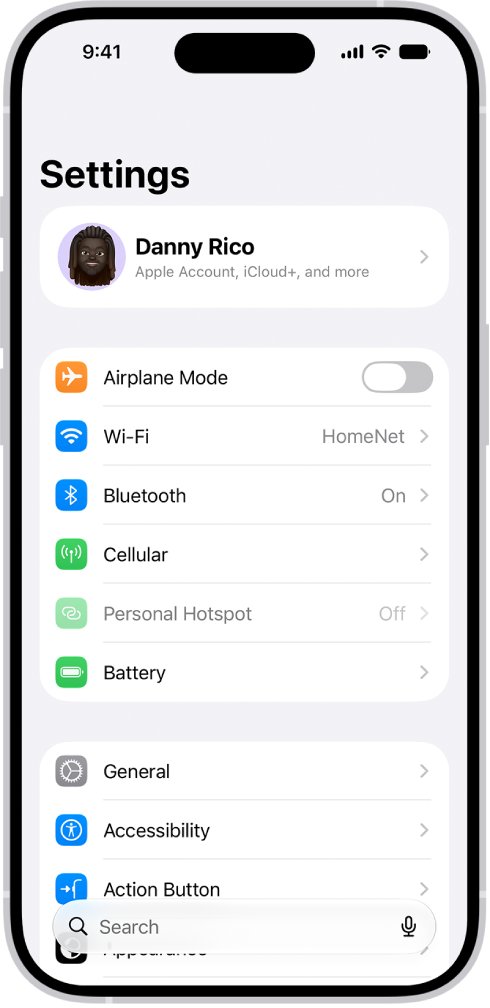
- Open Settings and tap Wi-Fi.
- Tap Edit in the corner of the screen.
- Tap the More Info button next to the network.
- Tap Forget This Network, then tap Forget.
- Tap the network in the list and enter the password.
Apple also recommends this step after any router change, so the iPhone picks up the new settings when it rejoins.
How to change Private Wi-Fi Address on iPhone
Try this when only the iPhone is refused. Your iPhone uses its own private address on each network, so a router with MAC filtering or an allow list can reject it while approving your other devices.
- Open Settings and tap Wi-Fi.
- If you are not connected to the network, tap Edit.
- Tap the More Info button next to the network.
- Tap Private Wi-Fi Address.
- Choose Fixed, or Off if the router needs the hardware MAC address.
- Join the network again and test it.
Fixed keeps one private address, and it is the default on networks using WPA2 or stronger. Rotating changes about every two weeks. Earlier iOS versions show an on or off switch instead of these options.
How to remove a VPN or security app blocking iPhone WiFi
A VPN or security app can block traffic on the iPhone alone, which fits this symptom exactly. Apple's test is to remove the app and try again.
- Uninstall the VPN or security app from your iPhone.
- Open Settings > General > VPN & Device Management.
- Select any VPN configuration profile you no longer need, then tap Remove Profile.
- Restart your iPhone and test Wi-Fi.
- If the app caused the problem and you still need it, contact the VPN manager or the app's provider.
Removing a profile also removes the other settings and accounts it provided. Ask your IT team first if work or school installed it.
How to update iPhone software to fix WiFi
Apple advises installing the latest software before you change Wi-Fi settings. With Wi-Fi down, use a Mac or Windows PC for the update instead.
- Back up your iPhone with iCloud or a computer.
- Plug the iPhone into power.
- Open Settings and tap General.
- Tap Software Update to see your version and any available update.
- Tap Download and Install and follow the prompts.
Apple fixed a Wi-Fi and Bluetooth bug on iPhone 17 models in iOS 26.0.1, so check for Wi-Fi problems on iPhone 17 Pro Max if you own one.
How to turn on Wi-Fi networking in iPhone Location Services
Apple asks you to keep this setting on, because rules on Wi-Fi channels and signal strength vary by country or region. It helps the iPhone see nearby networks and connect reliably.
- Open Settings and tap Privacy & Security.
- Tap Location Services and turn on Location Services.
- Scroll to the bottom and tap System Services.
- Turn on Networking & Wireless, shown as Wi-Fi Networking on some iOS versions.
Router settings that stop an iPhone connecting to WiFi
Some router settings let older devices keep working while an iPhone struggles. Change them in the router's app or configuration page, and back up the router's settings first.
| Router setting | Apple's recommendation | How it affects an iPhone |
|---|---|---|
| Security | WPA3 Personal, or WPA2/WPA3 Transitional | WEP, TKIP and WPA/WPA2 mixed modes reduce reliability and trigger warnings |
| Network name (SSID) | One unique name for all bands | Separate band names can stop devices connecting reliably |
| Hidden network | Disabled | A hidden network can trigger a privacy warning and needs joining through Other |
| MAC address filtering | Disabled | A filter can reject the iPhone's private address |
| Firmware | Latest version, with automatic updates on | Apple also asks you to confirm the router supports your iPhone |
| Bands | All bands enabled | Try another band, such as 5 GHz instead of 2.4 GHz |
| 2.4 GHz channel width | 20 MHz | Helps avoid reliability problems near other networks and Bluetooth devices |
| DHCP lease time | 8 hours for home or office | A router out of addresses cannot assign one to a newly joining device |
Restart the router and modem by unplugging them and plugging them back in. Forget the network on the iPhone afterwards so it uses the new settings.
How to reset network settings on iPhone
Use this only after the other fixes fail. It removes all saved Wi-Fi networks and passwords, cellular settings, and VPN and APN settings, but it does not erase your content.
- Make sure you know your Wi-Fi password.
- Open Settings and tap General.
- Tap Transfer or Reset iPhone, then tap Reset.
- Tap Reset Network Settings and confirm.
- Open Settings > Wi-Fi, tap your network and enter the password.
The reset also renames the device to iPhone, changes manually trusted certificates to untrusted and can turn off cellular data roaming. Ask your IT administrator first if a school or business configures the network.
How to tell if iPhone is connected to WiFi
- Open Settings > Wi-Fi and look for the blue checkmark next to your network.
- Check for the Wi-Fi icon at the top of the screen.
- Turn off cellular data for a moment in Settings > Cellular.
- Open Safari and load a page you have not visited recently.
- Turn cellular data back on.
iPhone WiFi not connecting but other devices are
iPhone says the Wi-Fi password is incorrect
The saved password does not match the one the router now uses.
- Forget the network in Settings > Wi-Fi.
- Confirm the current password with whoever manages the network.
- Join the network again and type the password carefully.
iPhone is connected to Wi-Fi but has no internet
A VPN or saved setting is blocking traffic on the iPhone, since other devices are online.
- Uninstall any VPN or security app, then restart the iPhone.
- Forget and rejoin the network.
- Reset network settings if the page still will not load.
- Contact your internet provider if the iPhone joins but stays offline after the reset.
iPhone connects to other Wi-Fi but not home Wi-Fi
The home router's settings are the likely cause.
- Set Private Wi-Fi Address to Fixed for the home network.
- Turn off MAC filtering on the router, or add the iPhone's address to its allow list.
- Update the router firmware and restart the router and modem.
- Join the other band if the router has separate bands.
iPhone can't connect to any Wi-Fi network
The problem is on the iPhone rather than a router.
- Try a Wi-Fi network in a different location.
- Update iOS, then reset network settings.
- Contact Apple if the iPhone still cannot join any network.
Tips: Enhancing Wi-Fi connectivity on your iPhone
| Tip | How to do it | Why it helps |
|---|---|---|
| Stay in range | Move closer to the router | You might be too far from the signal |
| Try another band | Join 5 GHz instead of 2.4 GHz if your router offers separate names | The other frequency may connect when the first does not |
| Use one network name | Give every band the same SSID on the router | Devices connect more reliably to a single name |
| Keep software current | Update iOS and turn on automatic router firmware updates | Updates bring stability and security improvements |
| Leave Private Wi-Fi Address on | Use Fixed rather than Off unless the network requires otherwise | Off uses the hardware MAC address, which makes the iPhone easier to track across networks |
| Turn Connectivity Assist back on | Settings > Wi-Fi > Connectivity Assist once testing is done | It uses cellular data when Wi-Fi is weak or busy |
iPhone WiFi not working FAQ: frequently asked questions
How do I fix iPhone WiFi not working?
Check that Wi-Fi is on and Airplane Mode is off, then restart the iPhone. Next, forget and rejoin the network, change the Private Wi-Fi Address, remove VPN apps and update iOS. Reset network settings only if those steps fail.
Why does my iPhone say “Incorrect Password” for Wi-Fi when the password is correct?
The iPhone may be using a saved password the router no longer accepts, or the password was mistyped. Forget the network, confirm the current password with the network's owner and join again. Check the router's security mode if the problem continues.
Can Wi-Fi issues be a sign of a hardware problem?
They can be when the iPhone cannot join any Wi-Fi network in any location. Update iOS and reset network settings first. If it still fails everywhere, contact Apple, because the fault then sits with the iPhone rather than a router.
Will resetting network settings delete any personal data?
No. Reset Network Settings keeps your content, including photos, messages and apps. It removes saved Wi-Fi networks and passwords, cellular settings, and VPN and APN settings. It also renames the device to iPhone and changes manually trusted certificates to untrusted.
Why does my iPhone keep dropping the Wi-Fi connection?
Weak signal, separate band names or old router security settings are common causes. Move closer, use one network name for all bands and update the router. If Wi-Fi disconnects when the iPhone is locked, the fix differs.
Should I update my Wi-Fi router’s firmware too?
Yes. Apple recommends the latest firmware and automatic updates where available, and it asks you to confirm the router supports your iPhone. Use the router maker's app or configuration page, and back up its settings before you change anything.
Why is WiFi not working on my phone but working on my laptop?
The router is fine in that case, so look at the phone. A private address blocked by MAC filtering, a VPN app or an outdated saved network profile are the usual causes. Forget the network and change the Private Wi-Fi Address first.
How do I fix WiFi and Bluetooth not working on iPhone?
Install the latest iOS first. Apple's iOS 26.0.1 update fixed Wi-Fi and Bluetooth disconnecting on iPhone 17, iPhone Air and iPhone 17 Pro models. If both stay down on any model, restart the iPhone and then contact Apple.
What should I do when WiFi doesn't work on any device?
Restart the router and modem by unplugging them and plugging them back in. If no device can get online after that, there may be a service outage, so contact your internet provider. Apple's iPhone fixes will not help until the network returns.
How do I fix no WiFi showing on iPhone?
Move closer to the router and make sure it is turned on. If your network is hidden, tap Other in Settings > Wi-Fi and enter its name, security type and password. Turning off the hidden network setting on the router is the better fix.