To fix PAGE_FAULT_IN_NONPAGED_AREA, update or roll back the driver named on the blue screen, then test your RAM with Windows Memory Diagnostic and repair the disk with chkdsk /f /r.
This guide explains what stop code 0x50 means, how to find the faulty driver or part, every fix in the order to try it, and when the problem is hardware that needs a repair.
The fastest fix for PAGE_FAULT_IN_NONPAGED_AREA
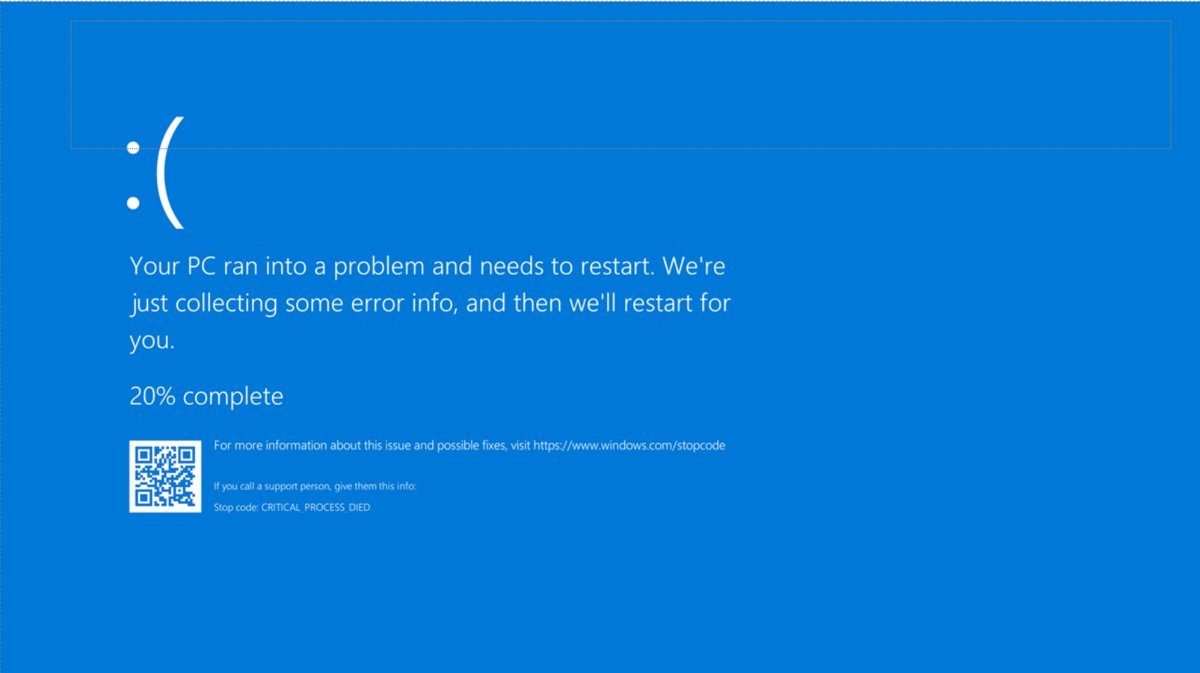
Most 0x50 crashes come from a faulty driver, so start with the file name printed under the stop code, such as a .sys file.
- If you added hardware just before the crashes began, shut down, remove it and restart.
- Note any driver file named on the blue screen.
- Right-click Start and select Device Manager.
- Expand the category of the device that driver belongs to, right-click the device and select Properties.
- On the Driver tab, select Roll Back Driver if the problem began after a driver update, choose a reason and select Yes.
- If no rollback is offered, right-click the device instead and select Update driver > Search automatically for updated driver software.
- Restart and use the PC normally to see whether the crash returns.
Understanding the PAGE_FAULT_IN_NONPAGED_AREA BSOD Error
PAGE_FAULT_IN_NONPAGED_AREA is bug check 0x00000050. Microsoft defines it as Windows referencing invalid system memory, usually an address that is wrong or points at memory that has already been freed.
| Cause Microsoft lists | Typical trigger | Fix to try |
|---|---|---|
| Faulty driver | A new or updated graphics, network, storage or audio driver | Roll back, update or reinstall the driver |
| Faulty system service | A third-party service installed with an app | Clean boot, then remove or update the app |
| Antivirus software | A security product's kernel driver | Update the security product or contact its vendor |
| Corrupted NTFS volume | Disk errors after power loss or a failing drive | Run chkdsk /f /r |
| Faulty or failing hardware | Defective RAM, cache or video memory, or a newly added part | Run Windows Memory Diagnostic and the maker's hardware tests |
Security software can trigger it at scale: in July 2024 Microsoft documented a CrowdStrike update that caused 0x50 or 0x7E blue screens on Windows endpoints (KB5042421).
How to Diagnose the PAGE_FAULT_IN_NONPAGED_AREA Error
- Read the blue screen: if a driver is responsible and can be identified, Windows prints its name there.
- Search Start for Event Viewer and open it.
- Open Windows Logs > System and look for critical errors logged at the same time as the crash.
- Note the device or driver named in those errors; it is your first suspect.
- Write down what changed just before the crashes started: a driver, a Windows update, new software or new hardware.
If the PC crashes before the desktop loads, run the fixes below from Safe Mode, which loads only a basic set of drivers.
Step-by-Step Solutions to Fix PAGE_FAULT_IN_NONPAGED_AREA BSOD Error
Work down this table in order. Each row is cheaper and safer than the one below it.
| Order | Fix | Use it when |
|---|---|---|
| 1 | Restart and remove newly added hardware | Crashes began after fitting RAM, a card or a USB device |
| 2 | Boot into Safe Mode | Windows crashes before or soon after sign-in |
| 3 | Update or roll back drivers | A driver is named on the screen or in Event Viewer |
| 4 | Run Windows Memory Diagnostic | No driver is named, or crashes are random |
| 5 | Check the disk with chkdsk | Crashes coincide with file errors or slow disk access |
| 6 | Run DISM and SFC | System files may be damaged |
| 7 | Perform a clean boot | You suspect a third-party service or startup app |
| 8 | Install Windows updates | The PC is behind on updates and drivers |
| 9 | Uninstall a recent update or app | Crashes began right after an update or install |
| 10 | Run a Microsoft Defender Offline scan | You suspect malware |
| 11 | Test hardware with the maker's diagnostics | Every software fix failed |
Boot into Safe Mode
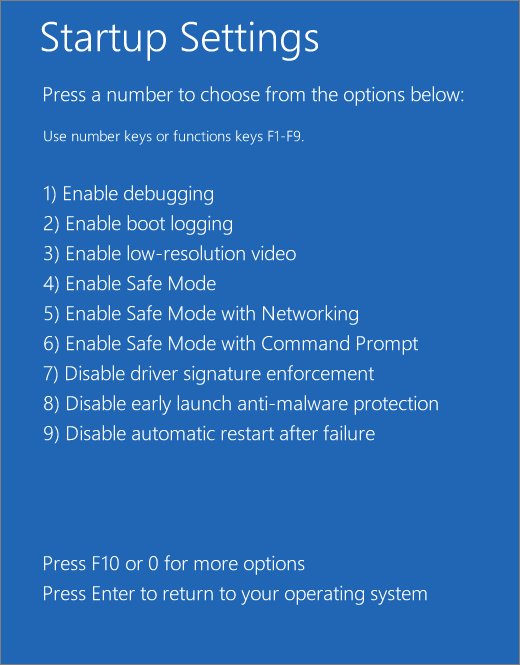
- In Windows 11, open Settings > System > Recovery and select Restart now next to Advanced startup; in Windows 10, use Settings > Update & Security > Recovery.
- If you cannot reach Settings, hold Shift while you select Power > Restart on the sign-in screen.
- If Windows will not start at all, interrupt startup twice with the power button to reach the recovery environment.
- Select Troubleshoot > Advanced options > Startup Settings > Restart.
- Press 4 or F4 for Safe Mode, or 5 or F5 for Safe Mode with Networking.
Run Windows Memory Diagnostic
Defective RAM is one of the causes Microsoft names for 0x50, and the built-in test checks it without extra software.
- Save your work and close apps.
- Press Windows + R, type
mdschedand select OK. - Select Restart now and check for problems (recommended).
- Let the test finish; the PC restarts into Windows by itself.
- Read the result in the notification near the clock, or in Event Viewer under Applications and Services Logs > Microsoft > Windows > MemoryDiagnostics-Results.
- If errors are reported, replace the faulty memory or take the PC to its maker for repair.
Check the disk for errors with chkdsk
chkdsk C: /f /rRun it in Command Prompt opened as administrator. Microsoft recommends these switches to detect and repair disk errors behind a corrupted NTFS volume. On the system drive the scan cannot run while Windows is using it, so accept the offer to schedule it and restart.
You should see: After the restart, the scan runs and Windows loads normally. If chkdsk reports bad sectors, ask the drive maker for its diagnostic tool and back up your files.
Use System File Checker (SFC) and DISM
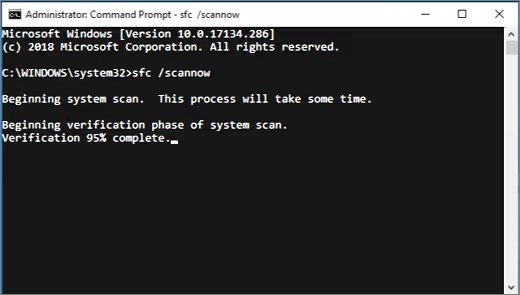
Type cmd in the search box, right-click Command Prompt and select Run as administrator. Run DISM first, then SFC.
DISM.exe /Online /Cleanup-image /Restorehealth
sfc /scannow
DISM repairs the Windows image that SFC uses as its source, and SFC then checks and repairs protected system files. Do not close the window until verification reaches 100%.
You should see: "Windows Resource Protection did not find any integrity violations" or "Windows Resource Protection found corrupt files and successfully repaired them."
Perform a clean boot
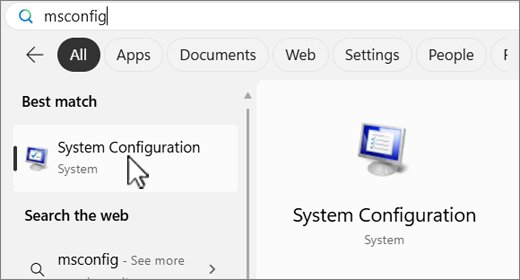
- Select Search, type msconfig and open System Configuration.
- On the Services tab, select Hide all Microsoft services, then Disable all, then Apply.
- On the Startup tab, select Open Task Manager and disable each enabled startup item, noting which ones you changed.
- Select OK and restart.
- If the crashes stop, re-enable items in small groups until the crash returns, then update or remove that app.
Check for Windows Updates and remove a bad one
- Open Start > Settings > Windows Update and select Check for updates.
- Under Advanced options, turn on Receive updates for other Microsoft products, then install all updates, including optional driver updates.
- If crashes began after an update, go to Windows Update > Update history and select Uninstall updates under Related settings.
- In Windows 10, use Settings > Update & Security > Windows Update > View your update history > Uninstall updates.
- Select the recent update and select Uninstall; some updates cannot be removed.
- To remove a recently installed app, uninstall it from Settings and restart.
Check for malware with Microsoft Defender Offline
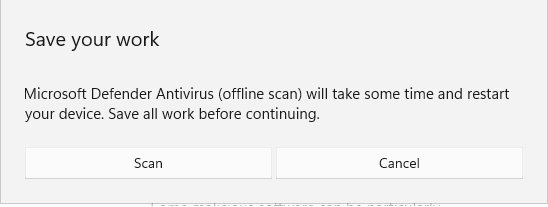
- Save your work; the scan takes about 15 minutes and restarts the PC.
- Open the Windows Security app and select Virus & threat protection.
- Select Scan options, choose Microsoft Defender Offline scan and select Scan now.
- Confirm the prompts with Scan and Yes.
- After Windows restarts, check Protection history under Scan options for results.
If BitLocker protects the system drive, have your recovery key ready, because the restart may ask for it.
How to check the fix worked
- Use the PC for the same tasks that used to crash it, such as gaming or copying large files.
- Open Event Viewer, select Windows Logs > System, and confirm no new critical errors appear after the fix.
- Check that Device Manager shows no devices marked with an exclamation point.
- If you made a clean boot, return to normal startup once stable: in System Configuration, select Normal Startup on the General tab, Enable all on the Services tab, and re-enable startup apps.
Fix PAGE_FAULT_IN_NONPAGED_AREA when it keeps coming back
The blue screen appears in a restart loop
A driver or update that loads at startup crashes Windows every time.
- Interrupt startup twice with the power button to open the recovery environment.
- Select Troubleshoot > Advanced options > Uninstall Updates to remove the latest update.
- If that fails, use System Restore from the same menu to return to an earlier restore point.
- As a last resort, use Startup Repair or Reset this PC.
Memory Diagnostic passes but crashes continue
The fault may be in a driver, a disk, or video memory the test does not cover.
- Run
chkdsk /f /rand DISM plus SFC as shown above. - Reinstall the graphics driver: right-click the display adapter in Device Manager, select Uninstall device, then restart.
- Run the hardware diagnostics supplied by your PC or motherboard maker.
The crash names a security product's driver
Microsoft lists antivirus software as a known trigger for 0x50.
- Update the security product to its latest version.
- Contact the vendor about a known issue with your Windows build.
- Keep Microsoft Defender running so the PC stays protected while you work on it.
When to Seek Professional Help
Get the PC checked by the manufacturer or a repair shop when the memory test reports errors, chkdsk finds bad sectors, or the crash survives a reset of Windows. Those results point to failing RAM, a failing drive or another faulty component, and no software fix repairs hardware. If the PC is under warranty, the maker's diagnostics result is usually what support asks for first, so run it before you call.
Preventative Measures to Avoid Future PAGE_FAULT_IN_NONPAGED_AREA Errors
- Install drivers from Windows Update or your PC maker's site rather than from download portals.
- Keep Windows and optional driver updates current.
- Create a restore point before installing a major driver, so you can roll back quickly.
- Keep 10% to 15% of the system drive free, as Microsoft advises for stop-code problems.
- Shut down properly instead of cutting power, which protects the NTFS file system.
- Add hardware one part at a time, so a crash points to the part you just fitted.
Other stop codes share many of these fixes; the steps for a Clock Watchdog Timeout blue screen follow the same driver-first order.
Frequently asked questions
What does PAGE_FAULT_IN_NONPAGED_AREA mean?
It is stop code 0x00000050. Windows tried to use system memory that is invalid, usually because an address is wrong or points to memory already freed. The usual culprits are a faulty driver or service, antivirus software, a corrupted NTFS volume, or failing RAM.
Is PAGE_FAULT_IN_NONPAGED_AREA a hardware or software problem?
It can be either. Faulty drivers and system services are software causes, while defective RAM, cache or video memory and newly added hardware are hardware causes. Run Windows Memory Diagnostic and chkdsk to rule hardware in or out before replacing anything.
Can bad RAM cause PAGE_FAULT_IN_NONPAGED_AREA?
Yes. Microsoft names defective RAM, including main memory, L2 cache and video RAM, as a cause. Run mdsched, choose Restart now and check for problems, and read the result after the restart. Replace any module that reports errors.
How do I find which driver caused the 0x50 blue screen?
Check the blue screen for a driver file name, which Windows prints when it can identify one. Then open Event Viewer, go to Windows Logs > System, and look for critical errors logged at the time of the crash; they usually name the device or driver.
Can a Windows update cause PAGE_FAULT_IN_NONPAGED_AREA?
Yes, an update or a driver delivered with it can. Go to Settings > Windows Update > Update history > Uninstall updates, remove the most recent one and restart. If the PC cannot boot, use Uninstall Updates in the recovery environment instead.
Will resetting Windows fix PAGE_FAULT_IN_NONPAGED_AREA?
A reset fixes software causes such as a bad driver, service or corrupted system file, because it reinstalls Windows. It does not fix failing RAM or a failing drive. If the crash returns after a reset, treat it as a hardware fault.
Is it safe to keep using a PC with this error?
Each crash can lose unsaved work and, if the cause is a corrupted volume or failing drive, can damage files further. Back up important data first, then work through the fixes. Stop using the PC heavily if chkdsk or the memory test reports errors.