The Run box (Win+R) is one of the fastest ways to start a program in Windows. Type notepad or mspaint and press Enter. That works because Windows knows where those programs live. With an alias you can do the same for any app, so typing ff opens Firefox or n opens Notepad++. Win+R Alias Manager was a small freeware tool that let you create these aliases from a simple window instead of editing the registry by hand. Under the hood, aliases like this use a registry key called App Paths, and you can set them up yourself.
How Run-box aliases work
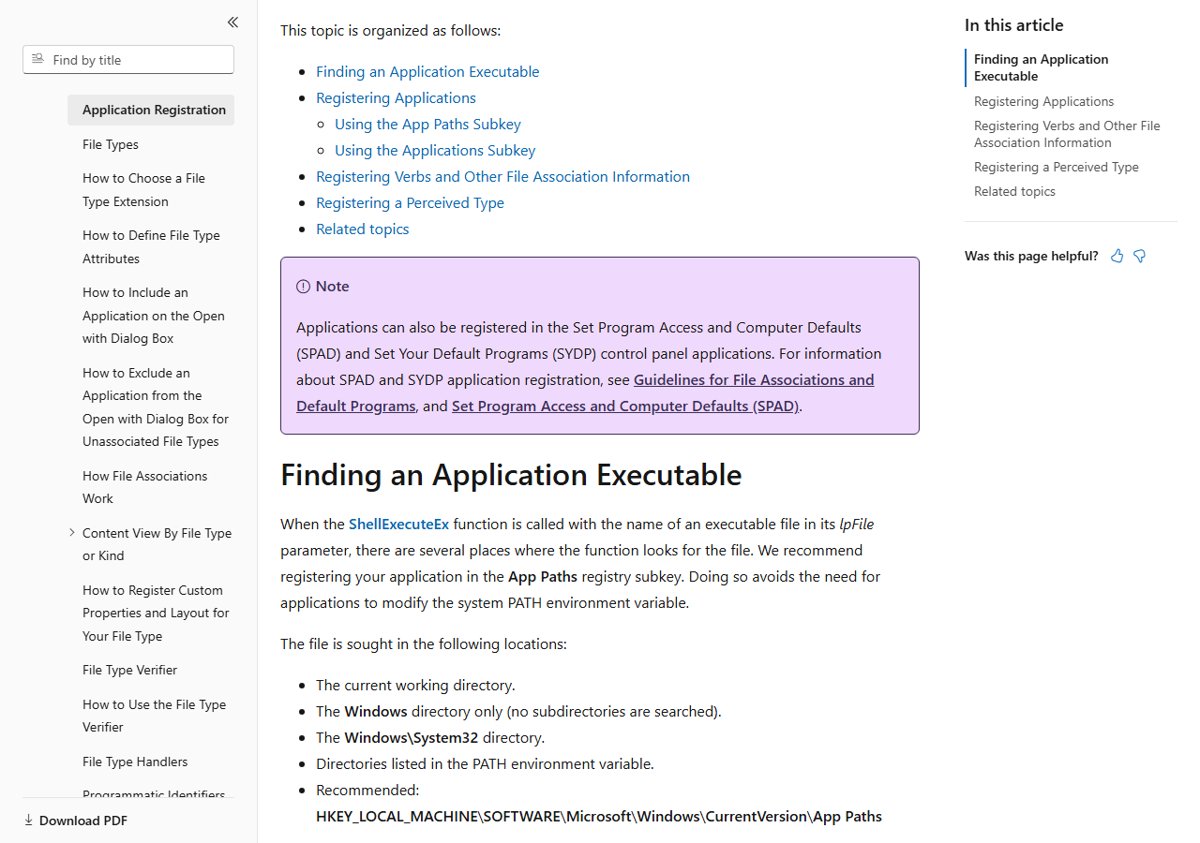
When you type a program name in Run, Windows looks for it in several places: the current folder, the Windows folder, the System32 folder and the folders in your PATH. Microsoft’s documentation adds one more: the App Paths registry key. Each subkey under App Paths is named after a program (for example n.exe), and its default value holds the full path to the real file. Microsoft recommends App Paths for this because it avoids changing the system PATH.
There are two locations:
- HKEY_CURRENT_USER\Software\Microsoft\Windows\CurrentVersion\App Paths for an alias that only your account uses.
- HKEY_LOCAL_MACHINE\SOFTWARE\Microsoft\Windows\CurrentVersion\App Paths for every user on the PC. This needs administrator rights.
Create an alias manually
Back up the registry before you change it. Then:
- Press Win+R, type regedit and press Enter.
- Go to one of the App Paths keys above.
- Right-click App Paths, select New > Key and name it after your alias with .exe on the end, such as n.exe.
- Select the new key, double-click (Default) and enter the full path of the program, for example C:\Windows\notepad.exe.
- Close Registry Editor, press Win+R, type n and press Enter. The program opens.
A Microsoft engineer’s old blog post lists his own shortcuts made this way: n for Notepad, i for Internet Explorer, p for Process Explorer and w for WinDbg. Short, memorable names work best.
Optional: add a Path value
If the program needs its own folder on the PATH to find its files, add a string value named Path to the same key with that folder. Windows adds it to the PATH of that process only. If the app does not need it, leave it out.
Remove an alias
Delete the key you created under App Paths. Do not touch keys that installed programs created, because removing them can stop those programs from launching by name.
Other quick-launch options
If you would rather not edit the registry, a desktop or Start shortcut does a similar job. Our guide on creating desktop shortcuts shows how, and you can add a keyboard shortcut to it from its Properties. For more key combinations like Win+R, see this list of Windows keyboard shortcuts.