An embedded system is a specialized computer, made of a processor, memory and input/output hardware, that does one dedicated job inside a larger device such as a car, washing machine or pacemaker.
This guide covers how embedded systems work, their parts and types, everyday examples, security risks, development tools and how to build a career in the field.
What is an embedded system?
An embedded system is built into a complete device, and it often controls the physical operation of the machine around it. That control is why many of these systems must also respond within strict time limits.
If a device runs fixed software for one job, and you never think of it as a computer, it almost certainly contains an embedded system. A microwave oven, a router and an anti-lock braking controller all fit this definition, whereas a Windows laptop does not because you install new programs on it for any purpose.
The core architecture of an embedded system
Most designs stack software on top of hardware, with each layer serving the one above it. A simple device can skip the operating system layer entirely.
| Layer | What it does | Examples |
|---|---|---|
| Application software | Holds the logic for the device's one job | A wash cycle timer, a thermostat's control routine |
| Operating system (optional) | Schedules tasks and manages shared resources | FreeRTOS, QNX, VxWorks, embedded Linux |
| Drivers and board support package | Lets the software talk to this exact hardware, and ships with the device at manufacture | Sensor drivers, serial port drivers |
| Hardware | Runs the code and connects to the physical world | Microcontroller, memory, sensors, motors |
How an embedded system works: step-by-step
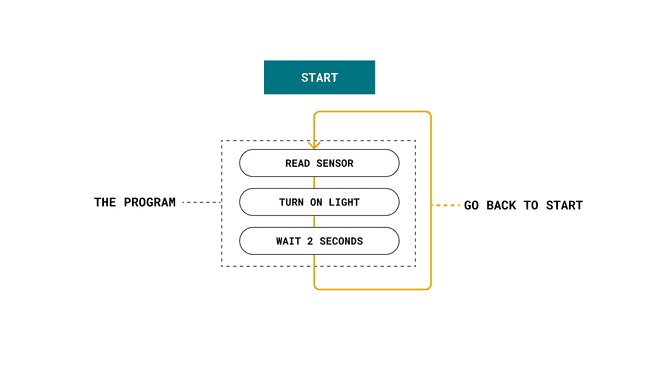
Every embedded system repeats the same cycle of reading, deciding and acting. A thermostat is an easy way to follow it, since it reads a temperature, compares it with your setting and switches the heating.
- Input collection: Sensors, buttons or network messages give the processor new data, such as light on a sensor or a finger on a button.
- Data processing and decision making: The processor fetches each firmware instruction, decodes it, executes it and stores the result, then decides what the device should do.
- Output execution: The system acts through an output such as a motor, a valve, an LED or a message over the network.
- Continuous monitoring and control: The firmware goes back to the inputs, either by polling them in a loop or by reacting to interrupts from timers and incoming data.
An interrupt pauses the running program, runs a short handler and then resumes, and it can also wake a chip from low-power sleep. Many designs add a watchdog timer that resets the system if the software stops signaling it.
Main components of an embedded system
| Component | Role | Detail |
|---|---|---|
| Microcontroller or microprocessor | Runs the program | A microcontroller also holds memory and peripherals on one chip |
| Memory | Stores the program and working data | Non-volatile flash or ROM keeps the firmware, and a small amount of RAM holds working data |
| Input devices | Bring data in | Sensors detect changes such as temperature, humidity, light, motion or pressure |
| Output devices | Act on the decision | Actuators open valves or turn motors, and displays or LEDs show status |
| Power supply | Keeps the system running | Some microcontrollers draw only milliwatts or microwatts, and nanowatts while asleep, which suits battery devices |
| Firmware (embedded software) | Controls the hardware | It is stored in non-volatile memory and often specialized for one board |
| Communication interfaces | Connect chips and devices | Common examples are UART, I²C, SPI, USB and Ethernet |
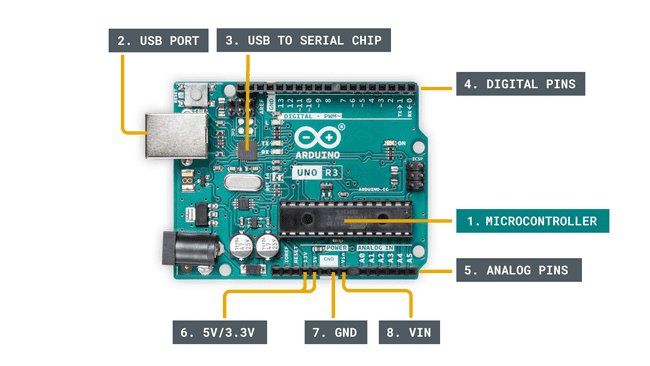
Microcontroller vs microprocessor in embedded systems
The choice decides how much extra circuitry a design needs. Most modern embedded designs are based on microcontrollers, while complex systems may use a general-purpose microprocessor.
| Feature | Microcontroller | Microprocessor |
|---|---|---|
| What is on the chip | Processor cores, memory and programmable input/output peripherals | The functions of a CPU in a single integrated circuit or a few connected ones |
| Support circuitry | Little, since memory and peripherals are built in | More, since memory and interfaces sit outside the chip |
| Program size | Usually must fit in on-chip memory | Can use larger external memory |
| Typical software | Bare-metal firmware or a small real-time operating system | A larger operating system, such as embedded Linux |
| Typical use | Appliances, sensors, motor control | More complex systems that need a full operating system |
Embedded system vs general-purpose computer
| Feature | Embedded system | General-purpose computer |
|---|---|---|
| Purpose | One specific task or a small set of tasks | Whatever software the user installs |
| Software | Firmware fixed to the hardware, stored in ROM or flash | An operating system plus changing applications |
| User interface | None, or buttons, LEDs, an LCD menu or a touchscreen | Keyboard, mouse and full display |
| Resources | Limited memory and processing, sized to the job | Large memory and storage for many uses |
| Timing | Often has strict real-time limits | Usually tolerates small delays |
| Expansion | Adding hardware or software is tightly controlled | Users add peripherals and apps freely |
| Uptime | Often runs for years without error and may recover from faults on its own | Restarted regularly for updates |
Types of embedded systems
The usual grouping looks at how a system connects and how strict its timing is, so one device can belong to more than one type. A connected car controller is both networked and real-time.
| Type | How it behaves | Examples |
|---|---|---|
| Standalone embedded systems | Work on their own without a host computer or network | Microwave ovens, washing machines, dishwashers |
| Real-time embedded systems | Must respond within a defined time limit | Engine control, pacemakers, printers |
| Networked embedded systems | Share data over a wired or wireless network | Routers, networked thermostats, home automation systems |
| Mobile embedded systems | Run in portable devices with limited size and power | Digital cameras, GPS receivers, MP3 players |
| Small-scale systems | Low-power CPU with limited memory, or an 8-bit or 16-bit microcontroller | Keyboards, remote controls |
| Medium and large systems | Mid-range or high-performance CPUs with enough memory for an operating system such as Linux | Network equipment, medical imaging equipment |
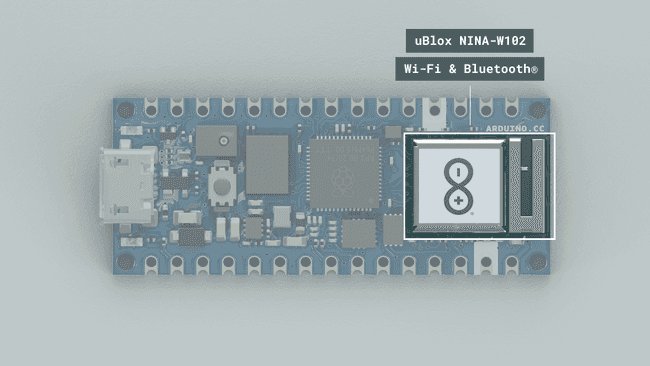
Hard vs soft real-time embedded systems
Real-time does not mean fast. It means predictable, and the difference between these classes is what a missed deadline costs.
| Class | What a missed deadline means | Examples |
|---|---|---|
| Hard real-time | Total system failure, so every deadline must be met | Car engine control, heart pacemakers |
| Firm real-time | Rare misses are tolerated, but a late result has no value | An assembly-line machine that ejects a part it could not process in time |
| Soft real-time | The result loses value after the deadline, and quality drops without total failure | Live audio and video, video games |
Embedded operating systems: RTOS, Linux and Windows IoT
Not every embedded system needs an operating system. Eight-bit and 16-bit microcontrollers are usually too constrained for Linux, so they run bare-metal code or a real-time operating system (RTOS).
| Option | What it suits | Key fact |
|---|---|---|
| Bare metal | The smallest microcontrollers | No operating system, as the firmware controls the hardware directly |
| FreeRTOS | Microcontrollers and other small devices | Open source under the MIT license, and it runs on more than 40 architectures |
| QNX, VxWorks | Systems with real-time requirements | Established real-time operating systems, along with MicroC/OS-II |
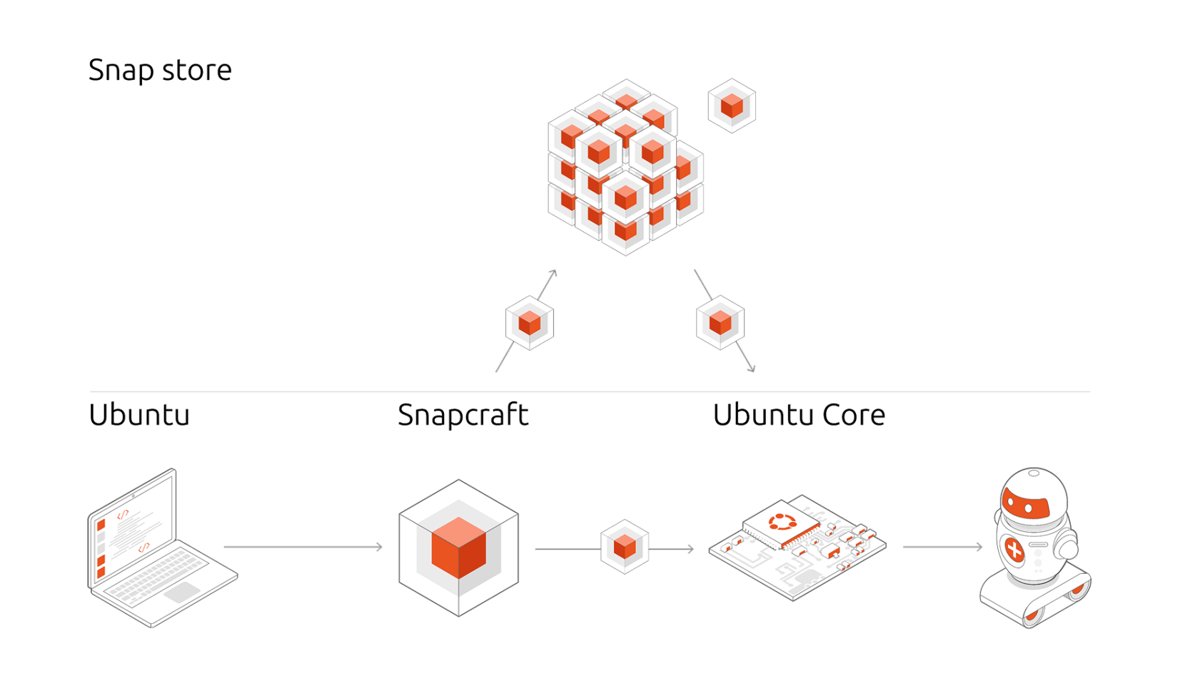
| Embedded Linux | 32-bit platforms with networking needs | Yocto and Buildroot build custom distributions, and Ubuntu Core is a packaged option |
| Windows IoT Enterprise | Fixed-purpose devices in banking, healthcare, hospitality, manufacturing and retail | LTSC releases carry a 10-year support lifecycle |
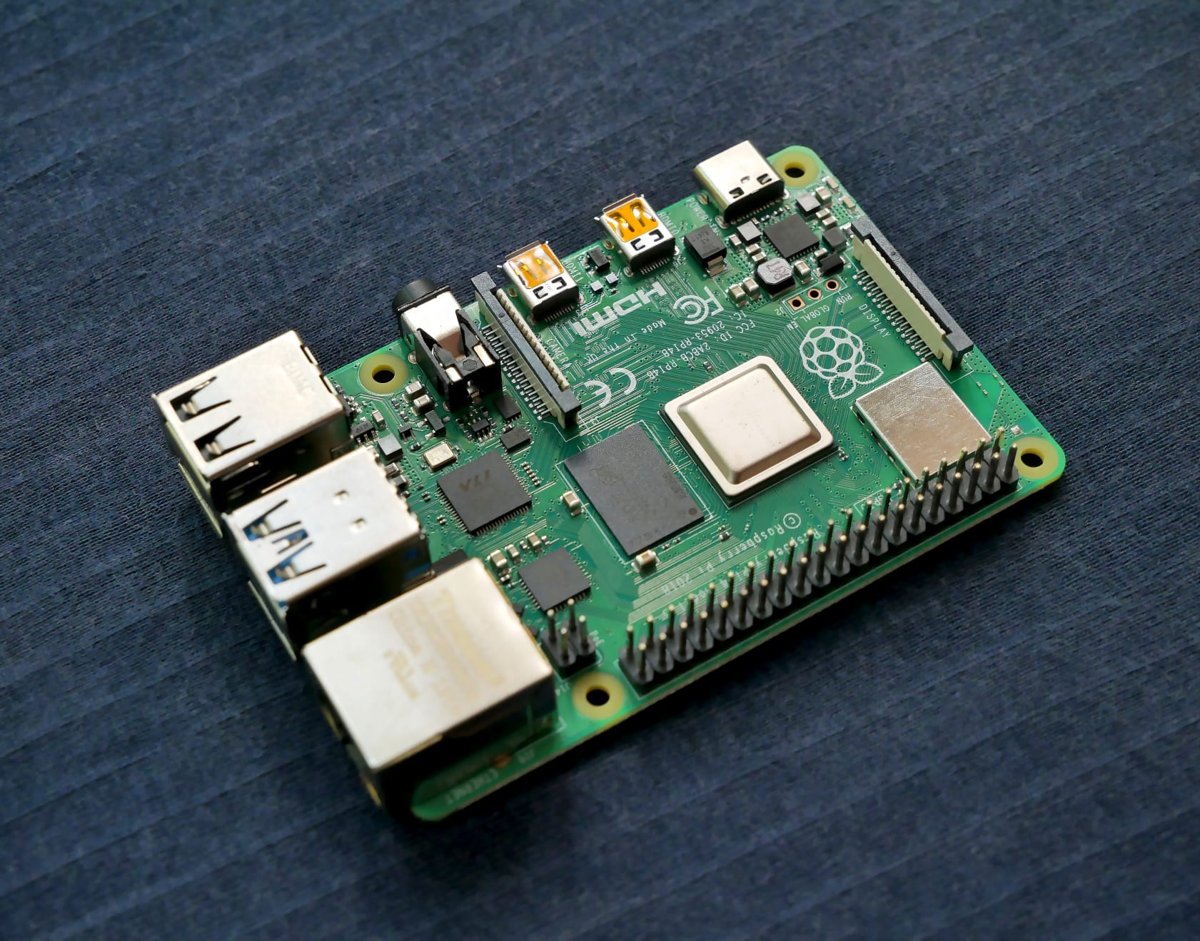
A Raspberry Pi is a common way to try embedded Linux at home, and you can get Ubuntu Server for Raspberry Pi at no cost.
Embedded software vs firmware
The two terms are often used interchangeably, but firmware has a narrower meaning. PCs have firmware as well, which is why you sometimes need to update firmware on Windows 11.
| Term | Meaning | Examples |
|---|---|---|
| Firmware | Software that provides low-level control of hardware, stored in non-volatile memory such as ROM or flash | Washing machine timing, TV picture settings, anti-lock brake control |
| Embedded software | Any software that controls a machine not usually thought of as a computer, and tuned for its hardware's time and memory limits | Car, pacemaker, appliance and router software |
| Flashing | Rewriting firmware stored in flash or EEPROM | Fixing bugs or adding features to a digital camera |
Security in embedded systems
The Mirai malware shows what weak device security can cost. It logged into IP cameras and home routers with a table of more than 60 factory default usernames and passwords, and on 21 October 2016 infected devices attacked DNS provider Dyn, disrupting GitHub, Twitter, Reddit and Netflix.
| Risk | What it looks like | Defense |
|---|---|---|
| Default credentials | Devices ship with shared logins that owners never change | Change passwords at setup, since a rebooted Mirai device can be reinfected within minutes without a new password |
| Open network services | Mirai found its targets by scanning telnet ports 23 and 2323 | Close services the device does not need, and use access controls |
| Unpatched firmware | Bugs stay in the field for the device's whole life | Deliver over-the-air security updates and monitor devices regularly |
| Exposed data | Devices collect personal data and send it across networks | Encrypt data and limit who can reach it |
| Spreading compromise | One hacked function can reach the rest of the device | Isolate subsystems with an embedded hypervisor or a trusted computing base |
Rules are tightening too. The EU's Cyber Resilience Act (Regulation 2024/2847) covers products with digital elements, with manufacturer reporting duties from 11 September 2026 and the remaining provisions from 11 December 2027.
Common tools used in embedded systems
Embedded developers write code on a PC and run it on separate target hardware, so they rely on tools for building and inspecting that remote code.
| Tool | What it does | When you use it |
|---|---|---|
| Cross compiler and assembler | Build code on a PC for a different target processor | Every build |
| In-circuit debugger (JTAG, SWD) | Controls and inspects code running on the real chip | Finding bugs on the hardware |
| In-circuit emulator | Replaces the processor with a simulated equivalent for full control | Harder hardware-level bugs |
| Full emulator | Simulates all the hardware on a PC, though it can run up to 100 times slower | Testing before hardware exists |
| RTOS trace tools | Record system events to show task timing | Timing and scheduling problems |
| Model-based tools | Generate code from state machines and UML diagrams | Complex control logic |
| MISRA C and C++ standards | Coding rules that support timing analysis and help avoid run-time errors | Safety-related code |
| Yocto and Buildroot | Build custom Linux distributions | Embedded Linux products |
Beginners can start with far less. You can download the Arduino IDE for Windows, Mac or Linux and program a low-cost board without a separate debugger.
Real-world examples of embedded systems
| Device | What the embedded system does | Why it needs one |
|---|---|---|
| Washing machines | Times each stage of the wash cycle through firmware | Digital controls replace mechanical parts and analog knobs |
| Digital cameras | Runs the camera's functions, and firmware updates can add features or file formats | Fixes and new features arrive without new hardware |
| Microwave ovens | Reads the keypad and controls the heating time | A low-cost chip handles the whole job |
| Automotive control units | Runs anti-lock braking, stability control, traction control and engine control | A typical mid-range car has about 30 microcontrollers |
| Heart pacemakers | Delivers precisely timed signals | Missed timing threatens the patient's life |
| Printers | Fires ink or laser at the exact moment | Late activation leaves output missing or misaligned |
| Routers | Moves network traffic and serves a browser-based settings page | It runs without a keyboard or screen |
Applications of embedded systems
Embedded systems reach far beyond gadgets. A 2009 estimate put 98% of all manufactured microprocessors in embedded systems.
| Industry | Where embedded systems appear |
|---|---|
| Consumer electronics | Televisions, mobile phones, digital cameras, GPS receivers, printers |
| Automotive industry | Motor controllers, anti-lock brakes, electronic stability control, traction control |
| Healthcare and medical devices | Patient monitors and imaging equipment, including CT and MRI scanners |
| Industrial automation | Programmable logic controllers, assembly lines, pipelines, electrical grids |
| Internet of Things (IoT) | Networked thermostats, wireless sensors, connected home lighting and security |
| Aerospace | Avionics, inertial guidance, GPS and spacecraft systems |
| Telecommunications and finance | Telephone switches, routers, ATMs |
History of embedded systems
| Date | Milestone | Why it mattered |
|---|---|---|
| 1961 | Autonetics D-17 guidance computer for the Minuteman missile | An early mass-produced embedded system |
| Around 1965 | Apollo Guidance Computer at the MIT Instrumentation Laboratory | Cited as one of the first recognizably modern embedded systems |
| 1971 | Intel 4004 | The first commercially available microprocessor, at 740 kHz and 4 bits |
| Early 1980s | Memory and input/output move onto the processor chip | Microcontrollers shift most design effort into software |
Advantages of embedded systems
| Advantage | What it means in practice |
|---|---|
| Low power consumption | Battery devices can run for long periods, since sleep modes cut power draw to very low levels |
| Small size | The computer fits inside the product, sometimes on a single chip |
| Low per-unit cost | Hardware sized to one job avoids paying for unused capacity |
| Rugged operating ranges | Designs avoid moving parts such as disk drives, so they suit harsh environments |
| Long, reliable operation | Systems often run for years without error and may recover from faults automatically |
| Predictable timing | Real-time designs respond within defined limits, which safety systems depend on |
Limitations of embedded systems
| Limitation | What it means in practice |
|---|---|
| Limited resources | Memory and processing can be as small as 16 KB of flash and 4 KB of RAM, so code must be tight |
| Tied to its hardware | Drivers ship at manufacture, and adding hardware or software later is tightly controlled |
| Harder debugging | Code runs on separate hardware, often with no screen, so you need extra tools to inspect it |
| Slow to fix in the field | A system in an inaccessible place, or one that must stay running for safety, is difficult to service |
| Security exposure | Connected devices can be attacked, and many sit unattended with old firmware |
| Early decisions are hard to reverse | Choosing an RTOS or an embedded OS early constrains later options |
The future of embedded systems
| Trend | What is changing | Effect on devices |
|---|---|---|
| Edge AI | AI models run directly on sensors and IoT hardware instead of in the cloud | Lower latency, less bandwidth use, and devices that keep working when the network drops |
| More connected devices | IBM cites estimates of tens of billions of IoT devices in use over the next few years | More firmware to develop, secure and maintain |
| Over-the-air updates | Libraries such as those in FreeRTOS deliver security patches and firmware updates remotely | Fixes reach devices without a service visit |
| Multicore microcontrollers | FreeRTOS can schedule tasks across multiple identical processor cores | Heavier local processing on small devices |
| Security regulation | The EU Cyber Resilience Act sets common cybersecurity requirements | Manufacturers must assess risk and report actively exploited vulnerabilities |
| Newer languages | Rust, Python and MicroPython are joining C and C++ on embedded projects | A wider set of developers can work on devices |
Is embedded systems a good career choice?
Yes, if you enjoy working close to hardware and want skills that transfer across cars, medical devices, factories and consumer products. Embedded software runs in cars, appliances, medical equipment and network hardware, and connected devices, edge AI and new security rules all add work for people who can write reliable low-level code. The trade-off is a steeper learning curve than general app development, as you need both programming and electronics.
Check current pay and job openings for your region before you commit, since both vary widely by country and industry.
Skills required for a career in embedded systems
| Skill | Why employers need it |
|---|---|
| C and C++ | Embedded code is typically written in these languages |
| Assembly basics | Used for booting and interrupt handling |
| Electronics fundamentals | You work directly with sensors, actuators and other circuits |
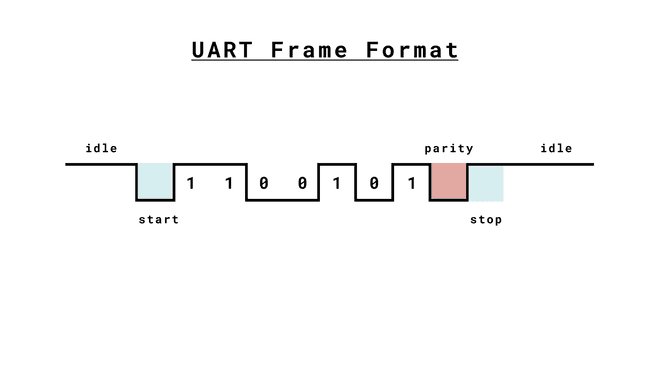
| Serial interfaces | UART, I²C and SPI connect chips and peripherals on most boards |
| RTOS concepts | Tasks, semaphores and message queues are how multitasking firmware shares data safely |
| Debugging with JTAG or SWD | Most hard bugs only appear on the real hardware |
| Embedded Linux | Yocto and Buildroot are widely used for larger devices |
| Secure development | Updates, access controls and encryption are expected on connected products |
How to become an embedded systems engineer
Hands-on projects teach this field faster than theory alone, and you can start with one inexpensive board. Pre-assembled Arduino modules cost less than $50, according to Arduino.
- Learn C until you are comfortable with pointers, bit operations and memory limits.
- Get an Arduino board and build a project that reads a sensor and drives an output.
- Add interrupts and a timer instead of a simple loop.
- Connect a second chip over I²C or SPI, and read its datasheet to do it.
- Move to a task-based design with FreeRTOS.
- Learn a hardware debugger that uses JTAG or SWD.
- Build a small embedded Linux image with Yocto or Buildroot.
- Publish your projects so that employers can see your code and your hardware work.
Embedded systems FAQ
What is an embedded system in simple terms?
It is a small computer hidden inside another product, built to do one job. The computer in a microwave oven, for example, reads the keypad and controls the heating, and you never install software on it yourself.
What are some examples of embedded systems?
Common examples include washing machines, microwave ovens, digital cameras, routers, printers, anti-lock brakes, pacemakers, traffic light controllers and ATMs. Each one contains a processor running fixed software for a dedicated purpose inside a larger machine.
Is a smartphone an embedded system?
Phones are often listed as consumer embedded systems, but a modern smartphone runs apps you install, much like a general-purpose computer. The label fits a phone less neatly than it fits a single-purpose device such as a microwave oven.
Is Arduino an embedded system?
An Arduino board is an open-source microcontroller platform for building embedded systems. Once you load a program, the board reads inputs and drives outputs for that one job, which makes a finished Arduino project a simple embedded system.
Is a Raspberry Pi an embedded system?
A Raspberry Pi is a ready-made ARM-based board that can be used in embedded designs. It can also run a desktop operating system, so it counts as embedded when you dedicate it to a fixed task inside a product.
What programming language is used for embedded systems?
Embedded code is typically written in C or C++, with assembly for booting and interrupt handling. Rust, Python and MicroPython are also used on some projects, and Ada appears in some military and aviation work.
Does an embedded system need an operating system?
No. Many small microcontroller designs run bare-metal firmware with no operating system at all. Larger systems may use an RTOS such as FreeRTOS, or a full operating system such as embedded Linux or Windows IoT Enterprise.
What is the difference between an embedded system and an IoT device?
An IoT device is an object with embedded sensors, software and network connectivity that collects and shares data. Every IoT device contains an embedded system, but an embedded system does not need a network connection to do its job.
Can embedded systems be hacked?
Yes. The Mirai malware infected IP cameras and home routers using factory default passwords, then used them in large attacks in 2016. Changing default passwords, closing unused services and installing firmware updates all reduce that risk.