The smallest iPhone Apple sells today is the iPhone 17e at 146.7 x 71.5 x 7.80 mm and 169 g, while the iPhone 18 Pro Max is the largest standard model at 163.4 x 78.0 x 8.75 mm and 249 g.
The charts below list Apple's official height, width, depth, weight and display size for every iPhone from the iPhone 12 mini to the iPhone 18 Pro Max, iPhone Air and the folding iPhone Duo.
Current iPhones ranked from smallest to biggest
Apple's current lineup has six models. The ranking below runs by height, then width, which is what decides pocket fit and one-handed reach. Every figure comes from Apple's tech specs page for that model.
| Rank | Model | Display | Height x width x depth | Weight | Best current pick for |
|---|---|---|---|---|---|
| 1 | iPhone 17e | 6.1-inch | 146.7 x 71.5 x 7.80 mm (5.78 x 2.82 x 0.31 in) | 169 g (5.96 oz) | Smallest body you can buy new |
| 2 | iPhone 16 | 6.1-inch | 147.6 x 71.6 x 7.80 mm (5.81 x 2.82 x 0.31 in) | 170 g (6.00 oz) | Small body with Camera Control |
| 3 | iPhone 17 | 6.3-inch | 149.6 x 71.5 x 7.95 mm (5.89 x 2.81 x 0.31 in) | 177 g (6.24 oz) | Bigger screen in nearly the same footprint |
| 4 | iPhone 18 Pro | 6.3-inch | 150.0 x 71.9 x 8.75 mm (5.91 x 2.83 x 0.34 in) | 211 g (7.44 oz) | Smallest Pro body |
| 5 | iPhone Air | 6.5-inch | 156.2 x 74.7 x 5.64 mm (6.15 x 2.94 x 0.22 in) | 165 g (5.82 oz) | Lightest and thinnest standard phone |
| 6 | iPhone 18 Pro Max | 6.9-inch | 163.4 x 78.0 x 8.75 mm (6.43 x 3.07 x 0.34 in) | 249 g (8.78 oz) | Largest non-folding screen |
| 7 | iPhone Duo | 7.6-inch inner, 5.4-inch outer | Closed: 117.8 x 84.1 x 11.3 mm (4.64 x 3.31 x 0.44 in). Open: 117.8 x 164.6 x 5.2 mm | 254 g (8.96 oz) | Biggest display of any iPhone |
iPhone size comparison chart: iPhone 12 to iPhone 18 Pro
This is the full iPhone dimensions chart for every model Apple released from 2020 to 2026, with weight and display size at a glance.
| Model (year) | Display | Height (mm) | Width (mm) | Depth (mm) | Weight |
|---|---|---|---|---|---|
| iPhone 12 mini (2020) | 5.4-inch | 131.5 | 64.2 | 7.4 | 135 g |
| iPhone 12 (2020) | 6.1-inch | 146.7 | 71.5 | 7.4 | 164 g |
| iPhone 12 Pro (2020) | 6.1-inch | 146.7 | 71.5 | 7.4 | 189 g |
| iPhone 12 Pro Max (2020) | 6.7-inch | 160.8 | 78.1 | 7.4 | 228 g |
| iPhone 13 mini (2021) | 5.4-inch | 131.5 | 64.2 | 7.65 | 141 g |
| iPhone 13 (2021) | 6.1-inch | 146.7 | 71.5 | 7.65 | 174 g |
| iPhone 13 Pro (2021) | 6.1-inch | 146.7 | 71.5 | 7.65 | 204 g |
| iPhone 13 Pro Max (2021) | 6.7-inch | 160.8 | 78.1 | 7.65 | 240 g |
| iPhone SE 3rd generation (2022) | 4.7-inch LCD | 138.4 | 67.3 | 7.3 | 144 g |
| iPhone 14 (2022) | 6.1-inch | 146.7 | 71.5 | 7.80 | 172 g |
| iPhone 14 Plus (2022) | 6.7-inch | 160.8 | 78.1 | 7.80 | 203 g |
| iPhone 14 Pro (2022) | 6.1-inch | 147.5 | 71.5 | 7.85 | 206 g |
| iPhone 14 Pro Max (2022) | 6.7-inch | 160.7 | 77.6 | 7.85 | 240 g |
| iPhone 15 (2023) | 6.1-inch | 147.6 | 71.6 | 7.80 | 171 g |
| iPhone 15 Plus (2023) | 6.7-inch | 160.9 | 77.8 | 7.80 | 201 g |
| iPhone 15 Pro (2023) | 6.1-inch | 146.6 | 70.6 | 8.25 | 187 g |
| iPhone 15 Pro Max (2023) | 6.7-inch | 159.9 | 76.7 | 8.25 | 221 g |
| iPhone 16 (2024) | 6.1-inch | 147.6 | 71.6 | 7.80 | 170 g |
| iPhone 16 Plus (2024) | 6.7-inch | 160.9 | 77.8 | 7.80 | 199 g |
| iPhone 16 Pro (2024) | 6.3-inch | 149.6 | 71.5 | 8.25 | 199 g |
| iPhone 16 Pro Max (2024) | 6.9-inch | 163.0 | 77.6 | 8.25 | 227 g |
| iPhone 16e (2025) | 6.1-inch | 146.7 | 71.5 | 7.80 | 167 g |
| iPhone 17 (2025) | 6.3-inch | 149.6 | 71.5 | 7.95 | 177 g |
| iPhone Air (2025) | 6.5-inch | 156.2 | 74.7 | 5.64 | 165 g |
| iPhone 17 Pro (2025) | 6.3-inch | 150.0 | 71.9 | 8.75 | 206 g |
| iPhone 17 Pro Max (2025) | 6.9-inch | 163.4 | 78.0 | 8.75 | 233 g |
| iPhone 17e (2026) | 6.1-inch | 146.7 | 71.5 | 7.80 | 169 g |
| iPhone 18 Pro (2026) | 6.3-inch | 150.0 | 71.9 | 8.75 | 211 g |
| iPhone 18 Pro Max (2026) | 6.9-inch | 163.4 | 78.0 | 8.75 | 249 g |
| iPhone Duo (2026), closed | 5.4-inch outer | 117.8 | 84.1 | 11.3 | 254 g |
| iPhone Duo (2026), open | 7.6-inch inner | 117.8 | 164.6 | 5.2 | 254 g |
Every 6.1-inch and 6.3-inch model since 2020 sits between 70.6 mm and 71.9 mm wide. Height and depth are where those phones actually differ.
The year column shows when each model arrived; the iPhone release timeline from 2007 to 2026 puts every generation in launch order.
Quick answers: which iPhone is smallest, thinnest, or largest?
| Question | Answer | Apple's figure |
|---|---|---|
| Which iPhone is the smallest you can buy new? | iPhone 17e | 146.7 x 71.5 x 7.80 mm, 169 g |
| Which iPhone is the smallest since 2020? | iPhone 12 mini and iPhone 13 mini | 131.5 x 64.2 mm, 135 g and 141 g |
| Which iPhone is the thinnest? | iPhone Duo when open; iPhone Air among non-folding models | 5.2 mm open; Air 5.64 mm |
| Which iPhone is the lightest current model? | iPhone Air | 165 g (5.82 oz) |
| Which iPhone is the biggest or largest body? | iPhone 18 Pro Max and iPhone 17 Pro Max | 163.4 x 78.0 x 8.75 mm |
| Which iPhone has the largest display? | iPhone Duo inner display; 6.9-inch Pro Max models among non-folding phones | 7.6-inch; 6.9-inch |
| Which iPhone is the heaviest? | iPhone Duo; iPhone 18 Pro Max among non-folding phones | 254 g; 249 g |
| Which iPhone has the smallest display in the chart? | iPhone SE 3rd generation | 4.7-inch LCD |
iPhone 17 vs. iPhone 17 Pro size
Both phones use a 6.3-inch display at 2622 x 1206 pixels and 460 ppi. The bodies are almost the same height, but the Pro is thicker and much heavier.
| Measurement | iPhone 17 | iPhone 17 Pro | Difference |
|---|---|---|---|
| Height | 149.6 mm (5.89 in) | 150.0 mm (5.91 in) | Pro 0.4 mm taller |
| Width | 71.5 mm (2.81 in) | 71.9 mm (2.83 in) | Pro 0.4 mm wider |
| Depth | 7.95 mm (0.31 in) | 8.75 mm (0.34 in) | Pro 0.8 mm thicker |
| Weight | 177 g (6.24 oz) | 206 g (7.27 oz) | Pro 29 g heavier |
| Rear cameras | Two, aligned vertically | Three, in a full-width camera plateau | Different case cut-outs |
The iPhone 18 Pro keeps the iPhone 17 Pro's exact 150.0 x 71.9 x 8.75 mm body and adds 5 g, at 211 g.
iPhone Air: the thinnest and lightest non-folding model
The iPhone Air is 5.64 mm thick and weighs 165 g, despite a 6.5-inch display. That makes it the thinnest and lightest iPhone in Apple's current non-folding lineup. Only the folding iPhone Duo is thinner, and only when open.
| Model | Display | Depth | Weight | Height |
|---|---|---|---|---|
| iPhone Air | 6.5-inch | 5.64 mm (0.22 in) | 165 g | 156.2 mm |
| iPhone 17e | 6.1-inch | 7.80 mm | 169 g | 146.7 mm |
| iPhone 16 Plus | 6.7-inch | 7.80 mm | 199 g | 160.9 mm |
The Air weighs 34 g less than the older 6.7-inch iPhone 16 Plus and is 4.7 mm shorter. It is still 9.5 mm taller than an iPhone 17e.
iPhone 12 size comparison: 12 mini vs. 12 vs. 12 Pro vs. 12 Pro Max
All four iPhone 12 models share a 7.4 mm depth. The iPhone 12 and 12 Pro have identical outer dimensions; the Pro's stainless steel band adds 25 g.
| Model | Display | Height x width x depth | Weight |
|---|---|---|---|
| iPhone 12 mini | 5.4-inch | 131.5 x 64.2 x 7.4 mm (5.18 x 2.53 x 0.29 in) | 135 g (4.76 oz) |
| iPhone 12 | 6.1-inch | 146.7 x 71.5 x 7.4 mm (5.78 x 2.82 x 0.29 in) | 164 g (5.78 oz) |
| iPhone 12 Pro | 6.1-inch | 146.7 x 71.5 x 7.4 mm (5.78 x 2.82 x 0.29 in) | 189 g (6.66 oz) |
| iPhone 12 Pro Max | 6.7-inch | 160.8 x 78.1 x 7.4 mm (6.33 x 3.07 x 0.29 in) | 228 g (8.03 oz) |
The 12 mini is 15.2 mm shorter and 7.3 mm narrower than the iPhone 12. No iPhone released since the 13 mini has matched that footprint.
iPhone 14 Plus vs. iPhone 14 Pro Max size
Both are 6.7-inch phones with nearly the same outline. The Pro Max is 37 g heavier because of its stainless steel band and third camera.
| Measurement | iPhone 14 Plus | iPhone 14 Pro Max |
|---|---|---|
| Height | 160.8 mm (6.33 in) | 160.7 mm (6.33 in) |
| Width | 78.1 mm (3.07 in) | 77.6 mm (3.05 in) |
| Depth | 7.80 mm (0.31 in) | 7.85 mm (0.31 in) |
| Weight | 203 g (7.16 oz) | 240 g (8.47 oz) |
| Top of display | No Dynamic Island | Dynamic Island |
| Frame and cameras | Aluminum, two cameras | Stainless steel, three cameras |
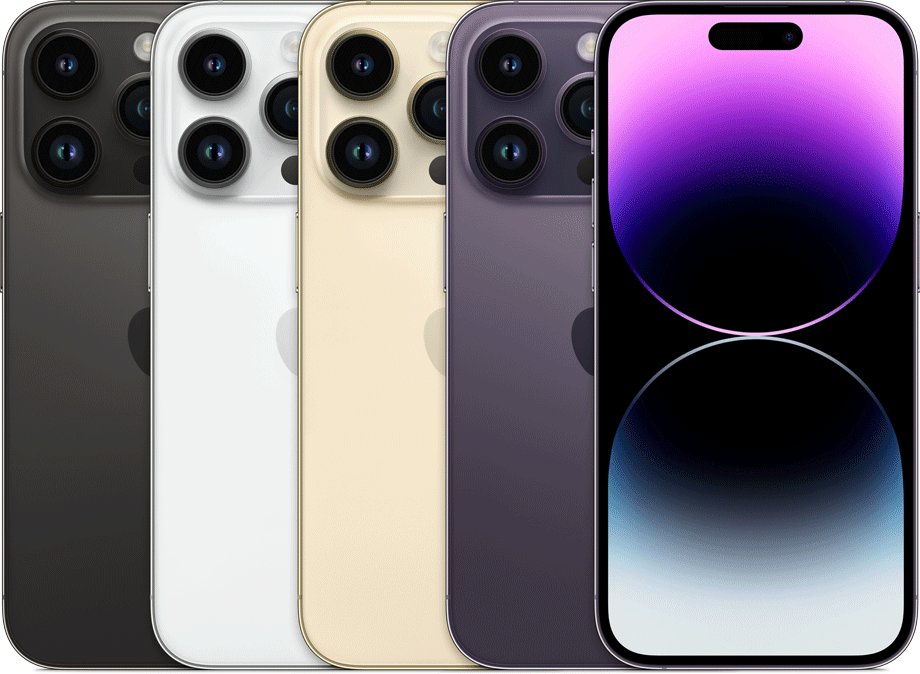
How iPhone sizes changed from the iPhone 15 to the iPhone 17
The standard and Pro lines grew from 6.1 to 6.3 inches over these three generations. The 6.7-inch Plus ended with the iPhone 16 Plus; the 2025 lineup has the 6.5-inch iPhone Air instead.
| Line | iPhone 15 (2023) | iPhone 16 (2024) | iPhone 17 (2025) |
|---|---|---|---|
| Standard | 6.1-inch, 147.6 x 71.6 x 7.80 mm, 171 g | 6.1-inch, 147.6 x 71.6 x 7.80 mm, 170 g | 6.3-inch, 149.6 x 71.5 x 7.95 mm, 177 g |
| Plus, then Air | 15 Plus: 6.7-inch, 160.9 x 77.8 x 7.80 mm, 201 g | 16 Plus: 6.7-inch, 160.9 x 77.8 x 7.80 mm, 199 g | Air: 6.5-inch, 156.2 x 74.7 x 5.64 mm, 165 g |
| Pro | 6.1-inch, 146.6 x 70.6 x 8.25 mm, 187 g | 6.3-inch, 149.6 x 71.5 x 8.25 mm, 199 g | 6.3-inch, 150.0 x 71.9 x 8.75 mm, 206 g |
| Pro Max | 6.7-inch, 159.9 x 76.7 x 8.25 mm, 221 g | 6.9-inch, 163.0 x 77.6 x 8.25 mm, 227 g | 6.9-inch, 163.4 x 78.0 x 8.75 mm, 233 g |
Mini, standard, Plus, Pro, and Pro Max: what the names mean for size
| Name | Display class | Typical body | Models |
|---|---|---|---|
| mini | 5.4-inch | 131.5 x 64.2 mm | iPhone 12 mini, iPhone 13 mini |
| SE | 4.7-inch LCD with Home button | 138.4 x 67.3 mm | iPhone SE 3rd generation |
| Standard and e | 6.1-inch, then 6.3-inch from iPhone 17 | 146.7-149.6 x 71.5-71.6 mm | iPhone 12 to 17, iPhone 16e, iPhone 17e |
| Pro | 6.1-inch, then 6.3-inch from iPhone 16 Pro | 146.6-150.0 x 70.6-71.9 mm, heavier than standard | iPhone 12 Pro to iPhone 18 Pro |
| Plus | 6.7-inch | 160.8-160.9 x 77.8-78.1 mm | iPhone 14 Plus, 15 Plus, 16 Plus |
| Air | 6.5-inch | 156.2 x 74.7 x 5.64 mm | iPhone Air |
| Pro Max | 6.7-inch, then 6.9-inch from iPhone 16 Pro Max | 159.9-163.4 x 76.7-78.1 mm | iPhone 12 Pro Max to iPhone 18 Pro Max |
| Duo | 7.6-inch folding inner, 5.4-inch outer | Closed 117.8 x 84.1 x 11.3 mm | iPhone Duo |
"Pro" describes cameras and materials, not a bigger body. A Pro is within about 1 mm of the standard model's width in the same year, but always heavier.
How the models compare in your hand
Width decides how far your thumb has to stretch, so it is the most useful number for one-handed use. The iPhone lineup falls into five clear width groups.
| Width group | Models | How it feels to hold |
|---|---|---|
| 64.2 mm | iPhone 12 mini, iPhone 13 mini | Easiest one-handed reach across the whole screen |
| 67.3 mm | iPhone SE 3rd generation | Narrow, with a Home button below a 4.7-inch screen |
| 70.6-71.9 mm | All 6.1-inch and 6.3-inch models, including iPhone 17e, 16, 17 and 18 Pro | Comfortable one-handed grip for most adult hands |
| 74.7 mm | iPhone Air | Wider, but light at 165 g |
| 76.7-78.1 mm | Plus and Pro Max models | Usually needs two hands for the far corner |
| 84.1 mm closed | iPhone Duo | Short and wide closed; a two-handed tablet-style device open |
What the measurements mean for everyday use
| Measurement | What it affects | Range in the chart |
|---|---|---|
| Height | Pocket fit and whether the top of the screen is reachable | 117.8 mm (Duo closed) to 163.4 mm (Pro Max) |
| Width | Grip and thumb reach | 64.2 mm (mini) to 84.1 mm (Duo closed) |
| Depth | Pocket bulge and how a phone sits in a slim case | 5.2 mm (Duo open) to 11.3 mm (Duo closed) |
| Weight | Comfort during long calls, reading and video | 135 g (12 mini) to 254 g (Duo) |
| Display diagonal | How much content fits on screen | 4.7-inch (SE) to 7.6-inch (Duo inner) |
The iPhone 18 Pro Max weighs 84 g more than the iPhone Air, a gap you notice over an hour of reading.
Why a 6.1-inch iPhone is not automatically the same size
Apple has sold more than ten 6.1-inch iPhones, and their bodies differ in height, depth and weight. The diagonal tells you the screen class, not the exact phone size.
| 6.1-inch model | Height x width x depth | Weight |
|---|---|---|
| iPhone 12, iPhone 12 Pro | 146.7 x 71.5 x 7.4 mm | 164 g, 189 g |
| iPhone 13, iPhone 13 Pro | 146.7 x 71.5 x 7.65 mm | 174 g, 204 g |
| iPhone 14, iPhone 16e, iPhone 17e | 146.7 x 71.5 x 7.80 mm | 172 g, 167 g, 169 g |
| iPhone 14 Pro | 147.5 x 71.5 x 7.85 mm | 206 g |
| iPhone 15, iPhone 16 | 147.6 x 71.6 x 7.80 mm | 171 g, 170 g |
| iPhone 15 Pro | 146.6 x 70.6 x 8.25 mm | 187 g |
Older 6.1-inch models are larger still: the iPhone 11's 150.9 x 75.7 x 8.3 mm body is 4.2 mm wider than an iPhone 12.
Display size is not the same as usable screen area
Apple rounds the advertised diagonal. Its spec pages also give the screen measured as a standard rectangle, and state that the actual viewable area is less.
| Advertised size | Measured as a rectangle | Resolution | Models |
|---|---|---|---|
| 5.4-inch | 5.42 in | 2340 x 1080 | iPhone 12 mini, 13 mini |
| 6.1-inch | 6.06 in | 2532 x 1170 | iPhone 12, 12 Pro, 13, 13 Pro, 14, 16e, 17e |
| 6.1-inch | 6.12 in | 2556 x 1179 | iPhone 14 Pro, 15, 15 Pro, 16 |
| 6.3-inch | 6.27 in | 2622 x 1206 | iPhone 16 Pro, 17, 17 Pro, 18 Pro |
| 6.5-inch | 6.55 in | 2736 x 1260 | iPhone Air |
| 6.7-inch | 6.68 in | 2778 x 1284 | iPhone 12 Pro Max, 13 Pro Max, 14 Plus |
| 6.7-inch | 6.69 in | 2796 x 1290 | iPhone 14 Pro Max, 15 Plus, 15 Pro Max, 16 Plus |
| 6.9-inch | 6.86 in | 2868 x 1320 | iPhone 16 Pro Max, 17 Pro Max, 18 Pro Max |
| 7.6-inch and 5.4-inch | 7.58 in and 5.36 in | 1878 x 2670 and 1398 x 2034 | iPhone Duo inner and outer |
Will an iPhone case fit another iPhone with similar dimensions?
Matching outer dimensions are necessary for a case to fit, but not enough. Camera layout and button positions decide whether the cut-outs line up.
| Look-alike pair | Same outer size? | What differs |
|---|---|---|
| iPhone 12 and iPhone 12 Pro | Yes, 146.7 x 71.5 x 7.4 mm | Two rear cameras vs. three cameras, so the camera opening differs |
| iPhone 15 and iPhone 16 | Yes, 147.6 x 71.6 x 7.80 mm | iPhone 16 adds the Action button and Camera Control, and its cameras sit vertically |
| iPhone 15 Plus and iPhone 16 Plus | Yes, 160.9 x 77.8 x 7.80 mm | Same button and camera changes as the 15 and 16 |
| iPhone 16 Pro and iPhone 17 | Height and width match; depth 8.25 vs. 7.95 mm | Three cameras vs. two, different depth |
| iPhone 17 Pro and iPhone 18 Pro | Yes, 150.0 x 71.9 x 8.75 mm | Apple describes the same camera plateau and button positions; weight differs by 5 g |
| iPhone 17 Pro Max and iPhone 18 Pro Max | Yes, 163.4 x 78.0 x 8.75 mm | Same layout in Apple's descriptions; weight differs by 16 g |
| iPhone 14 Plus and iPhone 14 Pro Max | Within 0.5 mm | Two vs. three cameras, so the camera opening differs |
Apple does not certify cases across models. A case sold for one model is only guaranteed for that model, even when the dimensions match exactly.
Are iPhone 12, 13, 14, 16e, and 17e cases interchangeable?
These five phones share the same 146.7 x 71.5 mm outline, but their depth and controls differ. Only the iPhone 16e and iPhone 17e match on every published measurement and control.
| Model | Depth | Rear cameras | Left-side control | Port |
|---|---|---|---|---|
| iPhone 12 | 7.4 mm | Two | Ring/Silent switch | Lightning |
| iPhone 13 | 7.65 mm | Two | Ring/Silent switch | Lightning |
| iPhone 14 | 7.80 mm | Two | Ring/Silent switch | Lightning |
| iPhone 16e | 7.80 mm | One | Action button | USB-C |
| iPhone 17e | 7.80 mm | One | Action button | USB-C |
A 12, 13 or 14 case has a two-camera opening and a switch cut-out, so it will not suit the single-camera 16e or 17e. Buy a case labelled for your exact model.
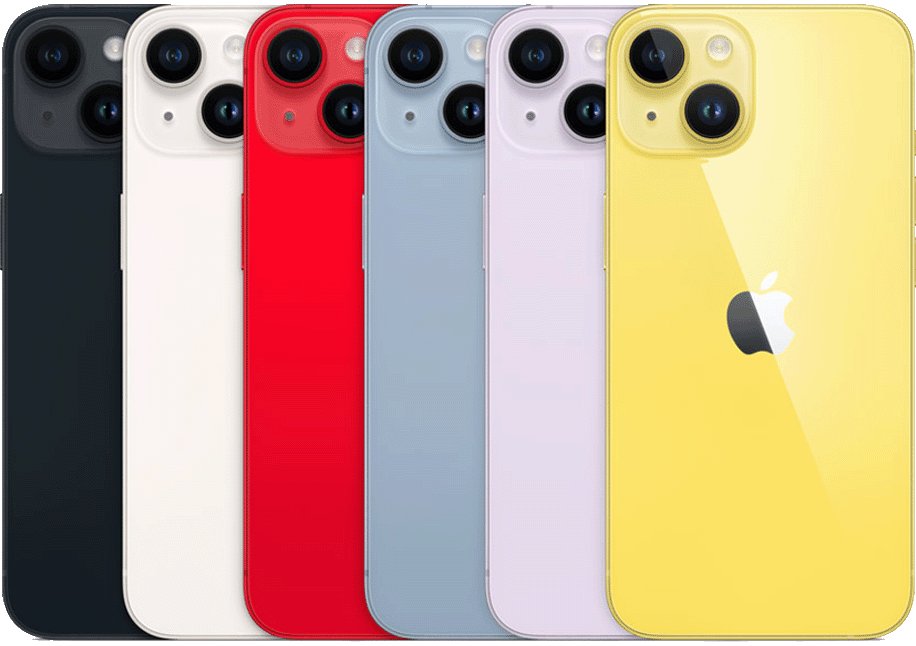
What about screen protectors?
A screen protector has to match the display's rectangle size and the cut-out at the top. Phones with and without the Dynamic Island need different protectors, even at the same diagonal.
| Protector group | Rectangle size | Top of display | Models |
|---|---|---|---|
| 6.1-inch, 2532 x 1170 | 6.06 in | No Dynamic Island | iPhone 12, 12 Pro, 13, 13 Pro, 14, 16e, 17e |
| 6.1-inch, 2556 x 1179 | 6.12 in | Dynamic Island | iPhone 14 Pro, 15, 15 Pro, 16 |
| 6.3-inch | 6.27 in | Dynamic Island | iPhone 16 Pro, 17, 17 Pro, 18 Pro |
| 6.7-inch, 2778 x 1284 | 6.68 in | No Dynamic Island | iPhone 12 Pro Max, 13 Pro Max, 14 Plus |
| 6.7-inch, 2796 x 1290 | 6.69 in | Dynamic Island | iPhone 14 Pro Max, 15 Plus, 15 Pro Max, 16 Plus |
| 6.9-inch | 6.86 in | Dynamic Island | iPhone 16 Pro Max, 17 Pro Max, 18 Pro Max |
Apple does not publish cut-out shapes on its spec pages, so a protector can misalign even inside one group. Check the model list on the packaging.
How to identify your iPhone before buying accessories
The model name in Settings is enough for most accessories. The model number settles any doubt, for example between an iPhone 16e and an iPhone 17e.
- Open the Settings app.
- Tap General, then tap About.
- Read the Model Name line, for example iPhone 17e.
- Tap the part number next to Model Number to reveal the model number that starts with A.
- Match that A-number against Apple's Identify your iPhone model page to confirm the exact model.
- If the phone will not turn on, remove the SIM tray and read the model number on the upper side of the slot, or look inside the USB-C or Lightning port on models without a tray.
Accessory checklist: match the exact model
- Confirm the model name on the case or protector listing matches Model Name in Settings > General > About exactly, including mini, Plus, Pro, Pro Max or e.
- Count the rear cameras on your phone and compare them with the camera opening in the product photos.
- Check the left side: a Ring/Silent switch and an Action button need different cut-outs.
- Check the lower right side for Camera Control on iPhone 16, iPhone 17, iPhone Air, the Pro models from iPhone 16 Pro, and iPhone 18 Pro.
- Match the port: iPhone 14 and earlier use Lightning, iPhone 15 and later use USB-C.
- For a screen protector, confirm whether your display has the Dynamic Island.
- For MagSafe accessories, check the tech specs page: the iPhone 17e lists MagSafe charging, while the iPhone 16e page does not.
Which iPhone size should you choose?
Pick the size first, then the features. Match your situation to a row.
| Your situation | Size to buy | Why |
|---|---|---|
| You want the smallest new iPhone | iPhone 17e or iPhone 16 | 146.7-147.6 mm tall and about 170 g |
| You use the phone one-handed and want a larger screen | iPhone 17 | 6.3-inch screen in a 71.5 mm wide body |
| You want a Pro camera in a compact body | iPhone 18 Pro | Same 71.9 mm width as the standard models, 211 g |
| You want a big screen but low weight | iPhone Air | 6.5-inch screen at 165 g and 5.64 mm thick |
| You watch video or read for hours and use two hands | iPhone 18 Pro Max | 6.9-inch screen, the largest without folding |
| You want a tablet-size screen that folds into a pocket | iPhone Duo | 7.6-inch inner screen, 117.8 mm tall closed |
| Kids, small hands or minimal-phone users on a budget | iPhone 17e | Smallest current body and the lowest weight after the Air |
| Older users who want larger text | iPhone 17 or iPhone 18 Pro Max | Bigger screens at the same 460 ppi sharpness |
Buying an older or oversized iPhone
| Option | Size advantage | What to check first |
|---|---|---|
| iPhone 12 mini or 13 mini (used) | Smallest bodies since 2020 at 131.5 x 64.2 mm | Lightning port; battery health on a used phone |
| iPhone SE 3rd generation (used) | 138.4 x 67.3 mm with a Home button | 4.7-inch LCD is the smallest screen in the chart |
| iPhone 14 Plus or 15 Plus (used) | 6.7-inch screen at about 200 g | No Dynamic Island and Lightning port on the 14 Plus |
| iPhone 18 Pro Max | 6.9-inch screen | 249 g, the heaviest non-folding iPhone |
| iPhone Duo | 7.6-inch inner screen | 254 g and 11.3 mm thick when closed; eSIM only |
Every model in this chart, including the 12 mini and SE 3rd generation, is on Apple's iOS 27 compatibility list.
Common size claims that are outdated or misleading
| Claim | What Apple's specs show |
|---|---|
| "The iPhone Air is the thinnest iPhone." | The iPhone Duo is 5.2 mm when open, against the Air's 5.64 mm. The Air is the thinnest non-folding model. |
| "The Pro Max is the biggest iPhone." | The iPhone Duo has the biggest display at 7.6 inches open. The Pro Max is the tallest at 163.4 mm. |
| "All 6.1-inch iPhones are the same size." | Depth runs from 7.4 mm to 8.25 mm and weight from 164 g to 206 g. |
| "The Pro model is bigger than the standard model." | From iPhone 12 to 15 the Pro matched the standard footprint within about 1 mm; it is heavier, not larger. |
| "There is still a mini iPhone." | The last mini was the iPhone 13 mini. The smallest current model is the iPhone 17e. |
| "There is an iPhone 17 Plus." | No. The 2025 lineup has no Plus model; the iPhone Air is its 6.5-inch option. |
Important measurement and availability notes
| Note | Detail |
|---|---|
| Measurement limits | Apple states that size and weight vary by configuration and manufacturing process. |
| Screen measurement | The advertised diagonal is rounded; the rectangle figure is exact and the viewable area is smaller. |
| Inches vs. millimetres | Apple lists inches to two decimal places, so use millimetres when comparing close models. |
| Current availability | Apple's iPhone page lists iPhone Duo, 18 Pro, Air, 17, 17e and 16 as the current lineup. |
| iPhone Duo dates | Pre-orders open October 16, 2026, and the phone is available from October 23, 2026. |
iPhone size chart FAQ
Which iPhone is the smallest?
The smallest current iPhone is the iPhone 17e at 146.7 x 71.5 x 7.80 mm and 169 g. The smallest models since 2020 are the iPhone 12 mini and iPhone 13 mini, both 131.5 x 64.2 mm, but Apple no longer sells either.
Which iPhone is the thinnest?
The iPhone Duo is the thinnest when open, at 5.2 mm. Among non-folding models, the iPhone Air is thinnest at 5.64 mm, about 2.3 mm thinner than the iPhone 17 at 7.95 mm.
Which iPhone is the largest?
The iPhone 18 Pro Max and iPhone 17 Pro Max have the largest standard bodies at 163.4 x 78.0 x 8.75 mm. The iPhone Duo has the largest display of any iPhone, a 7.6-inch folding screen.
Are all 6.1-inch iPhones the same physical size?
No. Most share a 146.7 x 71.5 mm outline, but depth runs from 7.4 mm on the iPhone 12 to 8.25 mm on the iPhone 15 Pro. The iPhone 15 and 16 are slightly larger at 147.6 x 71.6 mm.
Does the display size tell you the phone's actual size?
Only roughly. The diagonal names the screen class, and bodies within one class differ in height, depth and weight. The iPhone Air's 6.5-inch screen sits in a body shorter than any 6.7-inch iPhone.
What is the iPhone size chart in inches?
Apple lists inches beside millimetres. The iPhone 17e is 5.78 x 2.82 x 0.31 inches, the iPhone 17 is 5.89 x 2.81 x 0.31 inches, the iPhone Air is 6.15 x 2.94 x 0.22 inches, and the iPhone 18 Pro Max is 6.43 x 3.07 x 0.34 inches.
How big is the iPhone 17?
The iPhone 17 is 149.6 mm tall, 71.5 mm wide and 7.95 mm deep, and weighs 177 g. It has a 6.3-inch display at 2622 x 1206 pixels, the same size class as the iPhone 17 Pro and 18 Pro.
Are iPhone 16e and iPhone 17e cases interchangeable?
Both phones measure 146.7 x 71.5 x 7.80 mm, and Apple describes one rear camera, an Action button and a side button on each. Apple does not certify cross-model fit, so buy a case listed for your model.
How do I find my iPhone model?
Open Settings, tap General, then tap About. The Model Name line shows the model, and tapping the part number next to Model Number reveals the A-number that Apple's identification page matches to an exact model.
What storage sizes do current iPhones come in?
The iPhone 17e and iPhone 17 come in 256 GB and 512 GB. The iPhone 16 starts at 128 GB. The iPhone Air goes to 1 TB, and the iPhone 18 Pro, 18 Pro Max and iPhone Duo go up to 2 TB.
iPhone size chart bottom line: the best size for most people
Buy the iPhone 17 if you want the best balance of screen and size, and the iPhone 17e if you want the smallest new iPhone. The iPhone 17 fits a 6.3-inch screen into a body only 2.9 mm taller than the 17e, while the Air and Pro Max trade one-handed reach for a larger display.