Titanium is non-magnetic in everyday terms: it is a weakly paramagnetic metal, so a fridge magnet will not stick to it and it keeps no magnetism of its own.
This guide explains what paramagnetic means for titanium, how it compares with iron, steel and aluminium, how alloys and titanium dioxide behave, what titanium implants mean for an MRI, and how to run a simple magnet test at home.
Is titanium magnetic or non-magnetic?
Titanium is paramagnetic, which is the textbook way of saying it is attracted to a magnet so weakly that you cannot feel it. In practical terms it behaves as a non-magnetic metal.
| What you want to know | Short answer | Why |
|---|---|---|
| Will a magnet stick to titanium? | No | The pull on a paramagnet is far too weak to hold a magnet in place |
| Is titanium a magnetic metal? | Not in the everyday sense | It is paramagnetic, not ferromagnetic like iron, nickel or cobalt |
| Can titanium be magnetized? | No | Paramagnets lose all induced magnetism once the outside field is removed |
| Is titanium safe near an MRI scanner? | Titanium itself, yes | It is non-ferromagnetic, so titanium implants are routinely scanned |
| Does a magnet test prove an item is titanium? | No | Aluminium, copper and most austenitic stainless steel also fail to stick |
Why titanium is classified as paramagnetic
Paramagnetism comes from unpaired electrons, which act like tiny magnets. An outside field lines a small fraction of them up, which creates a weak pull toward the magnet.
Heat keeps shuffling those electron spins, so the alignment vanishes the moment the magnet is taken away. Ferromagnetic metals such as iron behave differently: their spins lock together into domains, which is why iron is pulled hard and can become a permanent magnet.
| Property | Titanium | What it means |
|---|---|---|
| Element | Ti, atomic number 22 | A transition metal with incompletely filled electron shells |
| Magnetic ordering | Paramagnetic | Weakly attracted to a magnet, only while the field is present |
| Molar magnetic susceptibility | +153.0 × 10⁻⁶ cm³/mol at 293 K | Positive and tiny, the signature of a paramagnet |
| Typical paramagnet susceptibility | 10⁻³ to 10⁻⁵ | A sensitive lab balance or a SQUID magnetometer is needed to detect it |
| Retained magnetism | None | Total magnetization drops to zero when the field is removed |
That is why reference sources describe titanium both as paramagnetic and as non-magnetic. The first is the physics label; the second is what you observe with any household magnet.
Titanium vs iron, steel and aluminium: how magnetic is each metal?
Magnetic susceptibility measures how strongly a material responds to a field. Positive values are attracted, negative values are faintly repelled (diamagnetic), and ferromagnets sit millions of times higher than either.
| Material | Type of magnetism | Published susceptibility | Sticks to a fridge magnet? |
|---|---|---|---|
| Titanium | Paramagnetic | Molar +153.0 × 10⁻⁶ cm³/mol | No |
| Aluminium | Paramagnetic | Molar +17 × 10⁻⁶ cm³/mol; volume (SI) +2.2 × 10⁻⁵ | No |
| Copper | Diamagnetic | Volume (SI) −9.63 × 10⁻⁶ | No |
| Water | Diamagnetic | Volume (SI) −9.035 × 10⁻⁶ | No |
| Nickel | Ferromagnetic | Volume (SI) 600 | Yes |
| Iron | Ferromagnetic | Volume (SI) 200,000 | Yes |
| Ferritic or martensitic stainless steel | Ferromagnetic | Not a single figure; varies by grade | Yes |
| Austenitic stainless steel (304, 316) | Usually non-magnetic | Can turn slightly magnetic after bending, cutting or cold working | Usually no, sometimes faintly at edges |
Titanium sits in the same group as aluminium. Both respond to a field, but neither comes anywhere near iron or nickel.
How titanium behaves near strong magnets
A stronger magnet raises the pull on titanium in proportion to the field, but the starting point is so small that the result still stays below what you can feel. Ferromagnetic pull grows non-linearly and is far stronger, which is why it is easy to see.
| Magnet | What you would observe with titanium | What you would observe with steel |
|---|---|---|
| Fridge magnet | Nothing; the magnet slides off | Magnet sticks firmly |
| Neodymium magnet | No noticeable attraction in normal handling | Snaps on and holds firmly |
| MRI scanner | Titanium implants are routinely scanned | Ferromagnetic objects can become dangerous projectiles |
| Laboratory balance or SQUID magnetometer | A small, measurable positive response | A strong, obvious attraction |
Once the magnet is moved away, the titanium returns to zero magnetization. Nothing about the encounter leaves it magnetized.
How to check if titanium is magnetic with a magnet test
A magnet test tells you whether an item contains a ferromagnetic metal. It cannot confirm that the item is titanium, but a strong pull is a clear sign that something other than titanium is present.
- Take a strong magnet, such as a neodymium magnet, rather than a weak promotional fridge magnet.
- Remove the item from any case, strap, chain or packaging that could contain steel parts or magnets.
- Hold the magnet against the bare metal at several points, including clasps, pins and screws.
- Watch for any snap or drag. Solid titanium shows no pull you can feel.
- If one spot pulls and the rest does not, note it; that part is made of a different metal, usually steel.
- If the whole item pulls strongly, treat it as steel or another ferromagnetic alloy, whatever the label says.
Pure titanium vs. titanium alloys
ASTM International recognizes 31 grades of titanium and titanium alloys. Grades 1 to 4 are commercially pure titanium, and the rest are alloys tuned for strength, ductility or corrosion resistance.
Most common alloys are still mostly titanium, with additions such as aluminium and vanadium. Some beta alloys use iron, nickel, cobalt or chromium as stabilizers, and iron, nickel and cobalt are ferromagnetic as pure metals.
| Grade | Composition | Typical use |
|---|---|---|
| Grades 1 to 4 | Commercially pure (unalloyed) titanium; strength rises with oxygen content | Formed sheet and plate, corrosion-resistant equipment |
| Grade 5 (Ti-6Al-4V) | 6% aluminium, 4% vanadium, iron capped at 0.25% | The most commonly used alloy; aircraft parts, artificial joints |
| Grade 9 (Ti-3Al-2.5V) | 3% aluminium, 2.5% vanadium | Aircraft hydraulic tubing, athletic equipment |
| Grade 23 (Ti-6Al-4V-ELI) | 6% aluminium, 4% vanadium, lower oxygen and iron | The most commonly used medical implant-grade alloy |
| Grade 38 | 4% aluminium, 2.5% vanadium, 1.5% iron | Developed for armor plating |
No single magnetic rating covers every grade. For an industrial part where magnetism matters, check the alloy's data sheet from the supplier rather than assuming it matches pure titanium.
Titanium in MRI, implants, and medical devices
Titanium is one of the most biocompatible metals, and titanium and titanium alloy implants have been used in surgery since the 1950s. Because titanium is non-ferromagnetic, patients with titanium implants can be examined safely with MRI.
| Medical use | Typical titanium material | Magnetic note |
|---|---|---|
| Hip and knee joint replacements | Ti-6Al-4V or Ti-6Al-4V-ELI | Non-ferromagnetic titanium alloy |
| Dental implants | Titanium that bonds directly to bone | Non-ferromagnetic |
| Bone screws and fracture plates | Titanium or titanium alloy | Non-ferromagnetic |
| Surgical instruments for image-guided surgery | Titanium | Used where ferromagnetic tools are not allowed |
| Pacemakers and cochlear implants | Electronic devices, not plain metal | Most pacemakers and cochlear implants are listed as MRI contraindications |
The metal is rarely the problem. Implants that contain electronics, magnets or other metals are what the scanning team needs to assess.
Titanium implants and MRI: what patients should know before a scan
MRI magnets can pull ferromagnetic objects at high speed, so the screening questions exist for good reason. Titanium on its own does not create that risk, but the scanning team still needs to know about every implant.
- List every implant you have, including joint replacements, plates, screws, dental implants, stents and piercings.
- Ask your surgeon or dentist for the implant card or the exact device name if you do not have it.
- Tell the MRI team about any device with electronics, such as a pacemaker, defibrillator or cochlear implant, because these are handled differently from plain titanium.
- Mention any metal fragments from past injuries, especially near the eyes, since metallic foreign bodies are a contraindication.
- Remove titanium jewelry and watches when asked, because clasps, pins and straps can be made of other metals.
- Follow the radiology team's decision. They confirm whether a specific implant is safe in their scanner.
Is titanium dioxide magnetic?
Titanium dioxide (TiO2) is the most common titanium compound and the end point of most refined titanium. It is a white pigment used in paint, plastics, paper and sunscreen.
| Substance | Magnetic behaviour | Where you meet it |
|---|---|---|
| Titanium metal | Paramagnetic (weakly attracted) | Implants, phones, watch cases, rings |
| Titanium dioxide: rutile | Diamagnetic white solid | Pigment, mineral sands |
| Titanium dioxide: anatase | Diamagnetic white solid | Pigment, photocatalyst |
| Titanium dioxide: brookite | Diamagnetic white solid | Mineral form |
Diamagnetic materials are faintly repelled by a magnet. In practice, titanium dioxide powder or paint shows no attraction at all.
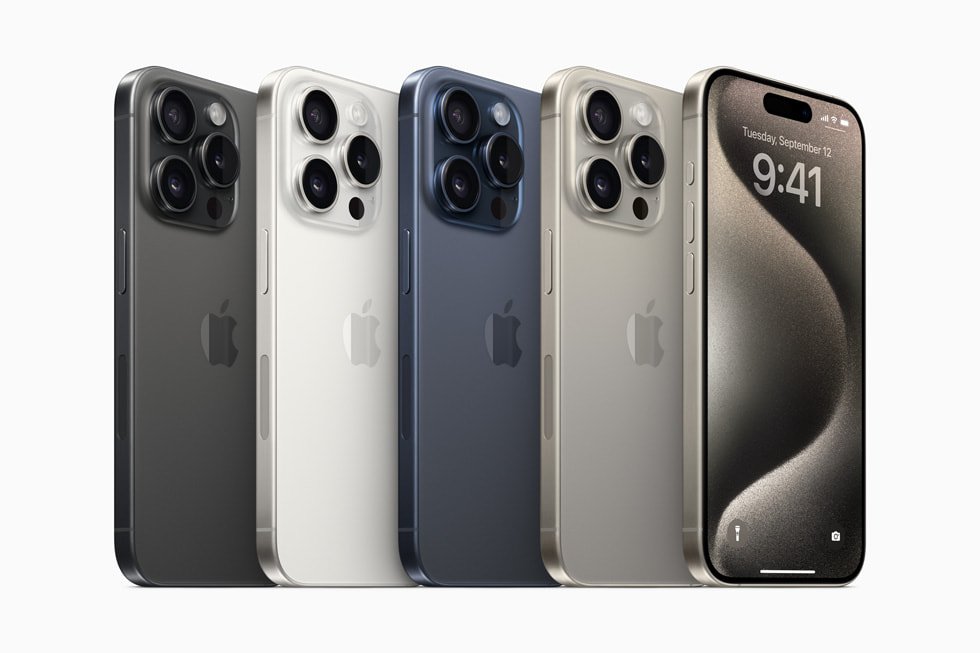
Why magnets stick to a titanium iPhone 15 Pro
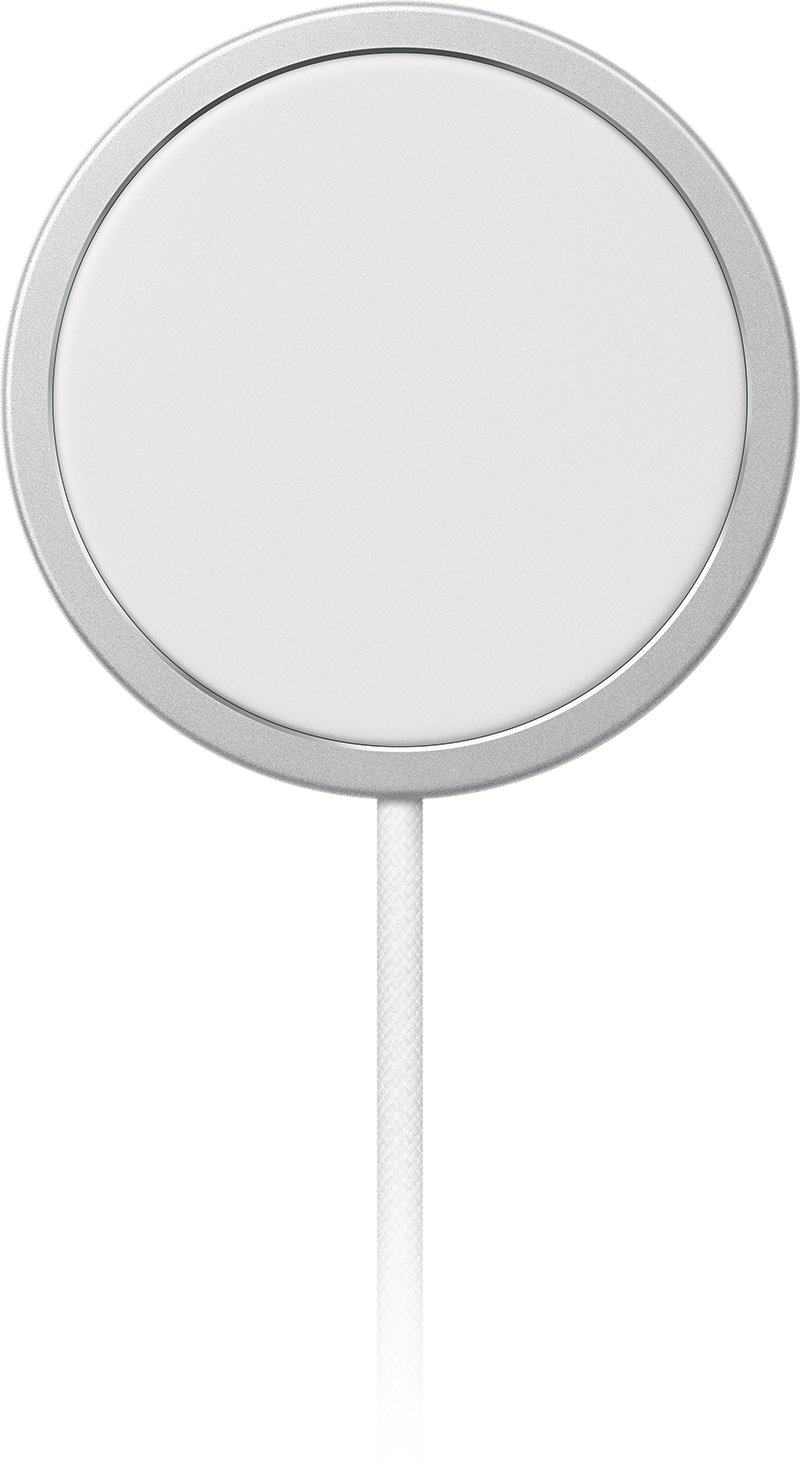
Apple's iPhone 15 Pro uses titanium bands bonded to a substructure made from recycled aluminium, and both metals are paramagnetic. The phone also supports MagSafe, which uses magnets for charger and accessory alignment.
| Part | Material | Attracts a magnet? |
|---|---|---|
| Outer bands | Titanium | No noticeable pull |
| Internal frame | 100 percent recycled aluminium | No noticeable pull |
| MagSafe area on the back | Magnet array behind the glass | Yes, by design |
So when a magnetic wallet snaps onto a titanium iPhone, the MagSafe magnets do the work, not the titanium. Apple advises keeping cards, badges and key fobs out from between the iPhone and a MagSafe charger, and keeping consumer devices at least 6 inches (15 cm) from implanted medical devices, or 12 inches (30 cm) when wireless charging.
Common myths about titanium and magnetism
| Myth | Fact |
|---|---|
| Titanium is strongly attracted to magnets | Titanium is paramagnetic; the pull is too weak to feel and needs lab instruments to measure |
| If a magnet sticks, the item must be titanium | The opposite: a magnet that sticks points to steel, iron or nickel, not titanium |
| If a magnet does not stick, the item must be titanium | Aluminium, copper and most austenitic stainless steel also fail the test |
| All titanium alloys behave exactly like pure titanium | Alloys vary by grade; some contain iron, nickel or cobalt additions, so check the data sheet |
| Titanium implants are dangerous in MRI because all metals are pulled by magnets | Only ferromagnetic metals are pulled hard; titanium is non-ferromagnetic and implants are routinely scanned |
| Titanium becomes a magnet after touching a strong magnet | Paramagnets keep no magnetization once the field is removed |
Titanium sticks to a magnet: causes and fixes
A magnet sticks to my titanium ring or watch
A steel part, a steel core or a plated base metal is present, because titanium itself does not hold a magnet.
- Test the band, case, clasp, pins and crown separately with the magnet.
- If only the clasp or pins pull, the titanium part is fine and the hardware is steel.
- If the whole band pulls, ask the seller for the alloy grade or material certificate.
- Treat any item that pulls everywhere as not solid titanium.
Do magnets stick to titanium phones and accessories?
Built-in alignment magnets, such as MagSafe on iPhone, attract other magnets regardless of the frame metal.
- Remove the case and test the titanium edge away from the back panel.
- Expect a pull only around the MagSafe area on the back.
- Keep payment cards and key fobs out from between the phone and a MagSafe charger.
How can I tell if my jewelry is real titanium?
A magnet test only rules metals out; aluminium, copper and some stainless steels also pass it.
- Run the magnet test first; a strong pull rules out solid titanium.
- Look for a stamped grade or material mark on the inside of the piece.
- Ask the jeweler for the alloy grade, such as Grade 2 or Grade 5, in writing.
Can you magnetize titanium with a strong magnet?
Paramagnets lose their induced magnetization as soon as the field is removed.
- Remove the magnet and test the titanium against a paper clip.
- If the paper clip is not attracted, the titanium holds no magnetism, as expected.
- If the paper clip is attracted, the item contains a ferromagnetic metal and is not plain titanium.
Titanium magnetism: frequently asked questions
Is titanium a magnetic metal?
No, not in the everyday sense. Titanium is paramagnetic, so it is attracted to a magnet only very weakly and only while the field is present. Magnetic metals in the usual sense are ferromagnetic, such as iron, nickel and cobalt.
How magnetic is titanium?
Very slightly. Titanium's molar magnetic susceptibility is about +153 × 10⁻⁶ cm³/mol, a tiny positive value in the same range as aluminium. Iron's response is many orders of magnitude larger, which is why only iron and steel stick to magnets.
Is titanium alloy magnetic?
Common titanium alloys such as Grade 5 (Ti-6Al-4V) are mostly titanium with aluminium and vanadium and are used in MRI-scanned implants. Some specialty alloys contain iron, nickel or cobalt additions, so check the supplier's data sheet when magnetism matters.
Is medical grade or surgical titanium magnetic?
No. Medical-grade titanium, most often Ti-6Al-4V-ELI (Grade 23), is non-ferromagnetic. That is why patients with titanium implants can usually have MRI scans, though the radiology team should still be told about every implant.
Can titanium be magnetized?
No. Titanium is paramagnetic, and paramagnets do not retain any magnetization once the outside magnetic field is removed. Holding a strong magnet against titanium leaves it with no magnetism of its own.
Do magnets stick to titanium?
No. The paramagnetic pull on titanium is far too weak to hold a magnet in place. If a magnet does stick to a titanium-labelled item, a steel part, a steel core or a built-in magnet is responsible.
Is titanium oxide or titanium dioxide magnetic?
No. Titanium dioxide in its three common forms, rutile, anatase and brookite, is a white diamagnetic solid. Diamagnetic materials are faintly repelled by magnets, so titanium dioxide paint, pigment or sunscreen shows no attraction.
Is titanium magnetic in an MRI?
Titanium is non-ferromagnetic, so the MRI magnet does not pull it the way it pulls steel. Titanium implants are routinely scanned, but devices with electronics, such as pacemakers or cochlear implants, need separate assessment.
What would happen if titanium was magnetic?
Titanium implants would face the same MRI restrictions as ferromagnetic objects, which an MRI magnet can pull at high speed. Its use in surgical instruments for image-guided surgery, where ferromagnetic tools are excluded, would also end.
Is titanium non-magnetic?
Yes, for practical purposes. Reference sources describe titanium as both paramagnetic and non-magnetic: it responds to a field only enough for lab instruments to measure, and no household magnet will stick to it.
Bottom line: is titanium magnetic?
Treat titanium as non-magnetic: magnets will not stick to it, it cannot be magnetized, and titanium implants are compatible with MRI scanning. Titanium is paramagnetic, with a response so small that only lab instruments detect it. When a titanium item does attract a magnet, look for steel hardware, a specialty alloy or a built-in magnet such as MagSafe.




![How to find word count in Microsoft Word [updated 2026]](https://techdows.com/wp-content/uploads/2026/10/Word-Review-tab-with-the-Word-Count-menu-and-Show-Word-Count-ticked-600x252.jpg)